How Southeast Asian Humidity Affects Solid Wood Furniture in Singapore
Singapore’s tropical climate can change the dimensions, fit and appearance of solid wood furniture throughout the year. In a Tampines HDB flat, a dining table near a balcony may repeatedly encounter daytime humidity of roughly 75–90%, while a corridor facing away from prevailing winds may stay closer to 65–75%. The difference matters because timber expands as it absorbs moisture and contracts as moisture leaves it. Movement of 1–3 mm across a wide tabletop or wardrobe side can affect how drawers slide, doors align and joints seat during assembly.
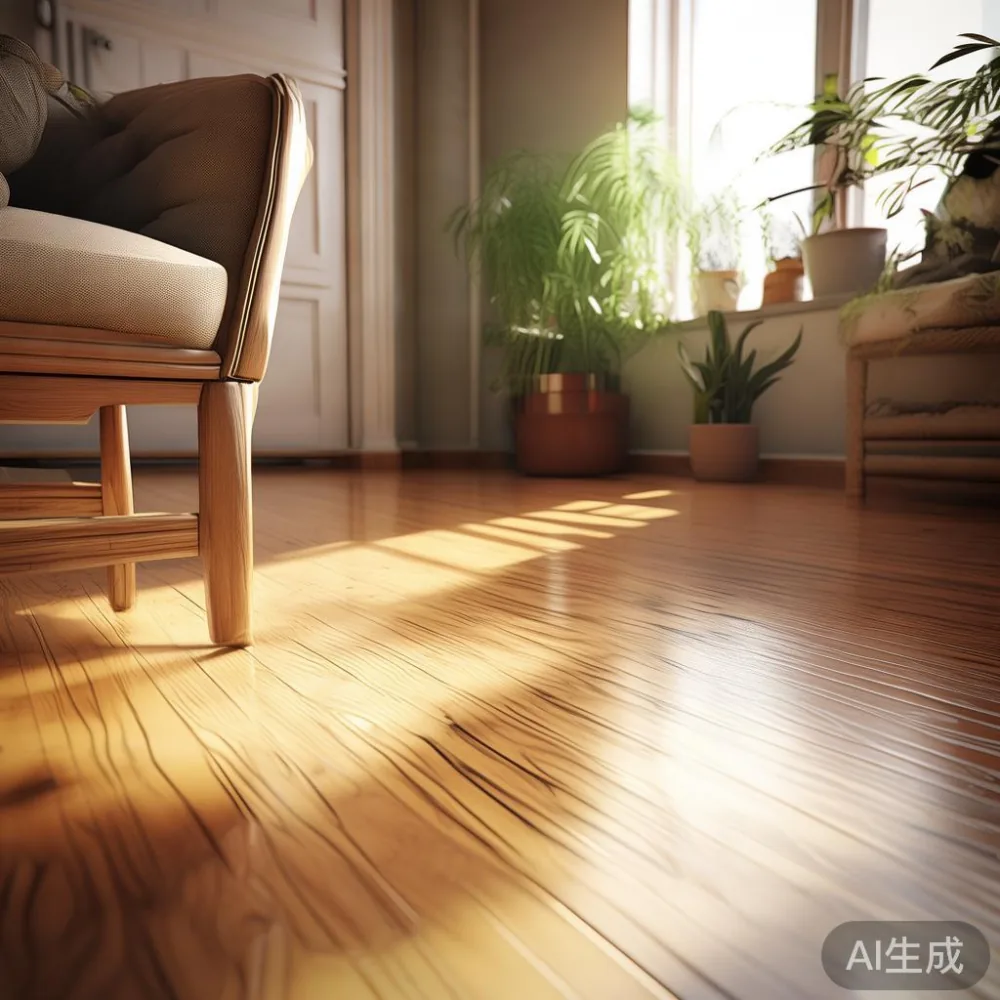
For buyers choosing furniture online, humidity is not merely a care note. It affects storage, acclimatisation, assembly difficulty, maintenance and long-term durability. Singapore’s typical relative humidity ranges from about 65% to 85%, with wet periods pushing some homes above 90%. Air-conditioned rooms, unventilated HDB units and coastal exposure in Bedok or Punggol can create frequent swings within a single day.
MIDHILL manufactures solid wood furniture in Foshan, where the climate is also humid and subtropical. Its export experience across 15 or more countries gives the company practical exposure to different moisture conditions. Locally, delivery usually takes 3–7 working days after confirmation, and orders above US$350 qualify for free shipping, although the final Singapore invoice may include GST and local charges where applicable.
How does humidity change solid wood furniture?
Wood is hygroscopic: its cell walls absorb atmospheric moisture, and the amount absorbed changes the dimensions of the timber. Movement is most visible across the grain. A 180 cm solid oak dining table might expand by several millimetres along its width, while movement along the grain is smaller. Veneered or engineered panels can also move, although they may do so differently from one-piece solid wood components.
Seasonal changes matter more than a single wet day. Repeated swelling and shrinking can loosen screw joints, make cabinet doors catch and cause a solid wood bed frame or wardrobe to pull slightly out of square. Rapid changes are often more demanding than stable high humidity, because the wood repeatedly cycles between swollen and dry states. Direct airflow from an air-conditioner can accelerate moisture loss around one edge of a wardrobe or nightstand while the opposite side remains in humid air.
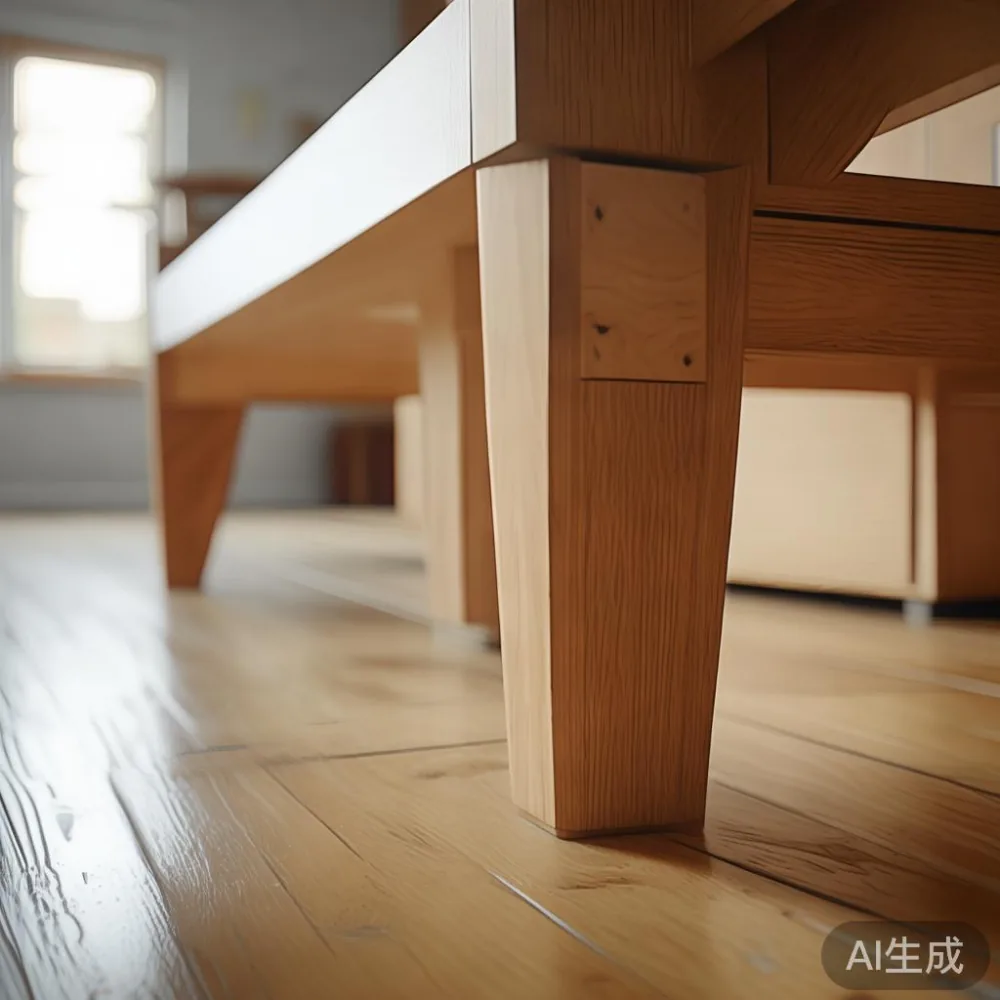
Humidity does not automatically mean failure. Good species selection, sound joinery, appropriate finishing and controlled indoor conditions can keep movement within manageable limits. The goal is to avoid trapping moisture inside a cabinet, placing solid wood against a cold condensation surface or assuming every joint will remain perfectly rigid after delivery.
Typical indoor readings give a useful baseline. A hygrometer placed in the living room, bedroom and dining area should ideally show a stable range of about 45–65% relative humidity. Singapore homes may need dehumidifiers, air circulation and sensible distance from windows. Running a dehumidifier to keep a room around 55% can reduce repeated dimensional movement compared with allowing the room to alternate between 70% and 90%.
Will a solid wood dining table fit in an HDB lift and corridor?
Yes, but the delivery route should be checked before a dining table is ordered. Many HDB lift cars measure approximately 110–140 cm deep and 90–140 cm wide, with door openings around 80–90 cm. Corridors may be only 90–120 cm wide, and a turn at a stairwell or lift lobby can reduce the usable turning space.
A round solid wood dining table with a diameter of 120–150 cm is often easier to manoeuvre than a 200 cm rectangular table. A rectangular table can still pass through a lift diagonally, but its legs or apron may prevent the required angle. The packed carton, not just the assembled table, determines whether it fits. For example, a 180 × 90 cm dining table may be delivered in two protected sections and assembled inside the home.
This is where assembly difficulty becomes a practical selling point rather than a vague rating. A table that arrives in 2 cartons and needs 6 bolts can usually be handled by 2 people in 30–45 minutes. A heavier single-piece marble table may require 3 or 4 people, lifting straps and a planned route because a 60–80 kg component can be difficult to turn in a 100 cm corridor.
Measure the lift car, lift door, landing and any tight corners. Add 10 cm of clearance for packaging and hand positions. Do not rely only on the largest internal dimension: the narrowest doorway can become the limiting point. If the route is unsuitable, arranging flat-pack delivery or carrying components in 2 trips usually reduces both risk and assembly difficulty.
Why do drawer and wardrobe joints shift in Singapore?
A wardrobe can be built to very tight tolerances in a dry factory and still need adjustment after reaching a humid Singapore bedroom. Side panels may swell, back panels may move and adjustable shelf supports may become less accurate. The visible result is a door that rubs, a drawer that closes unevenly or a carcass that appears slightly crooked when viewed from the front.
Freshly delivered furniture should be acclimatised before final adjustment. Keep it away from direct sunlight, air-conditioner outlets and washing-machine areas. Allow roughly 48–72 hours for the room and timber to settle before tightening joints, levelling feet or aligning doors. During that period, operate drawers gently and avoid forcing hardware.
Quality construction should allow controlled movement. Dowelled, mortised-and-tenoned or properly confirmed joinery generally tolerates seasonal dimensional change better than relying only on a narrow screw slot. Mid-range furniture should also have adjustable shelf pins, adjustable door hinges and accessible levelling feet. These details can lower assembly difficulty because installers can tune the unit instead of forcing it into position.
For a large wardrobe over 200 cm high, ask whether the unit is supplied with an anti-tip restraint. This is sensible in earthquake-prone regions and important in homes with children. Fix the restraint to a suitable wall structure, not merely to decorative trim. A 220 kg wardrobe can tip seriously if its centre of gravity moves outside the base after an impact.
How much humidity can a solid wood bed frame tolerate?
A properly made solid wood bed frame handles humid conditions considerably well because the frame is not usually enclosed like a cabinet. Its slats, rails and legs have more exposed surface area, so they can dry more readily. The main risks are surface checking, mould around a mattress edge, corrosion of unapproved metal fittings and prolonged contact with wet flooring.
Keep the frame at least 10–15 cm away from an exterior wall if the wall is cold or frequently damp, and do not place it directly against an air-conditioner vent. A mattress should not press tightly against a humid wall for several hours each day. Wipe condensation from the floor and inspect the frame twice a year, especially in ground-floor Bedok units or homes near a bathroom.
Comparisons such as Japanese bed vs Modern bed often focus on low profiles, clean lines and platform construction. Japanese-style platform frames may have closely spaced slats and minimal visible hardware, while modern platform beds use larger panels and more concealed support. Neither style removes the need to control moisture. The practical choice is the frame that suits the room’s dimensions and ventilation, not simply the style label.
For buyers considering European light luxury bed vs Japandi bed, the material and joinery deserve equal attention. European light luxury generally includes generous proportions and layered visual details; Japandi emphasises simpler forms, pale finishes and functional restraint. A French light luxury or post-modern light luxury bed can use solid wood rails with upholstered panels, but the timber components still require stable humidity.
Assembly difficulty for most bed frames is moderate. A queen bed with 2 long rails, 2 end rails, centre supports and 12–16 slats commonly takes 2 people 20–40 minutes. A king or upholstered bed may take 45–75 minutes. Assemble on a clean floor, tighten fittings gradually and check that the frame sits level before adding the mattress.
What should I do before assembling furniture in a humid home?
Begin by measuring the intended space and the complete delivery route. Check the floor for levelness, since uneven tiles can twist a dining table or wardrobe. Use a spirit level and adjust the furniture’s levelling feet after the components are positioned. If the dining table has a 180 cm top and a 75 cm height, leave roughly 90 cm around it for chairs and circulation; a 75 cm clearance behind each seated position is a practical minimum in a compact HDB dining area.
Next, inspect the timber and packaging. Look for already-open checks, water staining, swollen edges or mould. Do not assemble a damaged package simply because assembly has started. Photograph the condition before opening, retain the packaging and report the issue within the return window. MIDHILL offers a 14-day return policy, subject to the applicable product condition and return terms, so a careful inspection is worthwhile.
Acclimatisation should happen in the room where the furniture will stay. Keep components 15–30 cm away from walls where possible and maintain airflow around all sides. A moderate climate-control setting around 26°C and 55–65% relative humidity provides more stable conditions than repeatedly switching between a cold, dry air-conditioned room and a warm, humid corridor.
Only apply the supplied care products as directed. A damp cloth should be wrung out rather than dripping. Wipe along the grain, dry the surface immediately and avoid silicone-based sprays unless the finish supplier confirms compatibility. Re-oil or re-wax only at the recommended interval; thick applications can trap moisture or create patchy colour.
These steps also reduce assembly difficulty. Installers are less likely to over-tighten screws when the timber is already acclimatising, and drawers are less likely to jam if the carcass is allowed to settle first. A 10-year structural warranty addresses structural integrity, but normal seasonal movement and moisture-related surface care remain part of responsible furniture ownership.
Is a solid wood sofa affected by dampness indoors?
The timber frame of a solid wood sofa is usually stable indoors, but humidity can influence the upholstery, finish and adjacent floors. Remove cushions during very wet periods if the manufacturer permits, allow air to circulate beneath the frame and avoid placing the sofa against a cold condensation-prone wall. A sofa should sit on a level, dry surface, with at least 5 cm of space behind it for ventilation where space allows.
Buyers searching for the best Italian light luxury sofa for 2026 should look beyond the name on the label. Ask about frame timber, joint construction, cushion density, fabric composition and the supplier’s repair support. Italian-inspired light luxury may use oak, walnut or ash with softly rounded edges, but local performance still depends on humidity control and build quality.
One piece worth considering is a solid wood sofa paired with a marble table. Marble can give the room a cool, light-luxury character and works well with oak or walnut, but it should not be treated as humidity-proof. Sealed surfaces need prompt cleaning, and lifting a heavy marble top requires at least 2 trained people. A 120 × 60 cm marble table may weigh 55–90 kg, so its assembly difficulty can exceed that of the sofa.
MIDHILL also produces American light luxury and post-modern light luxury collections, where clean profiles meet warm solid wood. These designs suit Singapore apartments when their proportions are disciplined. A 200 cm sofa may overwhelm a narrow living room, while a 170–185 cm model can preserve a practical 60–75 cm passage. The right scale and humidity plan are more useful than assuming one style is automatically suitable for every flat.
How should Singapore buyers compare different solid wood designs?
Compare the timber species, component thickness, joint system, finish and hardware before comparing appearance. Solid wood does not mean every part of a piece is solid timber. A bed frame may use solid rails and legs with plywood or slats, while a wardrobe may combine solid frames with engineered panels. A product description should make those distinctions clear.
Luxury Mid-century modern furniture can fit an HDB living room when selected in compact dimensions. Tapered legs create visual lightness, but slim legs can be less stable on uneven floors, so adjustable feet are useful. A 160–180 cm three-seat sofa in oak or walnut may offer enough seating for 3 adults without consuming an entire 4 m living room.
For dining furniture, a 140–160 cm table can suit a compact household. An extendable model may be more practical than a fixed 200 cm top, although the extension mechanism deserves regular inspection. For a wardrobe, allow at least 60 cm in front of drawers where possible; a hinged design may need 90 cm or more when the door is fully open. For a nightstand, choose one with solid drawer bottoms, smooth runners and a back that can stand 5–8 cm away from a damp wall.
Buyers interested in under 2000 Post-modern furniture can assess value by looking at years of expected use rather than a low purchase price alone. A dining table used 4 times a week, a sofa used daily and a bed frame used nightly should all have serviceable construction. If assembly difficulty is high, allow at least 2 people and around 1 hour for a dining set, up to 2 hours for a large wardrobe and 30–60 minutes for a queen bed frame.
Confirm delivery, returns, GST and warranty terms before payment. MIDHILL’s free shipping threshold is US$350, equivalent to roughly SGD 460 at a broad illustrative conversion of about SGD 1.32 per US$1. The actual freight charge, GST and final invoice can vary. Singapore delivery generally takes 3–7 working days after dispatch confirmation, while production or custom orders can require 4–8 weeks.
What humidity-related questions should I ask before buying?
Ask whether the furniture is supplied flat-packed, how many people are needed for assembly and whether hardware and tools are included. Confirm the delivered carton dimensions, not only the assembled dimensions. For a dining table, request the weight of the top and the number of trestles. For a wardrobe, ask whether the back panel is fixed or removable and whether levelling feet are adjustable. For a solid wood sofa, request the timber specification and upholstery care guidance.
Also ask how the piece was finished. A factory-applied hardwax oil or compatible lacquer generally provides a practical barrier, but edge and end-grain surfaces still need care. In a coastal home, inspect furniture every 6 months for mould, salt residue, swollen joints and finish changes. Keep the relative humidity below roughly 70% where practical, and use a hygrometer rather than estimating from the weather outside.
Humidity management cannot freeze timber at one dimension, but it can prevent unnecessary stress. Stable conditions, sensible placement, careful assembly and regular inspection reduce movement and keep assembly difficulty predictable. That makes solid wood furniture better suited to Singapore homes, where thoughtful design and disciplined care matter more than the mistaken belief that solid wood never responds to the climate.