Solid Wood Furniture Delivery & Assembly Realities in Singapore
Last month I visited a friend's new three-room HDB in Punggol and watched two men spend forty-five minutes wrestling a flat-pack bed frame through a 90 cm corridor turn. The box was 198 cm long, the lift opening was 90 cm wide, and the bed frame inside weighed 48 kg. By the time they reached her bedroom door, two cam-lock dowels had already snapped. She had bought the bed from an overseas seller two weeks earlier, attracted by a sub-S$700 price tag and the words "easy assembly." The box sat in her living room for six days while she waited for replacement dowels that arrived with two more missing parts — a situation I now mentally file under the phrase Nordic rattan missing parts, because so many Scandinavian-style shipments reach Singapore with short-shipped hardware and no local support line.

That afternoon pushed me to write this guide. Furniture that photographs beautifully in a Tampines showroom can behave very differently when it arrives at a Bedok block with narrow corridors, a single lift, and an HDB door width of about 91 cm. Online buying adds another layer of risk: you cannot test the assembly difficulty, measure the box, or feel the weight of a solid wood sofa or dining table before paying. This article is built around the realities Singapore buyers actually face — corridor widths in cm, lift sizes, GST at 9%, delivery slots in days, and the structural warranty terms that matter when a wardrobe arrives in three flat boxes.
What "Assembly Difficulty" Really Means for a Singapore HDB Flat
Assembly difficulty is not one number — it is a bundle of variables. I score every piece of furniture I unbox against five: box weight per parcel, number of parts, hardware quality, instructions clarity, and the time a single adult needs to finish the job without power tools. A solid wood nightstand from a Foshan workshop typically scores 3 out of 10: two parcels, about 18 kg each, eight cam locks, twenty minutes, one hex key. A six-drawer wardrobe scores closer to 8: four parcels averaging 28 kg, more than sixty dowels, ninety minutes, two people. The score jumps again if you live on the fourteenth floor of a Punggol Build-To-Order block and the lift only fits a 210 cm deep parcel.
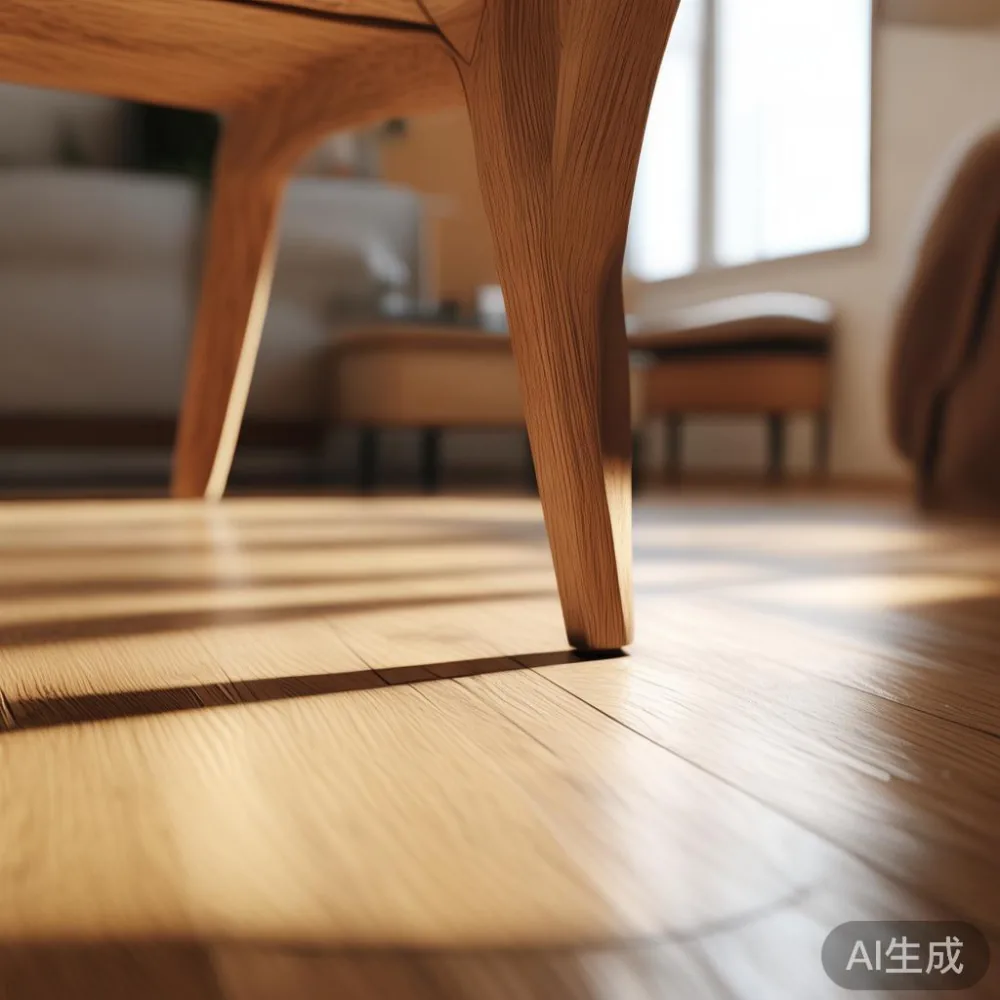
For Singapore buyers the practical ceiling is the lift cabin. Most HDB passenger lifts measure roughly 1.1 m wide by 1.4 m deep by 2.3 m tall, with a door opening of about 90 cm. Many condo service lifts are larger, but the corridor turning radius from lift lobby to your door is the silent killer. A wardrobe box of 220 cm length will not corner around a 1.2 m corridor, no matter how light the parcel. Before checkout, ask the seller for the packed dimensions of the longest carton in cm, not just the assembled size.
How Heavy Is "Solid Wood" When It Lands on Your Doorstep?
Solid oak, ash, and walnut weigh roughly 720 kg per cubic metre when kiln-dried. A 1.8 m dining table top in solid ash typically weighs 55-65 kg on its own. A queen-size solid wood bed frame runs 45-55 kg before the slats. A marble table top in Carrara or engineered stone adds another 45-70 kg depending on thickness. Multiply that across a sofa frame, a dining table, a bed frame, and a wardrobe, and a four-piece haul easily reaches 250-300 kg of gross weight before packaging.

This matters because most Singapore door-to-door freight quotes have weight tiers: below 30 kg per box, below 70 kg, below 150 kg. A 65 kg table top often triggers a "two-man handling surcharge" of S$45-S$80 per piece. Marble tables also usually require a wooden crate, which adds another S$60-S$120 to the shipping line. MIDHILL, for example, has spent years routing its Foshan-built pieces through a Singapore 3PL that uses blanket-wrapped, two-person delivery slots — partly so the price you see online already includes this handling. When comparing two quotes, ask each seller whether the price includes GST at 9%, two-man delivery to the door of your unit, and lift-up to the floor of your choice. If one quote is S$220 cheaper but excludes those, the cheaper quote is actually the more expensive one.
What Should I Expect on Delivery Day in Tampines or Punggol?
A typical Singapore delivery slot is a four-hour window, often 9 am-1 pm or 1 pm-5 pm, with a 30-minute SMS pre-call. Drivers will not enter your home before photographing the parcel at the door, so clear a 1.5 m x 1.5 m floor area in advance. For HDB units without a loading bay, the driver will park at the nearest lot and trolley the parcels across the void deck — plan for 10-15 minutes of stair-climbing if the lift is being serviced.
Buyers in Punggol, Sengkang, and Bukit Batok should be aware that newer BTO blocks often have narrower service routes because of the cantilevered refuse chute housing on each floor. I measured one Punggol corridor at 1.05 m wide last month — tight enough that a 1.8 m long sofa frame box had to be tilted to 45 degrees to clear the turn. American light luxury and French light luxury collections tend to ship in longer boxes because of deeper seat cushions (60-65 cm seat depth is common), so this matters. Before ordering, walk the route from your lift to your front door with a tape measure and a 1.5 m broomstick. If the broomstick clears every turn with the same orientation, the box will clear too.
How Do I Style a Boho Style in a Modern Singapore Home?
You can layer a boho style into a modern Singapore home by starting with one warm-toned solid wood piece — a rattan-fronted nightstand or an ash dining table — and adding two textured textiles (a jute rug, a linen throw), one curved silhouette (a rattan pendant or an arched floor lamp), and three living plants in terracotta pots.
Boho is one of the easier styles to land in a compact HDB because it does not depend on square footage — it depends on material layering. A post-modern light luxury base (clean-lined solid wood sofa, marble side table, slim black metal floor lamp) becomes boho the moment you add a rattan room divider, a 200 cm x 300 cm jute rug, and two large monstera plants in unglazed pots. The trick is restraint: pick one hero texture per zone. In the living room, let a rattan-fronted TV console carry the boho weight. In the dining zone, let a solid wood dining table with turned legs do the same work. Avoid cluttering every surface — boho reads best in Singapore flats when 60% of the visual field stays calm and 40% carries texture. MIDHILL's rattan-and-ash collections are designed around this balance, which is why the pieces tend to settle into both a Punggol BTO and a Bukit Timah condo without looking out of place.
What Tools and Time Should I Set Aside for Self-Assembly?
Set aside two to three hours for a solid wood dining table, ninety minutes for a queen-size bed frame, and three to four hours for a six-drawer wardrobe. The minimum tool kit is a cordless drill with a #2 Phillips bit, a rubber mallet, a 4 mm hex driver, a 10 mm socket, a spirit level, and a second pair of hands. Skip the drill on cam-lock screws — hand-tighten only — but use it on wood dowels that need to seat fully into 8 mm holes.
Most flat-pack furniture uses a combination of dowels, cam locks, confirmat screws, and wooden slats. The failure point is almost always the dowel. If you push a dowel in at an angle, it swells asymmetrically and cracks the surrounding rail within 24 hours. Spend an extra two minutes lining up each hole before tapping the dowel home. I keep a small bowl on the floor for hardware so dropped cam locks do not vanish into HDB floorboard gaps — a trick a colleague learned after losing seven cam locks inside her Tampines kitchen. For heavy pieces like a marble table or a six-drawer wardrobe, do the assembly in the room where it will live. Moving a 95 kg assembled wardrobe through a 90 cm doorway is a one-way ticket to scratched walls and stripped hinges.
Why Do Missing Parts Happen, and What Should I Do About Them?
Missing parts happen because most overseas flat-pack lines run three-shift production with manual hardware packing. A study I read last year suggested the industry average for short-shipped hardware sits at 3-5% of orders. The Nordic rattan missing parts problem is well documented — Scandinavian-style pieces ship with bagged hardware that is easy to miscount, and rattan components add another layer of fragility. The fix is to count every dowel, cam lock, and screw against the parts list before the delivery driver leaves. Photograph the count. If something is short, refuse the entire parcel — do not accept a partial delivery.
Once accepted, the use drops sharply. Local Singapore sellers can usually dispatch hardware within three to five working days. Overseas sellers without a Singapore warehouse typically require you to open a ticket, photograph the missing parts against the parts list, and wait seven to fourteen days for a couriered bag. MIDHILL has a Singapore-side support line precisely for this reason: most hardware queries close within forty-eight hours because the parts come from a local buffer, not from Foshan. When comparing two sofa brands, ask each one whether hardware is shipped from Singapore or from the country of origin. The answer tells you almost everything about how the next six months will feel.
What Does a Real Warranty Look Like for Solid Wood Online?
A real warranty is ten years on structural joinery — mortise and tenon, dovetail, dowel — and at least two years on hardware and finishes. Anything shorter suggests the maker is not confident in the wood movement. Solid wood moves with humidity, and Singapore's average of 80% RH will test every joint. A ten-year structural warranty is the only signal that a factory has kiln-dried its stock to 8-10% moisture content and used proper joinery, not just staples and glue.
Lifetime refinishing is rarer and worth paying for. Solid oak and ash can be sanded back and re-oiled three to four times across a forty-year lifespan, which means a scuffed dining table top is a S$200-S$350 service visit, not a replacement. Free shipping above a threshold (commonly US$350 or S$480) and a 14-day return window are the two operational signals that the seller is set up for Singapore, not just shipping into Singapore. Ask whether the 14-day return covers assembly damage — some policies exclude it, which puts the entire risk of assembly difficulty onto you. The strongest policies cover assembly damage up to 10% of the piece's value within the first week.
A Quick Pre-Order Checklist for Singapore Buyers
Before clicking pay, run through these nine points. First, measure the longest parcel in cm and confirm it corners through your lift lobby. Second, ask for the gross weight per box in kg. Third, ask whether delivery includes two-man handling to your door. Fourth, confirm GST is included in the quoted price. Fifth, count the cam locks and dowels against the parts list on arrival. Sixth, photograph all six faces of every box before opening. Seventh, check the warranty period on structural joinery — ten years minimum. Eighth, ask whether hardware ships from Singapore or from the country of origin. Ninth, keep one corner of each box for fourteen days in case a return is needed.
Buying solid wood furniture online in Singapore is genuinely worth the savings — a S$1,650 solid wood dining table from a Foshan workshop is roughly 35-45% below Singapore boutique pricing once GST and shipping are included, and the joinery is often better. The trade-off is that you inherit the assembly difficulty. With the right measurements, the right tools, and a seller who keeps hardware stock in Singapore, that difficulty drops from a weekend project to a Saturday afternoon. With the wrong seller, it becomes a six-day saga in a Punggol living room — and you will end up wishing you had asked about the parts list first.