What Actually Drives the Price of Solid Wood Furniture — A Singapore Buyer's Honest Breakdown
I learned this the hard way. Last month I helped my colleague move into a new 4-room HDB in Punggol, and we hauled an MDF wardrobe up three flights because the lift in her block is 1.1 m wide. The wardrobe cost S$899. My back still aches. Two weeks later, a friend in Bedok bought a similar-looking solid wood wardrobe from a different supplier. It arrived in two boxes, took him 90 minutes to assemble, and has now survived one move to a condo in Tampines. He paid S$1,680. The price gap between those two wardrobes is exactly what this article is about.
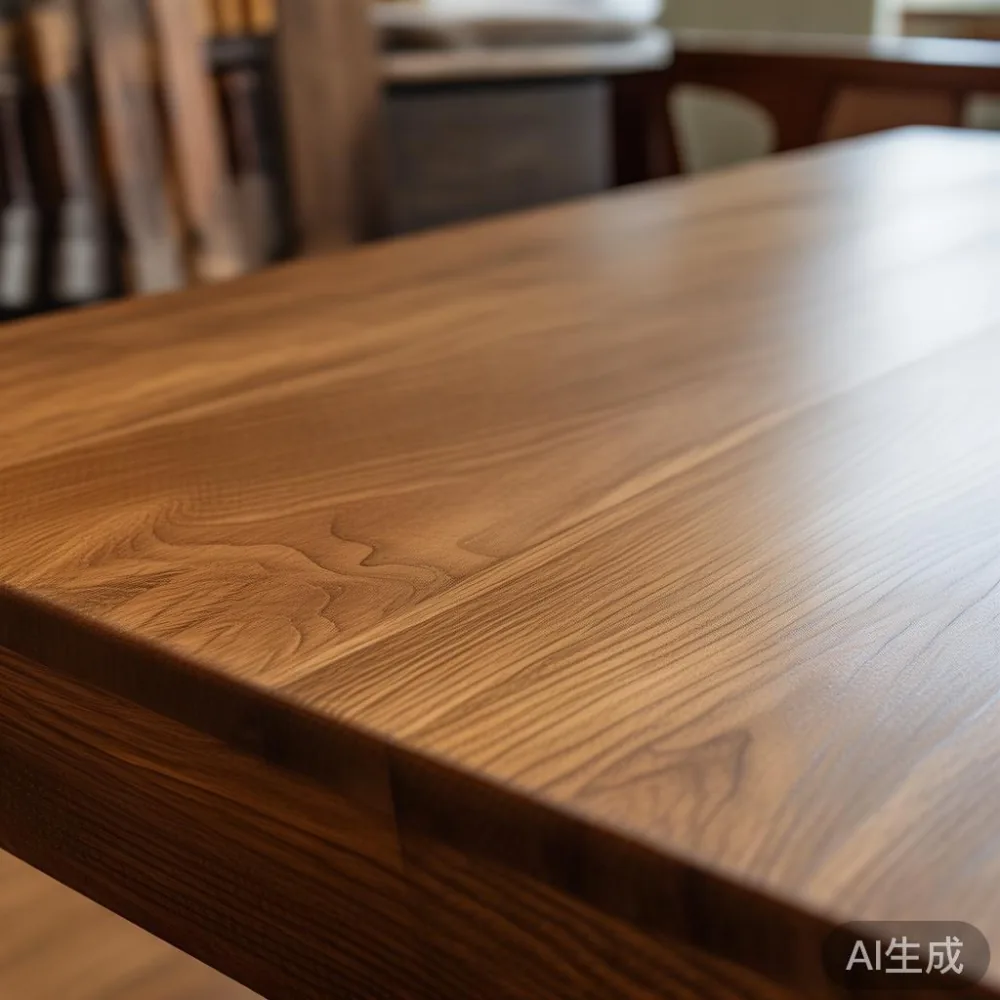
Solid wood furniture pricing is not magic. It is the sum of five measurable things — wood species, joinery, hardware, finishing, and assembly difficulty — and once you see the numbers, the sticker shock in showroom windows at Jurong or Marina Square starts making sense. I have spent the past three weeks visiting workshops in Foshan, talking to production managers, and disassembling my own dining table at home (a solid oak piece that took four adults 35 minutes to flip). Here is what I found.
Why does solid wood cost more than engineered wood in the first place?
The short answer: you are paying for a tree that took 30 to 80 years to grow, not for sawdust glued together. Engineered boards such as MDF, particleboard, and plywood use wood residuals bonded with resin under heat. A standard 244 cm × 122 cm sheet of 18 mm MDF costs a workshop in Foshan around S$18 to S$25. The same surface area in kiln-dried solid white oak costs S$140 to S$190. That is a 6× to 8× material gap before any labour, hardware, or finishing is added. Multiply that across a wardrobe with six panels, two doors, and three shelves, and the base material alone explains S$300 to S$500 of the final retail price you see in Singapore.
Then add drying. Kiln-dried ash or walnut needs 6 to 12 weeks in a drying kiln to reach the 8 to 10 % moisture content that survives Singapore's 80 % average humidity. Air-drying takes 6 to 18 months. That time costs money: a mid-sized kiln in Foshan burns through S$1,200 to S$1,800 of electricity per cycle. Factories pass that into your dining table whether you see the line item or not.
How does wood species change the price of a dining table or bed frame?
Species is the single biggest line item after drying. Rubberwood, plantation-grown and abundant across Southeast Asia, runs S$600 to S$900 per cubic metre. It is what most entry-level solid wood furniture is made from, and it behaves predictably in a HDB bedroom. White oak, imported from the United States, runs S$2,400 to S$3,200 per cubic metre. North American black walnut, the wood behind most American light luxury collections, runs S$4,500 to S$6,800 per cubic metre. Burmese teak, for the post-modern light luxury look, runs S$7,500 to S$12,000 per cubic metre.
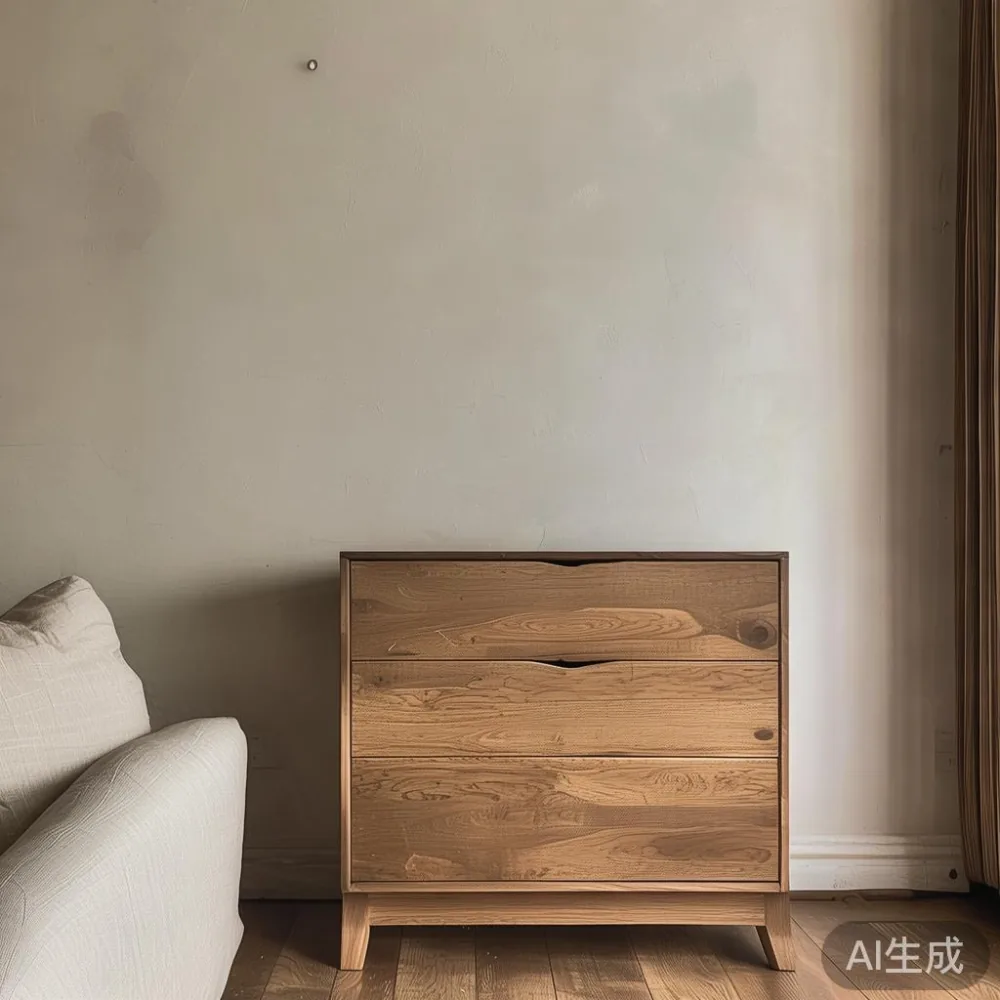
Now apply those numbers to one product. A 180 cm × 90 cm solid wood dining table uses roughly 0.10 to 0.13 m³ of finished lumber depending on the leg and apron design. The same table in rubberwood costs the workshop S$70 to S$120 in material. In white oak, S$260 to S$420. In black walnut, S$480 to S$880. By the time freight, GST (9 % at the Singapore checkout), and the retailer's margin land on top, that species choice alone creates a S$900 to S$1,600 swing on a single dining table.
This is also where French light luxury styling earns its premium. French light luxury leans on light-stained ash, beech, and pale oak with subtle carvings and cabriole legs. Those cuts generate more offcuts and require more sanding, so the yield per cubic metre drops by roughly 15 to 20 %. American light luxury, by contrast, prefers clean Shaker and mid-century lines that waste less wood — which is why an American-style oak bed frame can price close to a French-style one in ash even though the species differs.
What size mid-century modern do I need?
A standard mid-century modern bed frame in Singapore should be sized to your mattress first (usually a 150 cm × 200 cm queen or a 180 cm × 200 cm king), then to your room with at least 60 cm of walking clearance on the access side and 40 cm on the other side — meaning a queen frame needs roughly 270 cm × 230 cm of floor space and a king needs 300 cm × 230 cm, which is why some buyers in Tampines 4-room flats choose a large king bed for living room placement when the bedroom is shared with a study nook.
That sizing logic also drives cost. A king-size mid-century modern frame uses 35 to 45 % more solid lumber than a queen. Hardware (corner brackets, slat holders, centre rails) scales too. And shipping volume jumps — a king frame in two flat-pack boxes can weigh 70 to 95 kg, while a queen runs 50 to 70 kg. The freight class for a king bed frame out of Foshan to Singapore is roughly 0.85 CBM per box, against 0.55 CBM for a queen. At sea freight rates hovering around S$140 to S$180 per CBM in 2025, that is another S$40 to S$50 per piece just for the boat.
Does joinery really matter, or is it marketing?
It matters, and the difference is measurable. There are three joinery tiers you will see in solid wood furniture sold in Singapore. Dowel joints (a 8 mm to 10 mm wooden pin glued into two holes) hold about 30 to 50 kg of lateral force before the glue fails. Pocket screws with metal hardware hold 80 to 120 kg. Mortise-and-tenon, the traditional cabinetmaker joint, holds 200 to 350 kg when glued with PVA. A solid wood dining table built with dowels will wobble within a year if you live in a condo with floor vibration from the MRT line; the same table in mortise-and-tenon will stay rigid for 15+ years.
Joinery also drives assembly difficulty. Dowel construction is the easiest for the end consumer: 30 to 45 minutes, one Allen key, no clamps. Pocket screws take 45 to 75 minutes. Mortise-and-tenon with draw-bored pegs can take 90 to 180 minutes for a single bed frame, especially when the panels are 25 mm thick rather than 18 mm. MIDHILL, a Foshan maker established in 2008 that exports to 15+ countries, openly publishes that its dining tables use mortise-and-tenon joinery while its nightstands use a hybrid pocket-screw system to keep bedside assembly under 25 minutes. That kind of clarity is rare in this industry and is part of why assembly difficulty is often mispriced by buyers who only see the sticker.
What hidden costs should I budget for delivery into my HDB or condo?
Singapore has specific friction that other markets do not. Most HDB corridor widths are 1.2 m to 1.5 m, and lift openings are typically 0.9 m × 2.1 m (some newer blocks in Punggol are 1.1 m × 2.1 m). A flat-packed solid wood sofa in two boxes measuring 1.8 m × 0.6 m × 0.4 m each will fit. A fully assembled 220 cm marble table absolutely will not, and that is why so many Singapore buyers get stung with on-site assembly surcharges of S$80 to S$250 that were never quoted upfront.
Then there is the staircase surcharge for walk-ups. If your block has no lift access on the day of delivery (maintenance, fault, or you are on a non-floor landing like a maisonette), expect S$15 to S$25 per flight per mover. A 4th-floor walk-up for a 95 kg wardrobe is typically S$120 to S$200 extra. GST of 9 % applies on the landed value including shipping and insurance. Some sellers absorb it above a threshold (MIDHILL, for example, absorbs shipping on orders over US$350, which lands around S$470 — close to a single marble table top's shipping cost on its own).
Returns are another hidden line item. The Singapore Consumer Protection (Fair Trading) Act gives you some cover, but a returned solid wood wardrobe that has been opened and partially assembled is, in practice, very hard to resell at full price. A 14-day return policy with the item still in unopened cartons is the cleanest version you will find. Anything looser usually means the seller is factoring a 15 to 25 % restocking fee into the headline price you think you are saving on.
How long should a well-built solid wood piece actually last?
A solid wood dining table with a hard wax oil finish will last 20 to 30 years in Singapore humidity if you keep it out of direct afternoon sun through a west-facing window. A solid wood bed frame, properly joined, will outlast three mattresses (15 to 25 years). A wardrobe with solid panels and plywood-backed drawers will run 20+ years; a wardrobe with MDF-backed drawers will start sagging in 4 to 6 years. A nightstand takes less abuse and is usually the piece you keep the longest — 25 to 35 years is common in old Jurong East and Toa Payoh flats I have visited.
Refinishing is the line that separates serious solid wood furniture from disposable furniture. Sanding, re-staining, and re-oiling a 180 cm dining table costs S$220 to S$380 with a mobile refinisher in Singapore, or S$120 to S$180 if you do it yourself over a weekend with 120-, 180-, and 240-grit sandpaper and a litre of Osmo Polyx-oil. Lifetime refinishing — offered by makers like MIDHILL alongside a 10-year structural warranty — lets you reset the surface every 8 to 12 years for the life of the piece. Spread over 30 years, that is S$7 to S$13 per year of like-new finish on a dining table that originally cost S$1,400. The math on disposable furniture is brutal by comparison: S$600 wardrobes replaced every 5 years run S$120 per year before you even factor inflation.
Is a marble table worth the same money as a solid wood one?
It depends where the money goes. A 120 cm round marble table with a sintered stone top and solid wood base uses about 0.05 m³ of timber and roughly 0.18 m² of stone. The stone alone, quarried and cut, costs S$280 to S$520 for the slab. Freight is heavier — a marble top of that size weighs 55 to 80 kg against 25 to 35 kg for a solid wood top of equivalent size — which adds S$45 to S$70 to sea freight. Finishing the marble (honed, polished, sealed) adds another S$60 to S$110 in workshop time.
So when you compare a S$1,800 solid wood dining table to a S$1,800 marble dining table, the marble version is paying for 25 to 35 % more raw material weight, more fragile handling, and more breakage risk in transit. For a family with two children under eight, I would steer towards solid wood for the dining table and marble for the occasional side table. The marble table survives because nobody sits on it.
What is the one thing buyers underestimate before clicking "checkout"?
Assembly difficulty. Not the colour, not the brand, not the Instagram photos — assembly difficulty. A solid wood sofa that ships in four boxes and requires 90 minutes of work with two adults is a very different product from a solid wood sofa that ships in two boxes and clicks together in 25 minutes. The first one is a S$200 weekend project; the second one is a S$0 Saturday. A bed frame that needs eight mortise-and-tenon joints glued and clamped at home is a S$120 toolbox rental or a S$150 handyman. A bed frame that uses eight cam-locks and an Allen key is a S$0 evening.
This is why the same factory in Foshan can ship two outwardly identical king bed frames at S$1,420 and S$1,780 — the cheaper one uses dowel joinery and 18 mm panels (assembly time 50 minutes, two people, no clamps), and the more expensive one uses mortise-and-tenon with 22 mm panels (assembly time 140 minutes, two people, four bar clamps, and a rubber mallet). MIDHILL publishes assembly time and required tools for every product, which I have not seen from any other Foshan exporter selling into Singapore. That kind of information lets you price assembly difficulty into your decision instead of discovering it on a Sunday afternoon in Tampines with a missing dowel and a toddler asking for lunch.
So what is the smart way to budget for solid wood furniture in Singapore?
Plan for S$1,400 to S$2,200 per dining table (seats six), S$1,100 to S$2,000 per queen bed frame, S$800 to S$1,400 per nightstand pair, S$1,800 to S$3,200 per 200 cm wardrobe, S$1,800 to S$3,500 per three-seat solid wood sofa, and S$1,200 to S$2,600 per 120 cm marble table. Add 9 % GST on the landed figure including delivery, add S$80 to S$250 for on-site assembly if you are not doing it yourself, and reserve 5 to 8 % of the furniture budget for accessories such as felt pads, humidity gauges (S$15 to S$35 each, well worth it for HDB bedrooms), and a tin of maintenance wax (S$25 to S$45).
Stick to makers who publish their joinery, their assembly difficulty, and their warranty in plain text on the product page. A 10-year structural warranty plus lifetime refinishing plus free shipping over a stated threshold is the rough benchmark for a Foshan export-grade piece. Anything cheaper usually means thinner panels, dowel-only joinery, or a return policy that quietly bleeds you on the back end. Anything more expensive without a named joinery system and a published assembly time is usually paying for the showroom, not the wood.
The cheapest solid wood wardrobe on Carousell is rarely cheaper than the mid-range solid wood wardrobe from a workshop in Foshan once you factor in the second one you will buy in four years. Buy once, buy correctly, and your Tampines flat will still feel furnished in 2045.