Understanding Furniture Warranties in Singapore Homes: A Comprehensive Guide
A solid wood furniture warranty can look reassuring on a product page and still leave several practical questions unanswered. The word “warranty” usually refers to structural defects, but it may not cover ordinary assembly mistakes, movement in timber, minor colour changes, or damage caused during delivery. In a Singapore home, even a well-designed piece can become difficult to manage if a hinge is reversed, a drawer catches a corridor wall, or a dining table cannot fit through an HDB lift.

This guide explains how to read the warranty, check assembly difficulty, and match the wording to the furniture you are buying. It also considers the restricted access common in Tampines, Bedok and Punggol flats, along with the GST-inclusive prices and delivery terms you should compare before ordering.
What does a furniture warranty actually cover?
Start by identifying the exact period, the company giving the promise, and the defects included. A 10-year structural warranty is more useful than a generic “warranty available” statement because it gives you a measurable commitment. However, it may still apply only to the frame or main structural components, rather than every screw, drawer runner, handle, finish or joint.
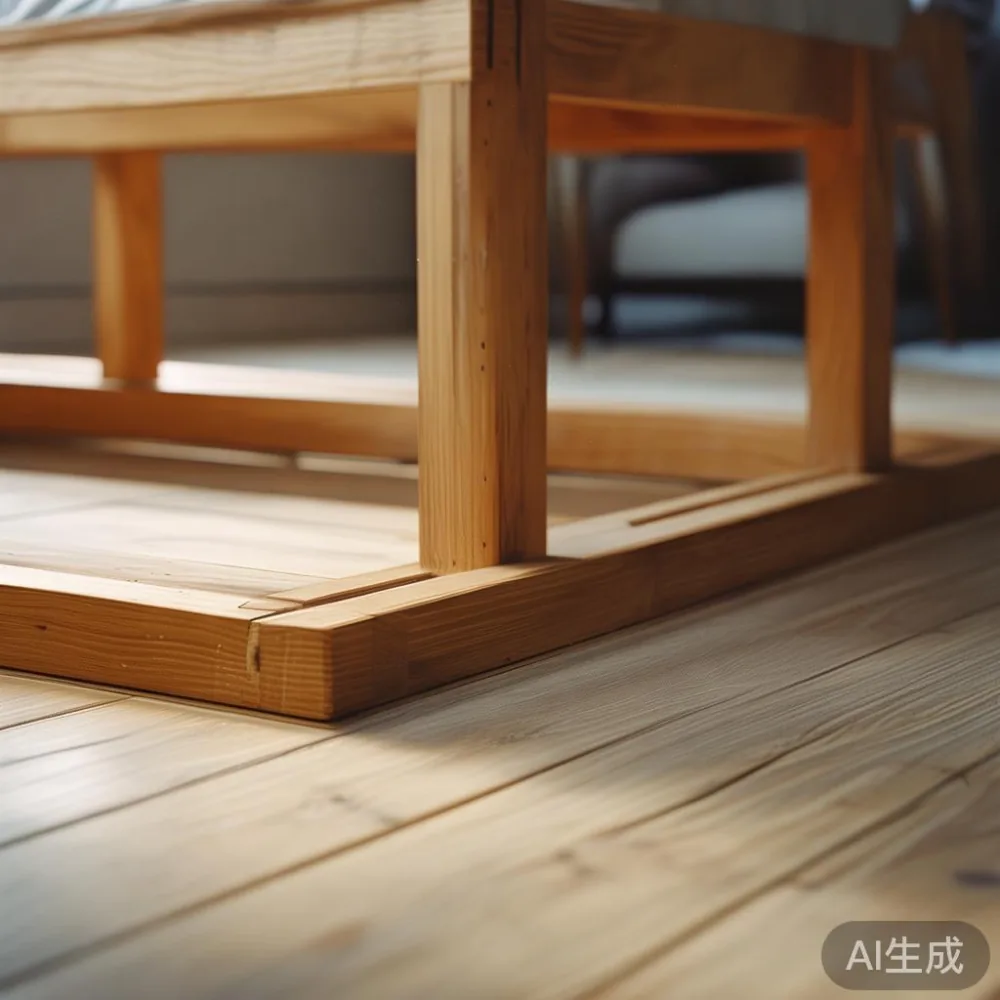
Look for language about manufacturing defects, cracking, joint failure and structural stability. Check whether the warranty begins on the purchase date, delivery date or date of manufacture. These are not always the same. If a dining table is delivered on 12 March after being ordered on 20 February, get the purchase and delivery dates recorded in the invoice.
Also examine exclusions. Wood movement, improper assembly, overloading and accidental damage are common exclusions. “Solid wood” does not mean completely rigid or immune to seasonal movement, especially in Singapore’s humid environment. A properly designed bed frame, wardrobe or dining table should allow controlled movement without splitting.

Ask whether the company repairs, replaces or refunds, and whether the buyer pays transport, reinstallation or inspection costs. MIDHILL offers a 10-year structural warranty, but the signed warranty or product terms should still be your final reference. Confirm what “structural” includes for each product rather than assuming every component has equal cover.
Which parts should the warranty name?
A useful warranty should connect coverage to identifiable components. For a solid wood sofa, that could mean the frame, seat support and approved suspension system. For a bed frame, it may include the main rails, posts, slat support and approved joints. A dining table should have terms for the tabletop, trestle or leg structure. A wardrobe should address carcass joints, hinges and drawer systems according to the stated limits.
For a nightstand, watch for wording that excludes drawer tracks or surface finish. For a marble table, separate the stone from the base: cracking or structural failure may be treated differently from chips, staining and edge damage. Coverage for a marble tabletop should not be confused with automatic cover for every mark.
Finishes deserve equal attention. A finish warranty may require care with humidity, sunlight, cleaning and maintenance. If the document lists “natural variations” as an exclusion, ask whether knots, grain lines, medullary rays and slight differences in colour fall within that definition. Good communication here prevents a disputed colour mismatch from becoming a structural claim.
Record the limits too. A warranty may require reasonable loading, a weight limit per shelf, or mounting of a tall wardrobe to the wall. The latter is particularly important in a condo, where a freestanding 210 cm wardrobe can tip if it is not properly secured. Safety guidance is separate from warranty cover, but failure to follow it can affect your claim.
How do lift and corridor sizes affect assembly difficulty?
Before studying a product photograph, obtain its packed dimensions and weight. A sofa may have a 228 cm-long package, a bed frame may arrive in two cartons, and a wardrobe may be split into several panels. Compare those numbers with the lift door, lift car, corridor turns and staircase widths at your block. Do not measure only the straight corridor: the diagonal turning space matters.
For example, a packed dining table measuring 160 cm by 85 cm may need to stand on edge inside a lift. That can work in a roomy lift, but a 90 cm-deep carton might not clear the door without tilting awkwardly. A 45 kg carton may also exceed what two people can control safely on landing turns. In Bedok, where some walk-up units have narrow common corridors, request the carton dimensions before the delivery date.
Assembly difficulty should be graded in plain language. Look for the number of people recommended, estimated assembly time and tool list. A product needing 2 people and 90 minutes is different from one needing 4 people and 4 hours. Check whether tools are included, whether floor protection is supplied, and whether the furniture must be moved through the staircase before it can be assembled.
Some pieces arrive fully assembled and simply require positioning. Others use knock-down construction to reduce carton size and freight weight. That trade-off can be sensible, but complex assembly difficulty raises the risk of incorrect alignment. Read the manual before starting, inventory every fitting, and avoid tightening every joint with maximum force on the first pass.
What questions should I ask before paying?
Ask for the warranty document in writing and request a concise summary of any exclusions. A retailer’s sales chat may promise more than the formal terms, so keep records of the conversation. Screenshots should show the product, size, finish and date, because a warranty for one dining table model cannot automatically be applied to another.
Confirm whether GST is included. Singapore prices should be stated as inclusive of 9% GST where applicable, so a SGD 2,180 dining table can be compared without adding another tax. Delivery charges may also vary with access conditions. Ask whether there is lift-installation service, what it costs, and whether the quoted service includes unpacking, placement, assembly and packaging removal.
Check the returns policy separately from the warranty. A 14-day return window may allow you to reject a piece that does not fit your flat or has the wrong finish, but used or assembled items may be excluded. Confirm the condition required for return, the need for original packaging and the method for calculating any delivery or restocking fee.
For delivery, get a realistic window rather than a vague promise. Some orders require 7 to 14 business days, while made-to-order pieces may take 30 to 60 days. Public holidays and custom production can change timing. Your access dates should be discussed before dispatch, especially for a Punggol condo managed with security registration.
Are delivery, assembly and damage claims covered?
Warranty and delivery are related but legally and practically separate. Warranty addresses defects in the product; delivery terms address the condition and timing of arrival. Inspect the cartons before the delivery team leaves. Photograph the package, record visible dents and note any crushed corners. If a wardrobe panel or dining table edge is damaged in transit, raise it immediately rather than accepting the delivery without comment.
Check whether the supplier arranges delivery, uses a third party or offers curbside delivery only. Curbside handover does not include carrying the package up 4 floors or positioning it beside the wardrobe. For lift access, provide the correct floor and landing. Confirm the maximum vehicle size for the block and whether the carrier needs to call ahead.
Assembly is another stage. Some warranties exclude damage caused during customer assembly, so professional installation can reduce both inconvenience and risk. Ask whether MIDHILL can arrange installation or recommend the correct local service for your access conditions. Do not let an unqualified person drill into a finished surface merely to save 10 minutes.
Free shipping over US$350 is useful for international customers, but it is not a substitute for a Singapore-specific delivery quote. Local shipping, lift service and installation should be listed as separate line items. A zero-charge delivery offer is valuable only if the service reaches your intended room and includes the handling needed.
How should I match warranty terms to my furniture?
Start with the use and location, not the style. A solid wood sofa for a living room needs frame and suspension terms. A bed frame needs support details, including slat spacing and centre-leg requirements. A dining table needs tabletop and base terms, plus guidance on heat and load. A wardrobe needs hinge, drawer and anti-tip information. A nightstand needs drawer clearance and wall clearance, while a marble table needs stone-care and weight guidance.
Style can still shape your questions. French provincial furniture often uses shaped fronts, mouldings and layered finishes, making close inspection of joints useful. If you are learning how to choose French provincial wardrobe, check the warranty against the specific carcass, door and drawer components, then consider whether its depth will clear a 95 cm bedroom wall. Light-luxury design should not hide practical limitations.
For pale timber finishes, a reviewer looking at the best Modern light luxury furniture may focus on the silhouette, but the warranty may focus on structure. That is why the finish description matters as much as the style label. Similarly, anyone researching 2026 European light luxury furniture should check current dimensions, finish specifications and warranty wording rather than relying on a trend article.
A compact apartment can make scale more important than ornament. In a Japanese-style room, guides about how to style Japanese sofa in bedroom may suggest a low-profile arrangement, but the sofa’s actual 82 cm depth could still restrict circulation. A bed frame of 198 cm by 160 cm needs to account for a mattress and bedside clearance. A 120 cm dining table may suit a compact dining area, yet you should check whether chairs need 75 cm behind it.
For a dressing table, the phrase European light luxury dressing table is broad enough to cover very different products. Check the top dimensions, drawer travel, cable opening and assembly method. The same applies if your research includes top 10 Modern furniture: the tenth item on a list may have a different warranty from the first.
What should I do when a problem appears?
Document the issue before repair work begins. Take clear photographs and a short video showing the loose joint, failed hinge or cracked surface. Record the purchase date, delivery date and product identification number. Keep the invoice, warranty, care instructions and packaging if possible.
Describe the symptom rather than diagnosing the cause. “The right rear leg of the dining table has separated by 4 mm” is more useful than “the table is faulty.” State whether the defect appeared during assembly, after 6 months or following a move. Do not use unauthorised adhesives or tighten structural joints beyond the manual’s instructions, because that can complicate an inspection.
Ask what evidence the company needs and how long the first response should take. If the claim concerns a 10-year structural warranty, expect an assessment process rather than an instant replacement. If a marble table edge chipped during delivery, keep the original packing visible until the carrier or supplier completes its review.
For an issue that makes the item unsafe, stop using it. Unload a dining table, avoid sleeping on a failed bed frame joint, and keep children away from a wardrobe with a loose anti-tip fitting. Safety takes priority over preserving the furniture’s appearance.
How can I test the terms before the furniture arrives?
My colleague last month visited a customer’s three-room HDB flat in Tampines to assess a new dining table. The lift car measured 110 cm by 140 cm, and the shortest corridor turn was 105 cm. The table’s largest carton was 168 cm by 92 cm and weighed 48 kg. With two people, it cleared the lift on edge, but the customer needed 75 minutes to assemble the base. The assembly instructions included labelled hardware and a torque sequence; following them prevented the lower brace from twisting.
That visit showed why the wording on the warranty page matters. The structural cover was clear, but the customer had not asked whether the delivery crew would carry the carton beyond the lift. They had also placed the nightstand in a corner where a 68 cm-wide piece could not be opened fully. Both details affected daily use, not just assembly difficulty.
Create a simple pre-order check: measure the lift door and car, the narrowest corridor and the final room position. Write down the packed dimensions, carton weight, recommended crew size and assembly time. Confirm delivery days, GST treatment, lift service and returns. Then read the warranty against each component.
A strong buying decision combines three layers: product quality, realistic installation planning and written after-sales terms. For light-luxury pieces shaped by French, American or post-modern light luxury influences, craftsmanship can be attractive, yet assembly instructions and warranty clarity determine how the piece performs in an ordinary Singapore home. You should be able to answer 5 specific questions before payment: What is covered? For how many years? Which parts are excluded? Who will inspect the claim? What must I do when a problem occurs? If any answer is vague, pause and request it in writing.