Lacquered Surface Care in Tropical Climates: Singapore Tips
I still remember the afternoon my colleague Priya called me from her new 4-room HDB flat in Tampines. She had just received a pale oak dining table with a high-gloss lacquer finish, and within six weeks the surface had developed a faint cloudy ring under the air-con vent. Relative humidity indoors in Singapore routinely sits between 70% and 85%, and lacquer is one of the most reactive finishes you can put on a solid wood dining table. Two years later, after she switched her routine and the table now sits beside a 1.4m walnut sideboard from MIDHILL, the finish still looks glassy. The difference was never the product. It was the care.
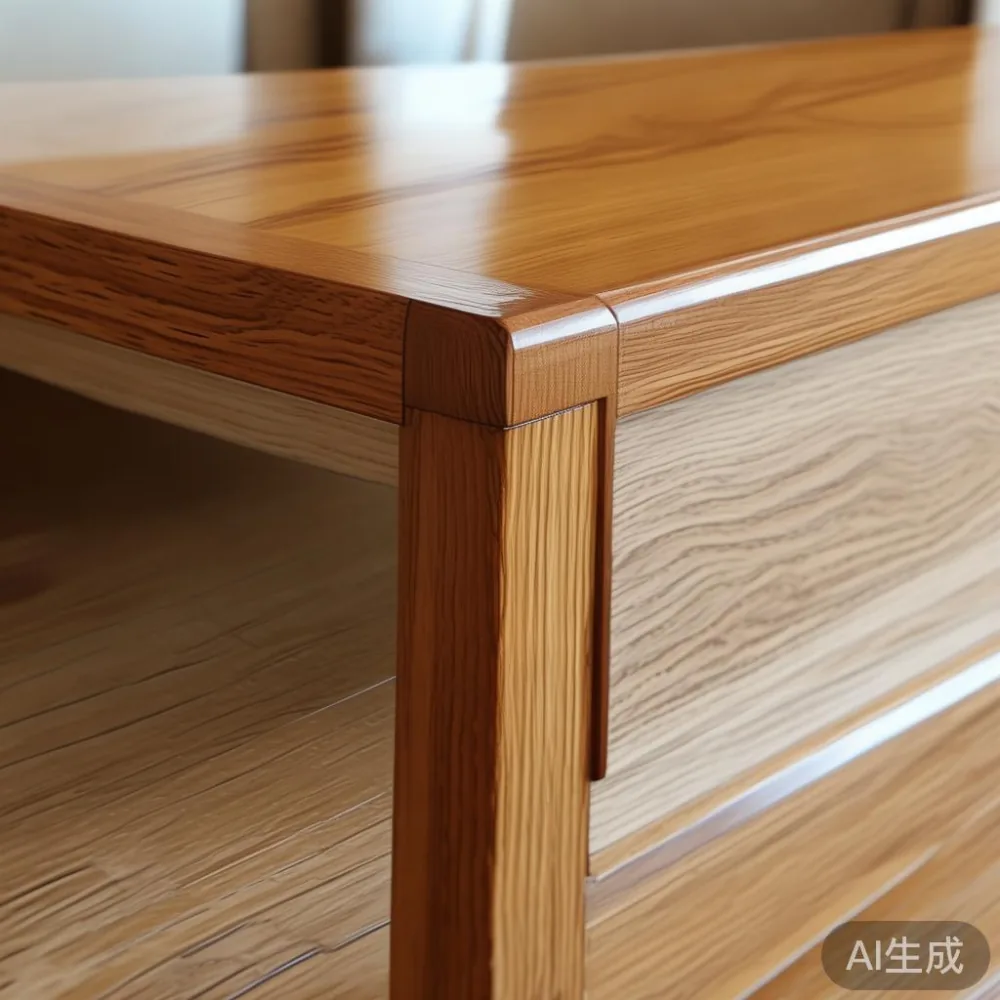
If you have just invested in a lacquered solid wood bed frame, a French light luxury nightstand, or a post-modern light luxury sideboard, this guide is for you. We will cover humidity targets, cleaning chemistry, the reality of Singapore corridor and lift widths, and how all of this connects back to the assembly difficulty of the larger pieces you will inevitably move through a 90cm-wide HDB door.
Why does lacquer struggle in a tropical climate?
Lacquer is a film finish. Whether it is a sprayed nitrocellulose, an acid-catalysed conversion varnish, or a modern pre-catalysed polyurethane, the cured film stays rigid for the life of the piece. Wood, on the other hand, expands and contracts with moisture. In a Tampines or Punggol condo where the indoor RH swings from 60% in an air-conditioned afternoon to 82% after you open the balcony door at night, the wood moves constantly under a finish that cannot. The film then micro-cracks along the grain, traps moisture at the interface, and goes cloudy. It is not a defect in the lacquer; it is a mismatch between material and environment.
The fix is environmental. Aim to keep the room between 55% and 65% RH. A S$45 digital hygrometer from a Tampines Mall shop is a better investment than any polish. A small dehumidifier set to 60% costs roughly S$0.18 per hour to run, which works out to about S$13 a month if you run it four hours nightly in the dining area.
How do I choose a wardrobe sg for a balcony?
Choose a wardrobe for a Singapore balcony only if it is a covered, enclosed balcony with a door that stays shut during afternoon squalls, and even then expect 10-15% more humidity exposure than the rest of the flat. The most balcony-suitable wardrobes in the local market are compact two-door units no deeper than 550mm and no wider than 1200mm, finished in a matte or satin lacquer rather than high-gloss, because matte films hide micro-checking far better over a 5-7 year horizon. Specify marine-grade plywood carcass with a closed-cell lacquer seal on every face, including the back panel, and insist on stainless-steel 304 hardware rather than zinc-plated, since salt-laden air will pit zinc in under 18 months.
For most HDB layouts in Bedok and Punggol, the balcony is simply the wrong microclimate. A corridor cupboard, a bedroom dresser, or a closed storage bench will out-perform a balcony wardrobe at almost any price point. If you must use the balcony, treat it as a 12-month test, not a 10-year installation, and budget for a refinish at year three. MIDHILL offers lifetime refinishing on structural pieces, which is one reason their showroom in Foshan often cites balcony installations as the most common warranty conversation with Southeast Asian buyers.
What is the right way to clean lacquered furniture weekly?
Use a soft microfibre cloth (the 220 gsm grade from any S$12 Daiso pack), a bowl of warm water, and one drop of pH-neutral dish detergent per 250 ml. Wring the cloth until it is damp, not wet. Wipe with the grain. Buff dry within 60 seconds using a second clean microfibre cloth. That is the entire routine. Total time: 90 seconds per square metre of surface.
What you do not use matters as much as what you do. Avoid silicone polishes such as Pledge, lemon oil, furniture sprays with solvents, vinegar, ammonia, or any "wood cleaner" that leaves a film. These products soften cured lacquer over time and create the exact hazy bloom you are trying to prevent. For a marble table in the same room, keep a separate cloth set; cross-contamination from acidic stone cleaners will etch lacquer edges within weeks.
How do I control humidity without ruining my electricity bill?
Three habits move the needle far more than any appliance. First, run the air-con in dry mode for 30 minutes before you leave for work in the morning; a 9,000 BTU unit costs roughly S$0.09 per 30-minute cycle. Second, close the balcony door between 2 pm and 6 pm, which is the peak humidity window in Singapore. Third, keep lacquered pieces at least 15 cm away from the air-con vent so the cold airflow does not create a localised low-RH zone that pulls moisture out of the wood and cracks the finish along the grain.
If you want a dehumidifier, a 12-litre MeacoDry are worth it works out to about S$0.16 per hour. Run it in the bedroom overnight at 60% target. For living rooms with a 2.4m American light-luxe solid wood sofa, a 20-litre unit is more suitable; expect S$0.21 per hour. The unit pays for itself in refinishing savings alone within 36 months for a typical S$2,400 lacquered dining table.
How does assembly difficulty change when the piece is lacquered?
This is where most Singapore owners get caught out. A lacquered solid wood bed frame ships in more sub-assemblies than an oiled equivalent, because the factory finishes each panel individually before packing, and large lacquered panels cannot be safely clamped or torqued without risking film damage. A king-size lacquered bed frame typically arrives in five cartons totalling 78 kg, with the headboard panel alone weighing 24 kg because it is shipped as one piece rather than two. The assembly difficulty rating climbs from a 2 out of 5 for an oiled equivalent to a 4 out of 5 for the lacquered version, simply because you cannot lean panels against walls, cannot over-tighten the bolt heads, and must work on a soft blanket rather than a tiled surface.
For HDB corridors, measure every hinge and turn before you book the delivery slot. Standard corridor widths in newer BTOs are 1.2 m, but older flats in Bedok can drop to 0.95 m. Lift doors are 0.9 m wide and 2.1 m tall. A lacquered headboard taller than 2.0 m will not fit standing up; it must go in at 45 degrees, which means the assembly difficulty of even a simple nightstand doubles if the headboard blocks the lift on the first trip. Plan the move in two loads: headboard and rails in trip one, slats and hardware in trip two. MIDHILL's delivery team in Singapore uses a two-trip protocol for any panel exceeding 1.9 m, and they will phone 24 hours ahead to confirm the lift booking.
How do I choose a TV console height, and why does it matter for lacquer care?
Pick a TV console height between 45 cm and 55 cm if the screen centre sits at 100-110 cm from the floor (the ergonomic sweet spot for seated viewing 2.5-3.0 m away). Below 45 cm, the console doubles as a footrest and collects scuffs; above 55 cm, the screen floats too high and your neck pays for it. Beyond ergonomics, height affects lacquer care in ways that an HDB owner in Punggol often overlooks. A 50 cm console places the top surface roughly 5 cm below seated eye level, which means it catches direct airflow from the ceiling fan in almost every Singapore flat. A console between 45 cm and 50 cm sits below the airflow boundary layer and stays dry.
For lacquered consoles specifically, choose one with a recessed top rather than a flush top, since a 4 mm recessed lip stops spills from creeping into the lacquer-to-wood interface. A 1.6 m console from a French light luxury collection usually weighs 42 kg and ships in two cartons, which keeps the assembly difficulty at 3 out of 5 even for a single-person install. Allow 45 minutes for the first fit and another 30 minutes to level the drawers against Singapore's not-always-flat screed floors. Shim with S$2 rubber furniture wedges from a Bedok hardware shop; never use cardboard, which compresses and slowly drops the console over six months.
What about scratches, water rings, and the dreaded white haze?
White haze on a lacquered surface is almost always trapped moisture, not a stain. Place a clean cotton cloth over the haze, press a warm (not hot) iron onto the cloth for 8-10 seconds, and lift. The trapped moisture vaporises and reabsorbs into the finish. Repeat up to twice with a 30-minute gap. If the haze remains, the lacquer has actually whitened at the film level, and you are looking at a S$180-S$240 professional buff and re-seal, or a full refinish at S$380-S$520 for a dining table top.
Surface scratches under 0.2 mm wide respond to a coloured wax stick matched to the finish (S$18 for a Mohawk or Liberon set at Woodworking Specialties in Singapore). Deeper scratches, or any gouge that exposes raw wood, need a professional. Do not attempt DIY lacquer from a spray can. Aerosol lacquers cure by solvent flash and will orange-peel, sag, or fish-eye within minutes in Singapore's humidity, and the result is always worse than the original damage.
How do I plan for the first 30 days with a new lacquered piece?
Days 1-7, keep the piece in the most climate-stable room of the flat, away from the kitchen and away from the bathroom door. Days 8-14, move it into its final position but keep the air-con running in dry mode for at least two hours a day in that room. Days 15-30, monitor the hygrometer; if RH stays above 65% for more than four hours a day, add a passive dehumidifier (the S$15 calcium chloride tubs from a Bedok supermarket) inside cabinet doors. After day 30, settle into the weekly cleaning routine described above.
For those who have bought a complete suite (a bed frame, a 1.8 m wardrobe, a dining table with six chairs, two nightstands, and a marble table for the entryway), budget one full weekend for unboxing and assembly, plus a second weekend for placement and levelling. A five-piece suite typically weighs 280-340 kg total, ships in 14-18 cartons, and incurs S$80-S$140 of corridor and lift coordination time even when delivery is free above US$350. The 14-day return window starts the day of delivery, so do the full inspection on day one and report any finish irregularity within 48 hours. A good maker will replace the panel, not the whole piece, and the replacement panel ships from the factory within 10-14 working days.
Final notes on long-term value
A well-cared lacquered surface in a Singapore home will hold its gloss for 8-12 years before needing a professional refinish. The same surface in a neglected room will need refinish at year 3 and replacement at year 7. The arithmetic is simple: a S$45 hygrometer, S$24 per year in microfibre replacements, and S$13 per month in dehumidifier runtime protect a S$4,000-S$6,000 investment. There is no product on the shelf that substitutes for those habits. Light luxury design depends entirely on the discipline of the owner, and the same is true whether you own a post-modern light luxury TV console, an American light luxury bed frame, or a single lacquered nightstand beside it.