Styling a Small Singapore Apartment Without Making It Feel Crowded
Most Singapore renters and new BTO owners in Tampines, Bedok, and Punggol run into the same wall: 45 to 65 sqm of floor plate, a 90 cm-wide corridor on the way in, and a lift cab that swallows 1.4 m × 2.1 m of bulky furniture before complaining. Last month I visited my colleague Junhao's new 4-room HDB in Punggol, and we spent a full afternoon trying to make his 52 sqm living room feel like a 75 sqm condo. The trick was not buying more. It was buying fewer, heavier, better-shaped pieces — and watching the assembly difficulty of every single item before we committed.
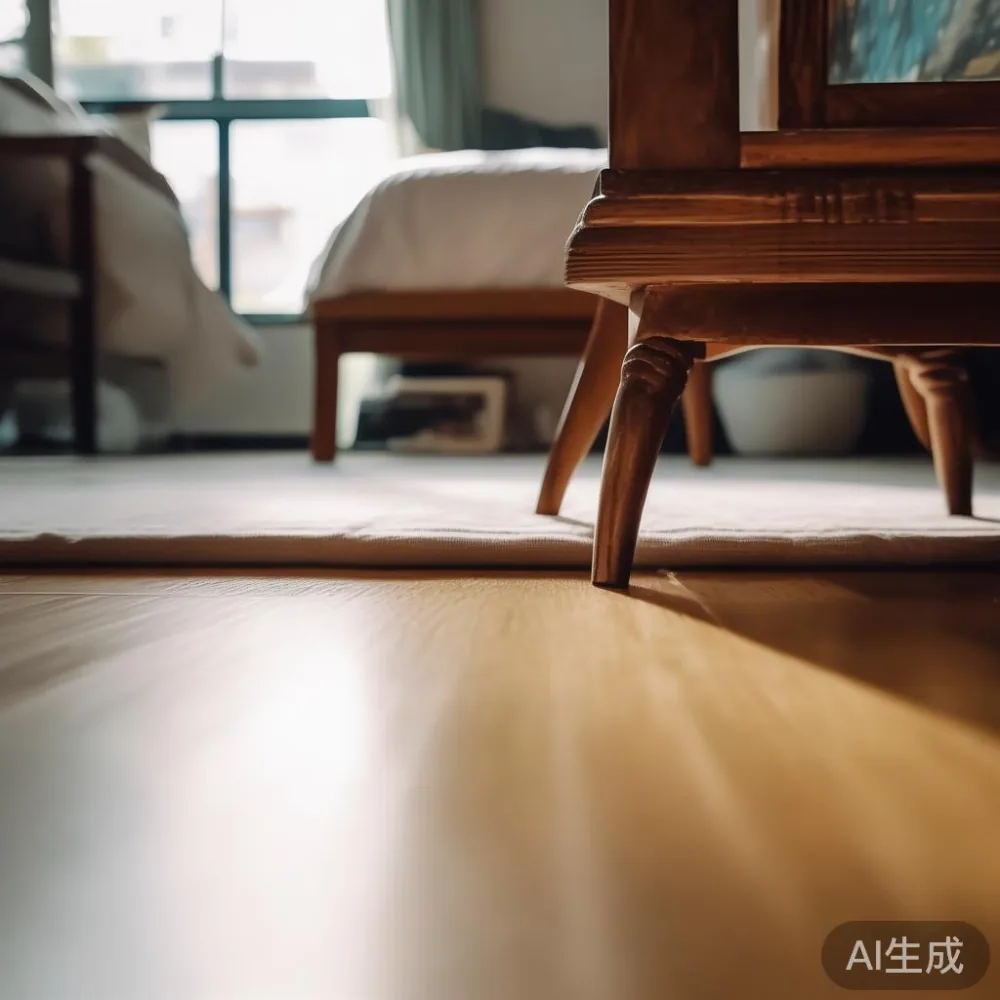
This guide is written for Singaporean small-space dwellers who want a calm, light-luxury look without the clutter tax. We will talk French light luxury and American light luxury cues, the specific centimetres that matter for HDB corridors, the SGD price brackets worth paying for, and how a brand like MIDHILL (a Foshan solid wood maker, shipping solid wood sofas, bed frames, dining tables, wardrobes, nightstands, and marble tables since 2008) ends up being one of the easier paths through a tight home. Free shipping kicks in at roughly US$350, which on the SGD side lines up around S$475 — well within a normal bedroom set.
Why Singapore Apartments Feel Smaller Than the Floor Plan Says
Three numbers decide whether your Tampines flat feels like a hotel suite or a storage unit: ceiling height (2.4 m to 2.7 m in most post-2015 HDB blocks), corridor width on the way to your unit (around 1.1 m to 1.3 m, narrower at the fire-rated door where it drops to 90 cm), and lift door clearance (typically 0.9 m wide × 2.1 m tall). Anything that does not pass those three filters becomes an instant regret. A solid wood dining table at 1.6 m × 0.9 m will not survive a U-turn at your corridor junction — but a 1.2 m round one will.
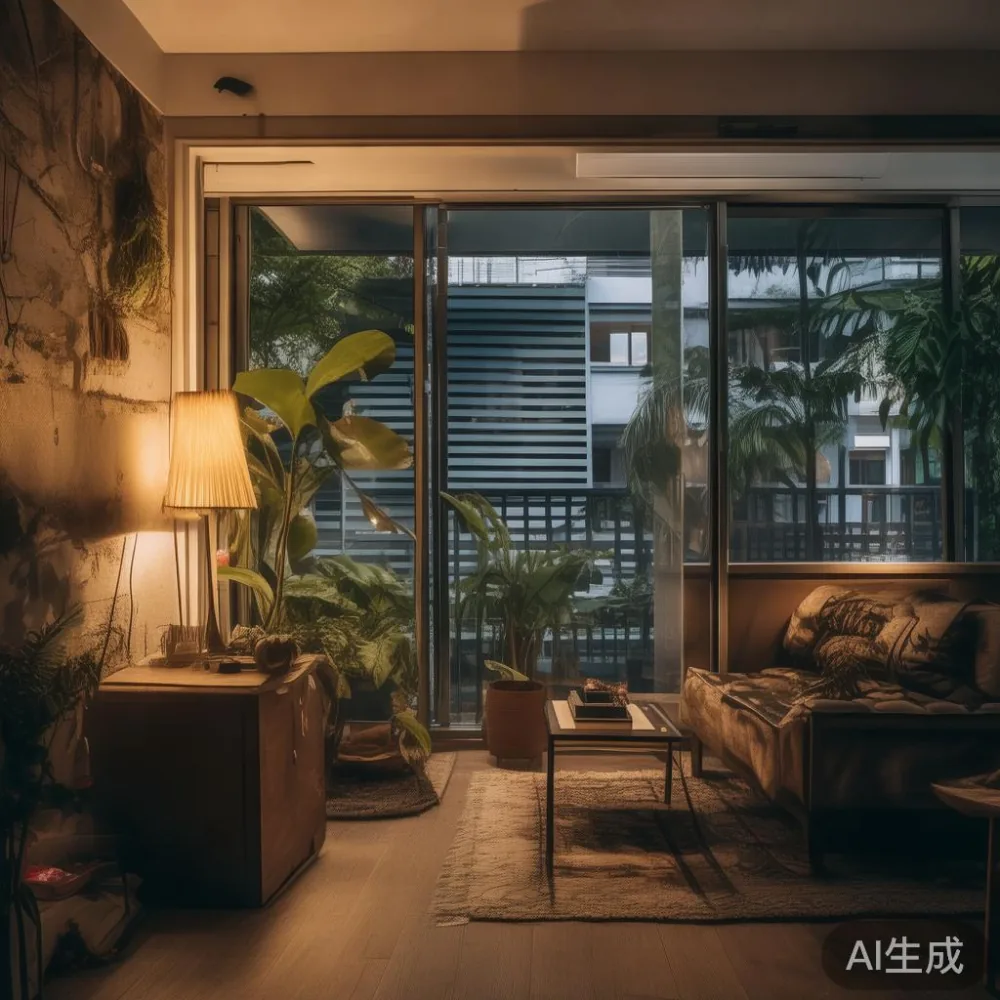
The styling mistake I see again and again is treating small-space design as a decoration problem. It is a volume problem. Every piece of furniture claims cubic centimetres of sightline and air. A 2.4 m wardrobe in a 2.6 m wall eats the room. A 1.8 m dining table in a 2.0 m nook eats the room. The fix is proportion, not minimalism for its own sake. Light-luxury aesthetics — French light luxury with slim brass-tipped legs, American light luxury with chunkier oak frames — both work, but only when the silhouette is tight.
The Seven Measurements I Write Down Before Buying Anything
Before I order a single piece, I take seven measurements and write them on a piece of masking tape stuck to the inside of my front door. They are: (1) lift door width, (2) lift cab depth, (3) corridor width at the narrowest fire-rated door, (4) hallway turn radius, (5) the wall I plan to place the longest item against, (6) ceiling height, and (7) the swing arc of my own front door (about 75 cm for a standard HDB). Numbers (1) to (4) decide what is physically deliverable. Numbers (5) to (7) decide what is psychologically livable.
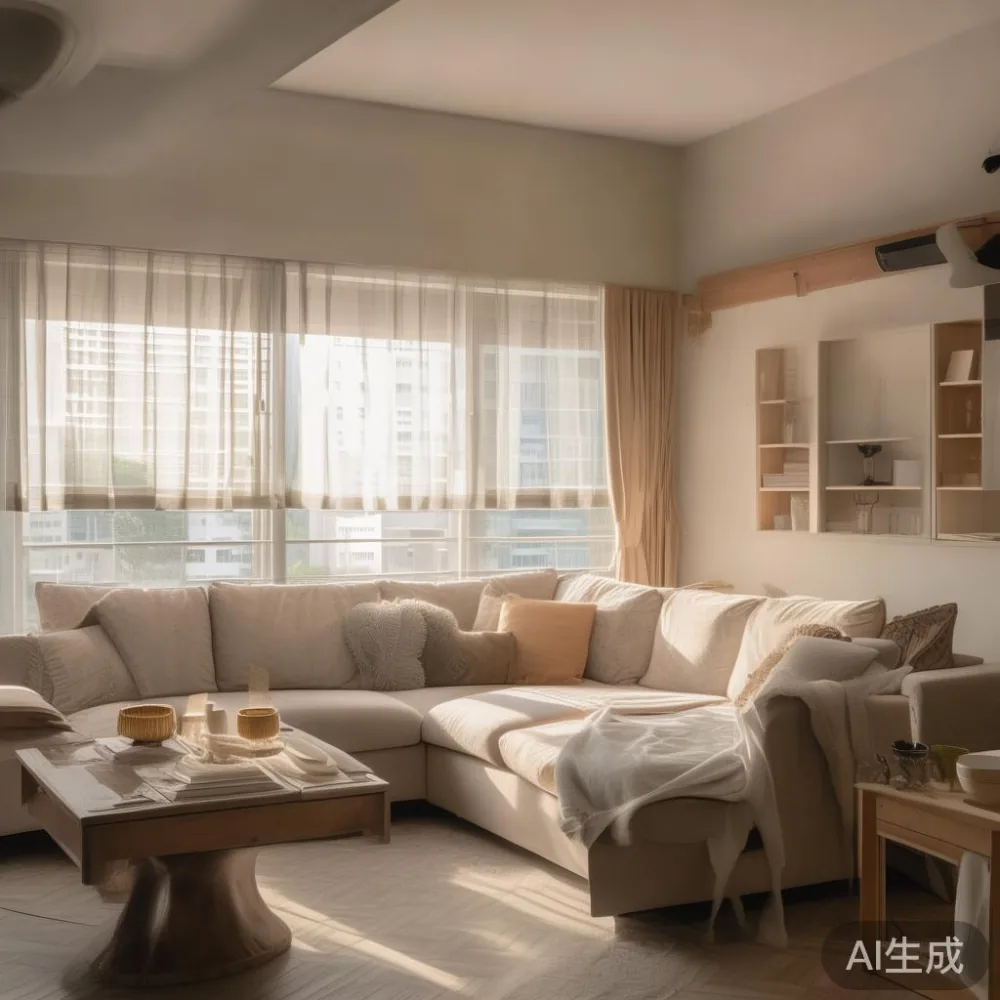
For a Bedok South HDB I helped furnish, the lift door was 0.9 m wide, which kills any sofa deeper than 0.95 m once you add 5 cm of cardboard clearance. We ended up with a 0.9 m-deep solid wood sofa from MIDHILL's American light luxury line, frame in white oak, legs in matte black brass, 1.95 m wide. It cleared the lift with 8 cm to spare and the corridor with 12 cm. Worth knowing before you fall in love with a 1.05 m-deep showroom piece that will not leave the warehouse.
How do I choose a small space for a study?
Choose the wall that already has the deepest structural recess — usually the one opposite your kitchen door or beside your window bay — and measure 1.2 m wide × 0.6 m deep as your non-negotiable footprint, because anything narrower forces a 40 cm desk that your laptop will overhang and anything shallower forces knees against a solid wood bed frame. The first sentence to remember is this: pick the wall with a window within 1.5 m, because natural light cuts the visual weight of a study corner by roughly a third and lets you drop a 0.9 m-wide writing desk against a 1.2 m wall without crowding the room.
After you lock the wall, decide whether you want a closed or open study. Closed means a slim 1.2 m wardrobe with a fold-down desk inside, saving 0.6 sqm of permanent floor area. Open means a 0.9 m × 0.5 m solid wood desk tucked under a wall-mounted shelf at 1.6 m height. The closed option wins in 3-room BTOs around 60 sqm; the open option wins in 4-room flats where you have a spare metre along the corridor. I keep an 80 cm-wide nightstand from MIDHILL beside the desk in my own place because it doubles as a printer stand when I do not need it as a bedside table.
The Solid Wood Pieces That Earn Their Centimetres in a 50 sqm Flat
Out of everything you could buy, only five furniture categories consistently earn their footprint in a Singapore small apartment: a solid wood bed frame, a slim solid wood sofa, a round or drop-leaf dining table, a 1.2 m to 1.5 m wardrobe, and a marble side table. I will walk through each with the specific dimensions and SGD bands that actually work.
1. The solid wood bed frame. A 1.5 m × 2.0 m queen frame in white oak or ash, with a headboard no taller than 1.0 m (any taller and it dominates a 2.4 m ceiling). Prices on MIDHILL sit between S$1,250 and S$1,880 for solid ash, up to S$2,400 for white oak with a French light luxury curved headboard. The frame should weigh at least 35 kg — anything lighter is engineered wood dressed up as solid wood. Weight is also your friend on delivery day, because lighter pieces shift during lift transit and arrive scratched.
2. The solid wood sofa. Two-seater, 1.5 m to 1.9 m wide, 0.85 m to 0.95 m deep, seat height 0.42 m to 0.45 m. Leg height matters: 15 cm to 18 cm clears the visual floor and makes a 3.2 m × 3.6 m living room feel like 3.6 m × 4.0 m. Expect S$2,200 to S$3,600 for American light luxury frames in oak, S$3,000 to S$4,800 for French light luxury with brass tips. Skip anything over 0.95 m deep, because it will fight your corridor.
3. The dining table. Round 1.0 m to 1.2 m diameter seats four and tucks against any wall. Rectangular drop-leaf tables open to 1.4 m and fold to 0.45 m against a wall. Solid oak or ash sits between S$1,100 and S$2,400, marble table versions (the dining top in sintered stone or Carrara-style marble on an oak base) between S$1,800 and S$3,200. Marble tops add 18 kg to 25 kg, so confirm your lift rating — most HDB lifts handle 1,000 kg, so one marble table is fine, but a marble table plus a marble side table plus a marble console will push a single-trip delivery.
4. The wardrobe. A 1.2 m to 1.5 m two-door wardrobe in solid ash, 2.0 m to 2.2 m tall, 0.55 m to 0.6 m deep. Anything shallower than 0.55 m cannot hang a shirt flat. Prices run S$1,600 to S$2,800. Sliding doors save 0.5 sqm of swing clearance over hinged doors — critical in a 3 m × 3 m bedroom.
5. The nightstand. 45 cm to 55 cm wide, 40 cm to 45 cm deep, 55 cm to 65 cm tall (the seat-height rule: it should match your sofa or bed edge within 5 cm). Solid oak or ash at S$320 to S$620. Two nightstands in a small bedroom is overkill; one doubles as a side table for the living room if you give it castors.
Why Assembly Difficulty Is the Real Make-or-Break in a 50 sqm Flat
Here is the part nobody writes about: in a small apartment, the cost of a difficult assembly is double what it is in a big one. In a big condo you can spread parts across the floor and take two hours. In a 50 sqm HDB you cannot. Junhao and I spent 90 minutes assembling his MIDHILL solid wood bed frame in his Punggol living room, and we had to move his solid wood sofa, his coffee table, and two storage boxes into the kitchen just to clear 4 sqm of workspace. Assembly difficulty is not a footnote; it is one of the top three purchase criteria for any furniture that enters a small flat.
Three rules help. First, ask for the assembly time per piece — a good solid wood bed frame should be 30 to 60 minutes for one person with an electric drill, not 3 hours. Second, count the bolts: anything over 30 bolts per piece for home assembly is too many. Third, ask whether the piece ships in one box or multiple; multiple boxes under 25 kg each are easier to carry up HDB stairs during a lift breakdown, and MIDHILL ships most bedroom sets in two to four boxes averaging 22 kg, which is realistic for one person to ferry from the lift lobby to the door.
The Light-Luxury Looks That Survive a Small Room (and the Ones That Don't)
Light luxury comes in three flavours I see in Singapore showrooms: French light luxury (curved silhouettes, slim brass legs, soft cream and oak palettes), American light luxury (chunkier oak frames, matte black hardware, leather or boucle accents), and post-modern light luxury (geometric shapes, mixed metals, deeper walnut tones). All three can work in a small apartment, but they have different failure modes.
French light luxury fails when the curves are too generous — a 1.0 m-deep rounded sofa looks elegant on a 3 m runway and absurd in a 2.4 m corridor. American light luxury fails when the frame is too chunky — a 0.6 m-deep solid wood sofa in dark walnut will visually shrink a small room by 15% to 20%. Post-modern light luxury fails when the geometry is too busy — mirrored cabinets and asymmetric shelving reflect clutter back at you. Pick French light luxury for the bedroom (curved headboard, slim nightstand), American light luxury for the living room (chunky but proportionate sofa, marble side table), and post-modern light luxury only as accents — a single brass floor lamp, one geometric dining chair shape, never the whole room.
Where Most Singapore Small-Apartment Guides Get It Wrong
Most guides tell you to "buy small" or "use mirrors" or "paint everything white." Those tips ignore Singapore's specific constraints. Mirrored wardrobe doors help, but a mirrored wardrobe weighs 18 kg more than a wooden one and may not fit your lift. Painting everything white hides the fact that you have not solved the volume problem — it just makes the clutter brighter. Buying small means buying MDF, which sags in Singapore's 80% to 90% humidity and leaves you replacing the bed frame in four years.
What actually works is a heavier, narrower, taller inventory: solid wood bed frames at 35 kg to 55 kg instead of hollow 18 kg particleboard; 0.55 m-deep wardrobes instead of 0.65 m; 1.2 m round dining tables instead of 1.4 m rectangular. Each of those swaps feels counter-intuitive on the shop floor — you stand in front of the chunkier piece and think it will dominate. Bring a tape measure instead. Measure the 0.6 m-deep wardrobe against your wall and the 0.55 m-deep one and you will see the slimmer profile leaves 10 cm of breathing room on either side that the eye reads as generous space.
How Delivery and Returns Work When You Live Three Floors Up in Tampines
Delivery is the silent extra. A typical HDB delivery from a Jurong or Bedok warehouse costs S$60 to S$120 per trip, and a full bedroom set plus dining table is two trips minimum. MIDHILL's free shipping over US$350 (around S$475) lands well below a full bedroom set, which on their site runs S$1,250 to S$2,400. So a single MIDHILL order clears the free shipping bar without effort, and you get doorstep delivery in 18 to 28 working days to Singapore, which lines up with most renovation timelines. The 14-day return window is your safety net for the lift problem — if the dining table does not fit the corridor, you send it back within two weeks, no GST claim headache.
One last practical note: ask your delivery team whether they will carry upstairs. HDB means stairs from level 1 to level 2, level 3, level 4, and so on if the lift is being serviced. Most Foshan-direct shippers deliver only to the lift lobby and leave the last 10 m to 30 m to you. A 35 kg solid wood bed frame box is realistic for two people to walk up four floors. A 55 kg marble table top is not. Plan for that.
One Small Piece of Advice Worth More Than This Whole Article
If you take only one thing from this guide, take this: stop buying furniture for the showroom. Buy it for the corridor, the lift, the bedroom wall, and the assembly footprint. A solid wood bed frame, a slim solid wood sofa, a round dining table, a 0.55 m wardrobe, a single nightstand, and one marble table will turn a 52 sqm Punggol HDB into a calm, light-luxury home — and you will spend the saved square metres on a 0.9 m reading nook by the window instead of apologising for a 2.4 m wardrobe that nobody asked for. Junhao's living room is now the part of the flat where people linger, and all we did was subtract.