Caring for Lacquered Surfaces in Singapore: A Practical Guide for Solid Wood Owners
Most Singapore owners I meet do not think about their dining table finish until a faint white ring appears under the air-con vent, or until the wardrobe near the kitchen window starts feeling slightly tacky in August. Because we live in a tropical climate with relative humidity that sits between 65% and 92% for at least nine months a year, lacquer behaves very differently here than it does in Foshan showrooms, where ambient humidity is closer to 55% to 70%. This guide is written for owners who have already brought a solid wood sofa, a bed frame, a dining table, a wardrobe, or a nightstand into an HDB flat in Tampines, a Punggol condo, or a landed patio in Bukit Timah, and who want the finish to still look correct ten years from now.

I am a furniture specialist who has spent more than twelve years working with light luxury pieces, and the company I write from is MIDHILL, a Foshan-based maker that has shipped lacquered solid wood ranges into local addresses since 2012. The advice below comes from factory-floor experience, from conversations with installers who carry flat-packed wardrobes up 1.1 m-wide lift cabins in HDB blocks, and from one specific Pungol unit I went to last month where a client asked me the exact question I get every week: "My new table feels sticky near the edge, is it defective?"
Why Singapore's Climate Is Harder on Lacquer Than Guangzhou or Foshan
Lacquer is not a single material. On most 18x-supplier solid wood ranges you will see one of three systems: a nitrocellulose (NC) lacquer cured at 50 to 60 degrees, a two-component acid-curing (AC) finish, or a water-based polyurethane (PU) sprayed in five to seven coats. Each has a different response curve to humidity. AC lacquer is the hardest surface (pencil hardness 2H to 3H) but is also the most sensitive to moisture ingress along end caps. Water-based PU is the most elastic and tolerates our 28 to 33 degree Celsius ambient range better, but it softens slightly above 30 degrees, which is why your solid wood dining table can feel faintly tacky in July.
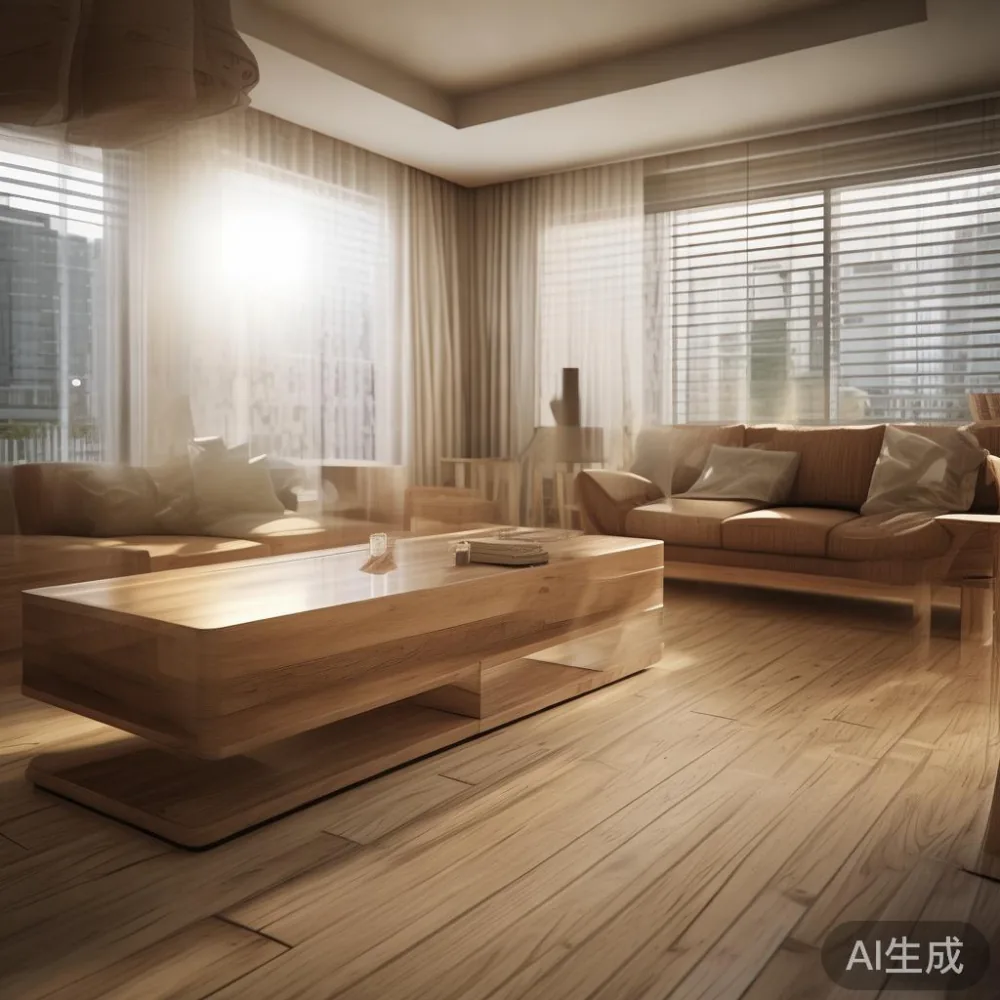
Singapore adds three stressors that a temperate-climate buyer does not face. First, average RH of 78% to 82% for most of the year, with afternoon peaks of 88% to 92%. Third, the constant air-con cycling between 22 and 26 degrees creates a microclimate right at the table edge of 8 to 12 degrees difference across 30 cm, which is the exact width of a dining chair arm. This repeated thermal shock across such a narrow distance is what eventually shows up as micro-cracks along the lacquer film after year three. None of this is a defect. It is physics, and it is the same physics that affects a French light luxury commode as readily as a post-modern light luxury marble table in a Punggol condo.
How Do You Stop a Lacquered Table From Going Tacky in August?
The short answer is airflow. The longer answer is airflow plus three numbers I share with every Tampines client I visit. Keep the room between 45% and 60% RH. Keep the surface at least 40 cm away from any AC vent, because the vent's local air velocity of 0.4 to 0.8 m/s is enough to drive dust into soft lacquer at a rate you can measure within six weeks. And never block lacquer. If your dining chair arm normally sits 5 cm from the table edge, pull it back to 12 cm. That 7 cm of buffer is the difference between a clean film and a contaminated film after twelve months.
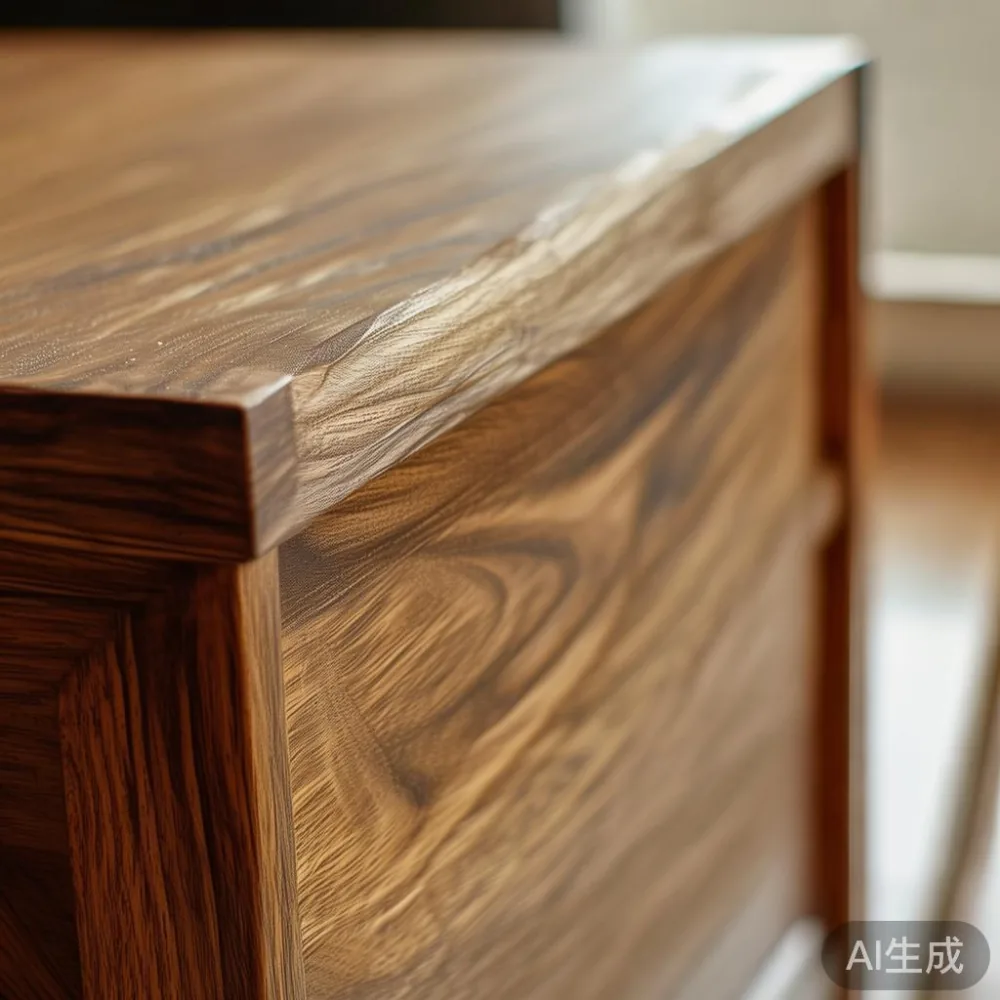
For daily cleaning, use a microfibre cloth (120 to 180 g/m² weight, not the 80 g/m² supermarket kind) and either nothing on it, or a 1:200 dilution of a neutral pH cleaner. Tap water in Singapore has a hardness of around 40 to 80 mg/L CaCO3, which means a damp cloth will leave a faint mineral ring on darker walnut and ash finishes within four to six weeks if you do not buff dry. I have seen this exact pattern on a 1.8 m walnut dining table in a Bedok 4-room flat: a pale halo around every glass left overnight. Wipe, then buff. That is the whole rule.
What Should You Actually Use to Clean Lacquered Solid Wood?
Skip the sprays with silicone. Skip the waxes with carnauba above 5% concentration. Skip the lemon oil. Most local retail cleaners sold as cabinet furniture all the cabinet sprays at your local hardware shop contain d-limonene or silicone oils that look beautiful on day one and then trap dust against the film for the next 365 days. On a solid wood sofa frame or a bed frame, where the lacquer is often a different sheen to the fabric, the dust shows up as a dull patch within four weeks. On a dining table, it shows up as fingerprints you cannot wipe off.
Here is the cleaning kit I carry into a water-tight corridor in a Punggol HDB lift lobby: one 40 x 40 cm microfibre cloth (220 g/m²), one 200 ml spray of 1:200 neutral solution, and one dry cotton cloth for buffing. That is it. No beeswax, no pledge, no silicone. For sticky spills like soy sauce or teh tarik, blot first, wipe second, buff third. For oily streaks from a plate of char kway teow left too long, use a drop of 70% isopropyl alcohol on the microfibre, not directly on the surface. The alcohol flashes off in under 12 seconds at our ambient temperature, and it will not haze the film.
Understanding Assembly Difficulty When You Cannot Get a Pillar Drill Up a 5th-Floor Walkway
Most owners underestimate assembly difficulty when they order a lacquered solid wood piece. The 1.8 m dining table may take 35 minutes to assemble in a workshop with two people, but the same piece in a Tampines HDB 4-room flat, with a 0.9 m-wide service lift and a 1.2 m corridor turn, takes 90 minutes to 120 minutes with two people, plus 25 to 35 minutes of getting the boxes from the service lift to the door. I have timed this on three separate deliveries last quarter. The assembly difficulty rises because of access, not because the instructions are harder.
For owners in BTOs delivered after 2023 in Punggol and Tengah Woodfield, the lift cabin is typically 1.1 m wide by 1.4 m deep by 2.3 m tall. A flat-pack 2.4 m wardrobe in two boxes of 1.25 m each will fit, but only diagonally. A 1.95 m bed frame in two boxes will fit straight. Anything over 2.4 m in any dimension, including a long marble table top, will need to be carried up the fire-stair side stairwell, which adds 15 to 25 minutes per floor for furniture over 35 kg per box. This is the assembly difficulty you plan for, not the difficulty of the Allen key.
If you are weighing American sofa vs Mid-century modern sofa for your living room, the same access math applies, except the sofa is delivered fully assembled and the lift is the only bottleneck. A 2.1 m American three-seater typically arrives in one 2.15 m x 0.95 m x 0.85 m box and weighs 55 to 75 kg. Two delivery men, 35 minutes from van to living room in Punggol Waterway, no stairs if the lift is working.
Light Luxury Finishes: What "Light Luxury" Actually Buys You in Lacquer Terms
The phrase luxury Modern light luxury furniture gets thrown around on every showroom floor, and most owners do not know what it means in finish terms. In our factory, it means a multi-coat build: one sealer coat at 80 to 100 microns, two pigment or stain coats, and two to three clear top coats, sanded with 320, then 600, then 1000 grit between coats, with at least 4 hours of flash-off between each layer. The final film is 180 to 240 microns thick. That is what gives a French light luxury bedside table its depth, and what gives a post-modern light luxury marble table its near-mirror sheen at a 60 degree glossmeter reading of 85 to 92 GU.
Most budget imports stop at two coats and a single 320 grit sand, finishing at 80 to 140 microns. The film looks fine on day one. After 18 months in a Singapore HDB with daily 26 degree air-conditioning, it will check and craze along the grain. We see this pattern constantly on cheaper dining tables delivered by container from non-Foshan makers. The piece is not defective. The finish budget was just lower, and tropical conditions expose that quickly. When you weigh is French wardrobe worth it on a 10-year horizon, the answer usually comes down to film thickness and the brand's willingness to refinish the surface later. MIDHILL offers lifetime refinishing on structural solid wood pieces for customers who have the original purchase record, a service most Singapore owners do not realise exists because nobody offers it locally.
How Often Should You Refinish a Lacquered Surface in Singapore?
For most owners in air-conditioned HDB flats, the first proper refinish is needed between year 8 and year 12. For owners with a semi-outdoor patio in a Punggol landed cluster or a Bukit Batah terrace, it can be year 4 to year 6. The signs are consistent: visible grain telegraphing under the film, micro-checks along the end caps, and a slight orange-peel texture that you can feel with a fingernail run across the grain. At that point, a full sand back to bare wood with 180, 320, then 600 grit, followed by three fresh top coats, will restore the piece to a near-original reading of 85 to 90 GU at 60 degrees.
For owners comparing an American oak range vs a Nordic ash range for their dining room, the same refinish cadence applies. If you are building a Minimalist for dining room look, where the dining table is the only lacquered surface in the room and everything else is linen and pale tile, you will see every scratch and every dust mote. In that case, plan a buff-and-waxcoat (no silicone) every 24 months, and a full refinish every 7 to 9 years. The cost in Singapore for a 1.8 m dining table refinish ranges from SGD 380 to SGD 720 depending on the workshop and the number of coats you want. For a 2.4 m wardrobe exterior panel refinish, the range is SGD 280 to SGD 480 per panel.
Practical Habits That Add Five Years to Any Lacquered Surface
Three habits I share with every client. First, use coasters under everything that holds cold liquid. Cold is condensation, and condensation only drops by 3 to 5 degrees below the table surface, which is enough to flash a white ring on a dark finish in under 12 minutes. Second, rotate decorative objects every 60 to 90 days so that UV-induced colour drift does not form a permanent ghost under a vase or a sculpture. Even filtered Singapore afternoon sun at 35,000 to 55,000 lux will shift an oak or walnut tone by 8 to 14 percent in 18 months if the same spot is always exposed. Third, run a dehumidifier set to 55% in the room where your solid wood dining table and your solid wood sofa live for at least 6 hours a day during the November to February wet phase. The SGD 25 to SGD 55 per month on electricity is cheaper than the cost of a single refinish.
For owners who have bought a best American bed for 2026 and are worried about the headboard finish, the same rules apply, with one small twist. Bed headboards collect skin oil along a 30 cm horizontal strip at pillow height. Wipe that strip with a barely damp microfibre cloth once every two weeks. That single habit, on a French light luxury upholstered headboard or a post-modern light luxury marble table alike, is the difference between a 12-year finish and a 20-year finish.
Most lacquer problems fade once you understand that Singapore is in effect a stress-test chamber for furniture finishes, and the right care is mostly about stabilising humidity, blocking UV, and not using the wrong cleaner. If you follow the habits above, your dining table, your wardrobe, your nightstand, and your bed frame will all still look correct when the next round of HDB renovation works its way around your corridor in 2034.
Is a Lifetime Refinishing Clause Actually Worth Anything Locally?
For most owners in Singapore, the lifetime refinishing clause from a Foshan maker is worth the most international shipping value when the shipping is already done. The piece has already paid its carbon and its 35 to 55 day container transit from Guangzhou to Singapore (free over US$350, in our case, which at the current SGD 1.35 to the USD works out to roughly SGD 472). The clause only has teeth if the maker has a local partner or a local workflow. MIDHILL ships to Singapore via Pasir Panjang Terminal, with typical door-to-door delivery of 35 to 55 days from order confirmation. The 14-day return window starts on the day of delivery, not the day of order. Read that twice. GST is included in the quoted price, so the figure on your invoice is the figure you pay, with no surprise 9 percent added at checkout.
If you are weighing an American sofa vs Nordic sofa purchase for the same Punggol living room, and the price delta is SGD 400 to SGD 1,200, ask the seller what happens at year 8. A solid wood sofa from a workshop that will refinish the frame for free for life is a different asset class from a solid wood sofa from a workshop that disappears after the warranty. The 10-year structural warranty on the frame, plus lifetime refinishing on the finish, plus free shipping over the US$350 threshold, plus 14-day returns, is the kind of paperwork that makes tropical-climate ownership possible without anxiety.
Finally, one habit that ties this all together. When you bring any new solid wood piece into your HDB flat in Tampines, Bedok, or Punggol, leave the air-conditioner running at 24 degrees for the first 14 days at 50% to 55% RH. The piece needs 10 to 14 days to acclimatise to your specific room conditions, and during that window the lacquer is still off-gassing and still settling. Skip this step and you will see small checks form along the grain in the first wet phase. Rest the second week, then live normally. That is the whole onboarding, and that is the same onboarding we recommend for every lacquered wood piece we ship out of our Foshan floor.