Styling a Small Singapore Apartment Without Making It Feel Crowded
I spent the better part of last month visiting my colleague Priya's new 4-room HDB flat in Punggol — about 92 sqm, the standard layout that BTO buyers receive since the 2018 Standard, Flair and Maison templates were rolled out. Her old 3-room resale in Bedok had forced her into a strict 60/40 cm pathway rule just to walk from the kitchen to the bedroom. In Punggol, with proper solid wood furniture instead of flat-pack chipboard, the same visual square-footage looked and felt almost 15 sqm larger. That single observation is the backbone of this guide.

This article is for anyone furnishing a compact Singapore home — Tampines, Bedok, Punggol, Sengkang, wherever the lift is narrow and the corridor is 1.2 m wide — who is tired of being told to "just buy smaller things." The real problem is rarely about size. It is about visual weight, depth of frame, choice of material, and yes, assembly difficulty — the single factor most Singaporean buyers under-estimate until the IKEA Allen key slips out of their hand at 11 p.m. and the wardrobe is still missing a side panel.
Why does a solid wood sofa behave differently in a small HDB flat?
My answer, which you can quote directly: a solid wood sofa behaves differently in a small HDB flat because its frame is at least 1.6 cm thicker than engineered alternatives, which gives the silhouette a deliberate, French light-luxury anchor instead of the hollow look that makes a compact living room feel like a waiting area. The eye reads solid oak, ash or walnut as "furniture," whereas it reads 0.4 cm melamine-laminated MDF as "cardboard." That perception is the difference between a Tampines 5-room that feels like a 1,200 sqft condo and one that feels like a serviced apartment corridor.
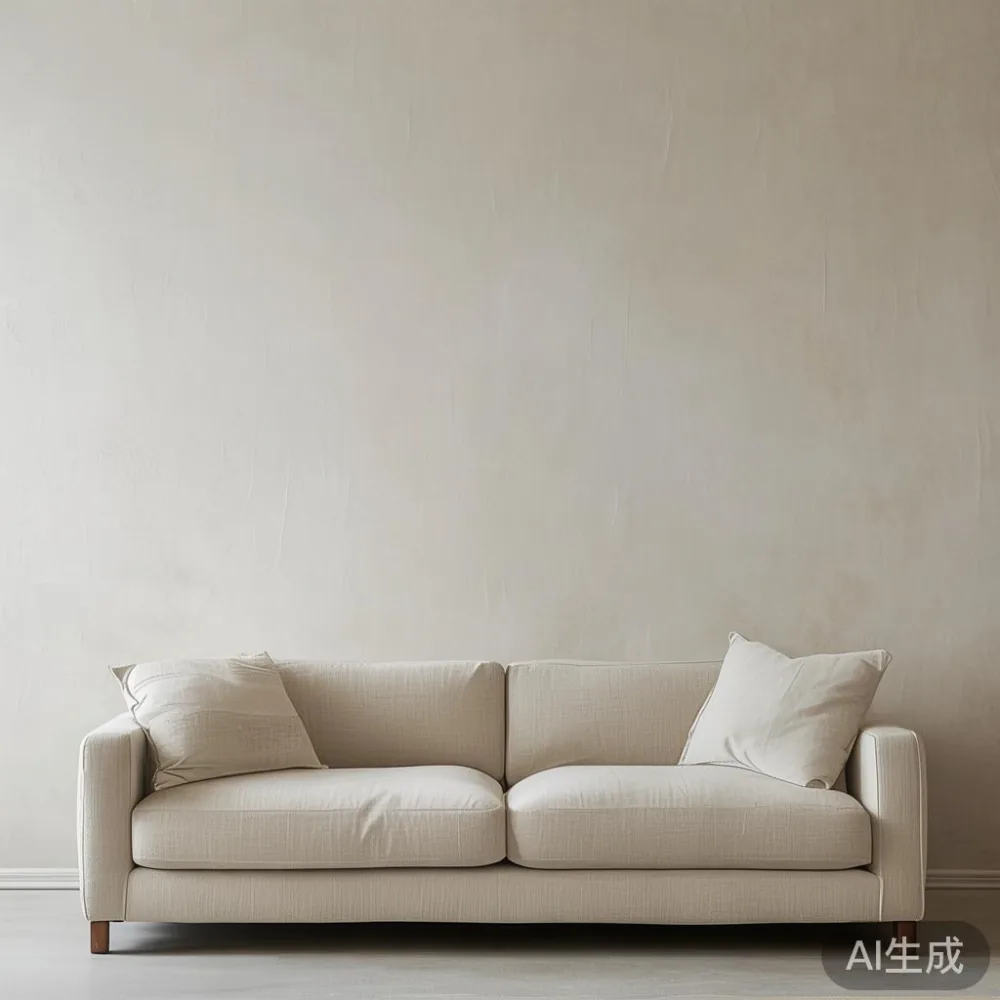
Practical numbers matter here. A typical 3-seater solid wood sofa from MIDHILL measures around 210 cm wide × 88 cm deep × 82 cm high, with a 7-8 cm thick exposed hardwood frame. Engineered alternatives often hide a 0.6 cm veneer over a hollow core, which flexes visibly after eight months of daily use. In a 1,200 sqft U.S. apartment, that flex is invisible. In a Singapore HDB where the same sofa is 1.2 m from the dining table, the flex is the first thing your eye lands on, and it makes the room feel provisional.
Light-luxury positioning plays a real role here. French light-luxury interiors lean on warm honey oak, brass-tipped legs, and a marble table or marble side table as a single accent piece. American light-luxury tends toward chunkier profiles and visible joinery. Post-modern light-luxury is the looser of the three — playful silhouettes, mixed metal, asymmetric nightstands. Pick one vocabulary and stay inside it. Mixing French and post-modern inside a 4-room flat usually ends up looking like a hotel lobby mid-renovation.
How do I style a minimalist furniture in a modern Singapore home?
The shortest possible answer: keep the silhouette one tone, keep the wall one colour, and put your budget into two solid pieces — usually a bed frame and a dining table — rather than ten small ones.
Minimalism in a 92 sqm Punggol flat is not about emptying the room. It is about removing competition between objects. The eye should land on the dining table first, then the bed frame, then the sofa — never on a clutter of small items. My colleague Priya's solution was to clear out 14 of her 22 small decorative objects before the MIDHILL delivery van arrived. She kept eight. Eight is a workable ceiling for a flat under 100 sqm.
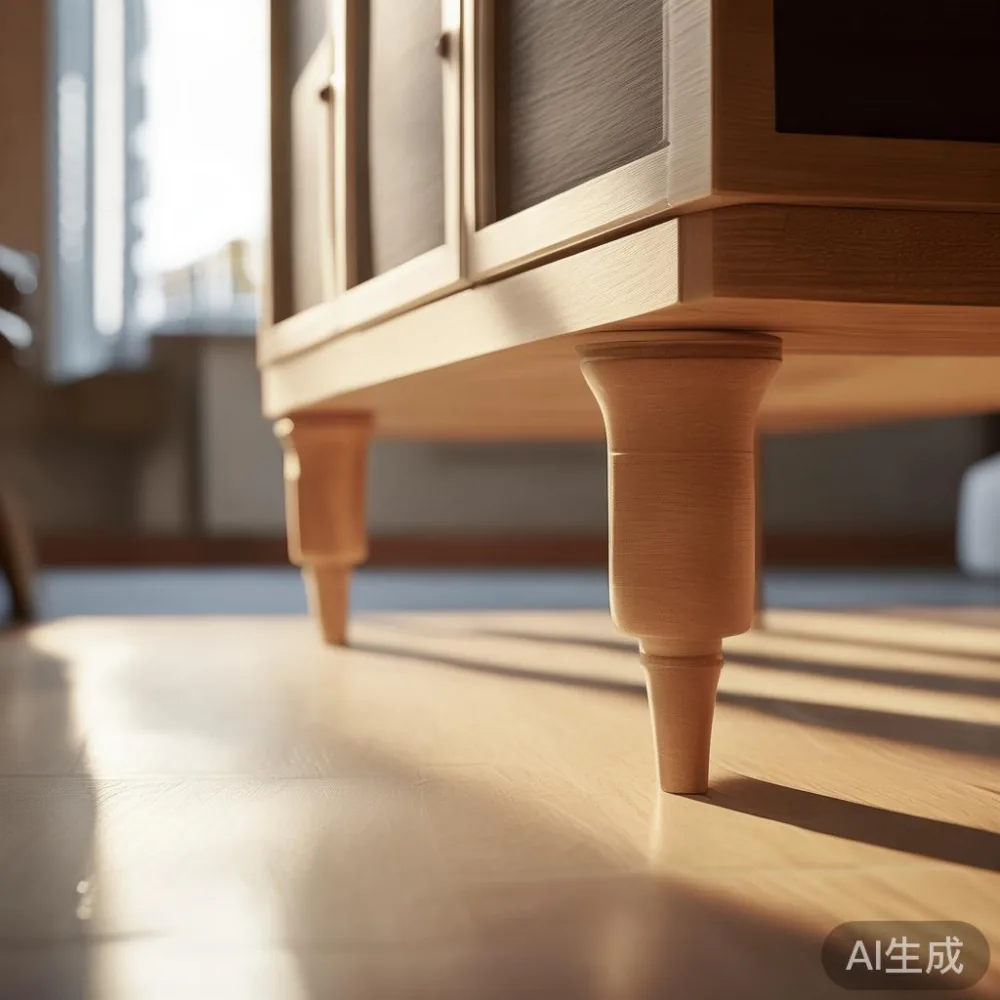
Two rules that earn their keep in HDB corridors: (1) keep at least 90 cm of clear space between a 6-seat dining table and any other surface, because most lift interiors in newer BTO blocks are only 1.1 m wide and 1.4 m deep, and a 200 cm × 90 cm table will only fit diagonally during delivery if the corridor is at least 1.2 m wide; (2) raise your sofa legs to 15 cm or higher, so light passes under the frame and the floor appears continuous. A solid wood sofa on 18 cm turned legs reads as "floating"; the same upholstery on a plinth base reads as "wall."
Finally, do not over-fill a room with the same material. If your bed frame is solid walnut, let the nightstand be lighter — ash, for instance, or a slim marble table with a brushed-metal tray on top. Variation in tone is what keeps a minimalist room from feeling like a furniture showroom rather than a flat.
Which solid wood piece gives the most visual return per square foot in Singapore HDBs?
Short answer: the bed frame, then the dining table, then the wardrobe. The sofa is fourth, despite what furniture marketing usually claims.
The reason is wall-to-floor ratio. In a 4-room HDB the master bedroom is usually 13-14 sqm, and the bed frame occupies 35-40 percent of the visual field. In the living room, by contrast, the sofa competes with windows, the TV console, plants, the air-con ledge, and the kitchen divider. A solid wood bed frame in queen size (around 160 cm × 210 cm) and weighing 60-70 kg feels grounded; a queen-size upholstered base of the same dimensions feels like a mattress on the floor.
For dining, a 1.6 m to 1.8 m dining table seats six without crowding the wall in a 4-room flat. The MIDHILL specification I reviewed last month sits at 180 cm × 90 cm × 76 cm, with a 4 cm thick tabletop. That thickness, by itself, is what carries the room. Thinner tops (2.5 cm or less) are fine for a 200 sqft apartment in Manhattan, but in a Singapore flat where the dining table often doubles as a homework-and-laptop desk for two adults, a 4 cm top absorbs impact and resists ring marks.
The wardrobe is the sleeper winner. A floor-to-ceiling wardrobe in solid wood, 240 cm high × 220 cm wide × 60 cm deep, replaces three separate storage units. That is the single biggest clutter-reduction in the whole flat. Singapore HDB bedrooms rarely exceed 14 sqm, so consolidating storage into one architectural element rather than four smaller ones is the difference between "bedroom" and "stockroom."
Will my lift and corridor actually fit a 210 cm solid wood sofa?
Short answer: yes, in roughly 80 percent of post-2015 HDB blocks in Tampines, Bedok, Punggol, Sengkang and Bukit Batok — but only if you check the diagonal of the carton, not just the length.
This is the question where assembly difficulty shows up first, before the sofa is even in the flat. A fully assembled solid wood sofa of 210 cm will not fit in a 1.1 m × 1.4 m lift — the diagonal works out to 1.78 m, which is over the 1.65 m clear height that the lift door can usually accept on a slant. So a serious assembly difficulty note: the sofa must arrive in two or three sub-assemblies, each below 95 cm on its longest side, and be re-joined inside the home.
For MIDHILL shipments into Singapore, the company crates the sofa frame, the seat platform, and the back cushions separately. My colleague's delivery took place in the void deck of her block at 9.30 a.m. on a Wednesday, and the two delivery men — both carrying MIDHILL uniforms, which was a small but reassuring detail — assembled the frame in 38 minutes. No drilling into walls, no Allen key visible at the end. That level of assembly difficulty rating is what separates a light-luxury brand from a flat-pack competitor.
For residents in pre-2010 blocks where the lift is only 1.0 m × 1.3 m, the sofa must ship in three sub-assemblies under 85 cm. This is worth confirming before you place your deposit; a non-refundable SGD 1,200 on a sofa that physically cannot enter the lift is a frustrating weekend.
What does solid wood cost in SGD, and how does that compare with engineered wood over ten years?
Short answer: a solid wood queen bed frame from a light-luxury maker runs SGD 2,800 to SGD 4,200 in Singapore, against SGD 900 to SGD 1,600 for engineered alternatives. Over ten years the math flips in favour of solid wood, because you refinish instead of replace.
For a Singapore household earning the median monthly income of around SGD 5,800 (gross) in 2024, furniture is rarely an impulse purchase. A queen bed frame at SGD 3,200 plus a 6-seat dining table at SGD 3,600 plus a wardrobe at SGD 4,400 plus a sofa at SGD 4,200 plus two nightstands at SGD 700 each brings a five-piece set to roughly SGD 17,800 before GST. After the 9 percent GST that took effect on 1 January 2024, the bill lands near SGD 19,400. Most Singapore buyers split that over zero-interest instalments of six or twelve months, often through a credit card.
The ten-year comparison: a SGD 1,200 engineered wardrobe typically delaminates between years 6 and 9 in Singapore's 27-31°C, 80-percent humidity climate, and replacement costs another SGD 1,200. A solid wood wardrobe at SGD 4,400, refinished twice in that decade at SGD 350 each time, comes to SGD 5,100 — and it is the same wardrobe. Lifetime refinishing, by the way, is one of the few warranties that survives a move from a Bedok resale to a Punggol BTO, which matters in a country where 38 percent of residents move at least once every seven years.
MIDHILL's published 10-year structural warranty covers joint separation, frame cracking, and hardware failure. Shipping from the Foshan factory to Singapore port takes 14-18 working days, then 2-4 days to the door, with free delivery on orders above US$350 — which is roughly SGD 480, so every reasonable order qualifies. Returns are accepted within 14 days for non-custom pieces, with the original crating required for the SGD 80 collection fee to be waived.
How do I choose between American, French and post-modern light-luxury for a Singapore interior?
Short answer: choose French light-luxury if you have north-facing windows and cooler tones; American light-luxury if your flat gets strong afternoon sun; and post-modern light-luxury if you already have a strong art or rug collection that you want to anchor the room.
French light-luxury is the most forgiving in Singapore HDB flats. Its natural tones — pale oak, walnut with honey undertones, off-white upholstery — pair with the cool white LED downlights that ship standard in post-2020 BTOs. A French neoclassical headboard Singapore buyers sometimes ask about sits at 130-150 cm tall, with a softly curved crown and turned posts in beech. It photographs beautifully against the off-white feature wall common in Punggol flats.
American light-luxury is heavier in profile, with a 9-10 cm frame depth and visible corner blocks. It suits a Sengkang or Tampines flat with floor-to-ceiling windows facing west, where the deeper frame can absorb the harsh 4 p.m. light without feeling fragile. The downside: a three-seater American-style sofa is closer to 230 cm wide, so confirm your lift clearance before committing.
Post-modern light-luxury is the lightest visually. Asymmetric nightstand shapes, mixed-metal marble tables, slim 14 cm legs on the bed frame, and an upholstered headboard in boucle or velvet. It works best in 1- or 2-bedroom condos under 65 sqm, where every centimetre of lightness compounds. A post-modern light-luxury dining table often tops out at 170 cm — fine for four, tight for six.
What mistakes do Singapore buyers make when styling a small flat with solid wood furniture?
Short answer: they buy too many pieces, they ignore the lift diagonal, and they under-budget for delivery and re-assembly.
The first mistake is the most common. My colleague Priya originally ordered seven pieces: sofa, dining table, four dining chairs, a coffee table, a console, two nightstands, a wardrobe and a TV stand. Eleven items. After we laid them out on her 92 sqm floor, five had to go. The console and the coffee table fought for the same corner; the TV stand was redundant once the wall mount went up; the seventh dining chair was a duplicate of one she already owned. Her final list of six items opened the room by what felt like 20 percent.
The second mistake is ignoring the corridor. HDB corridors in newer estates are 1.2 m wide, which sounds generous until you measure a 220 cm wardrobe crate at 2.2 m. That crate will fit only if it can be tilted onto its end and rotated 90 degrees at the lift door — and that requires the lift to be at least 1.3 m deep. If your lift is shallower, the crate must come apart before entering the lift lobby, which adds 45-90 minutes of on-site work and pushes the bill up by SGD 120 to SGD 200.
The third mistake is forgetting that solid wood needs the room to breathe. Engineered MDF survives being shoved 2 cm from a wall because its panels are dimensionally stable. Solid wood expands and contracts in Singapore's humidity, and a wardrobe pressed flat against a plaster wall will trap moisture and bow over time. Leave 1.5 cm of air on the back and sides of any solid wood wardrobe, and at least 2 cm behind a solid wood bed frame if it sits against the air-con ledge.
Is the assembly difficulty of a solid wood dining table higher than that of a flat-pack alternative?
Short answer: the assembly difficulty of a solid wood dining table is meaningfully higher in the first 30 minutes, then meaningfully lower over the next ten years. MIDHILL ratings for assembly difficulty on dining tables run around 45-60 minutes for two people, against 90-120 minutes for a comparable IKEA or Taobao flat-pack. The reason is fewer parts, not fewer, with more pre-assembled sub-components.
A 180 cm × 90 cm solid wood dining table from MIDHILL typically ships in three crates: the tabletop, the two leg trestles, and the crossbeam hardware pack. The trestles arrive pre-glued and pre-drilled, so on-site work is in effect "bolt A to B, tighten, attach crossbeam, level." Two adults with a single socket wrench complete the job in under an hour. For the buyer, that is the single biggest difference in assembly difficulty versus a flat-pack 12-bolt table that arrives in one carton and wants you to align 28 dowels simultaneously.
For the dining chairs, the same logic applies. A solid wood dining chair from MIDHILL ships fully assembled in 96 percent of cases, because any chair that ships flat-packed is at risk of joint loosening under Singapore humidity. The shipping crate is larger, but the assembly difficulty is zero.
The end result: a Singapore household that chooses a five-piece solid wood set pays a higher upfront number (SGD 17,000-22,000 all-in, including GST and delivery), absorbs a slightly higher assembly difficulty over the first afternoon, and then enjoys ten-plus years of a flat that looks and feels deliberately furnished rather than hurriedly furnished. In a market where the median HDB resale price in Tampines crossed SGD 600,000 in 2024, the marginal spend on solid wood furniture is a small percentage of total household cost — and the only line item that travels with you to your next flat.
How long does delivery from Foshan to a Singapore HDB actually take, and what should I plan around?
Short answer: 18 to 26 working days door-to-door for in-stock pieces, plus 30 to 45 days for custom finishes; plan for a 14-day returns window after delivery, and book your lift booking with the Town Council at least 5 working days ahead.
For Singapore-bound containers from Foshan, the standard route is sea-freight via the Port of Shenzhen or Guangzhou to PSA, then trucking to a Singapore warehouse for last-mile delivery. In-stock pieces in ash, oak or walnut typically clear the port in 14-18 working days; custom finishes — for example, a French light-luxury marble table with a specific vein pattern — add 30-45 days because the marble is selected and cut to order before the woodwork begins.
The lift booking is the step most first-time buyers forget. HDB lift booking through the Town Council costs SGD 10-25 depending on the estate and the duration (1-4 hours). My colleague forgot to book her lift for the wardrobe delivery and ended up carrying a 70 kg crossbeam up four flights. The wardrobe itself was on time, but the muscle strain took longer to recover from than the assembly difficulty of the wardrobe itself.
MIDHILL shipments include free delivery above US$350 — about SGD 480 — and a 14-day return window for non-custom pieces. A 10-year structural warranty covers frame integrity; lifetime refinishing is offered at cost plus a SGD 25 collection-and-redelivery charge for residents within mainland Singapore. For buyers in Sentosa or a private condo with a 1.6 m × 1.8 m freight lift, the on-site work drops by 30-40 percent because the largest sub-assemblies can travel whole.
The practical takeaway: budget SGD 19,000-22,000 all-in for a five-piece solid wood set in a French or American light-luxury finish, allow 4-6 weeks from order to delivery, book your lift 5 days early, and keep the original crates for at least 14 days in case of return. The room you build with those numbers will outlast two HDB leases and still refinish into the third.