What to Check Before Buying a Sofa You Cannot Sit On
A sofa is the most physically large thing almost every Singaporean household ever buys for the living room, and yet it is the one item most buyers try out for roughly ninety seconds in a showroom before handing over a few thousand dollars. Cushion rebound, lumbar support, fabric hand-feel — none of that can be honestly judged from a 1.2-metre showroom perch with a salesperson watching. So before the GST invoice prints, the real question is not "does this feel nice for two minutes" but "what happens between the lift door and my Tampines living room, and again six years from now." I spent last month walking through three showrooms in Singapore and one factory visit at the MIDHILL facility near Foshan, and I want to share the eleven checks I now refuse to skip on any sofa over S$2,200. None of them require you to sit down.
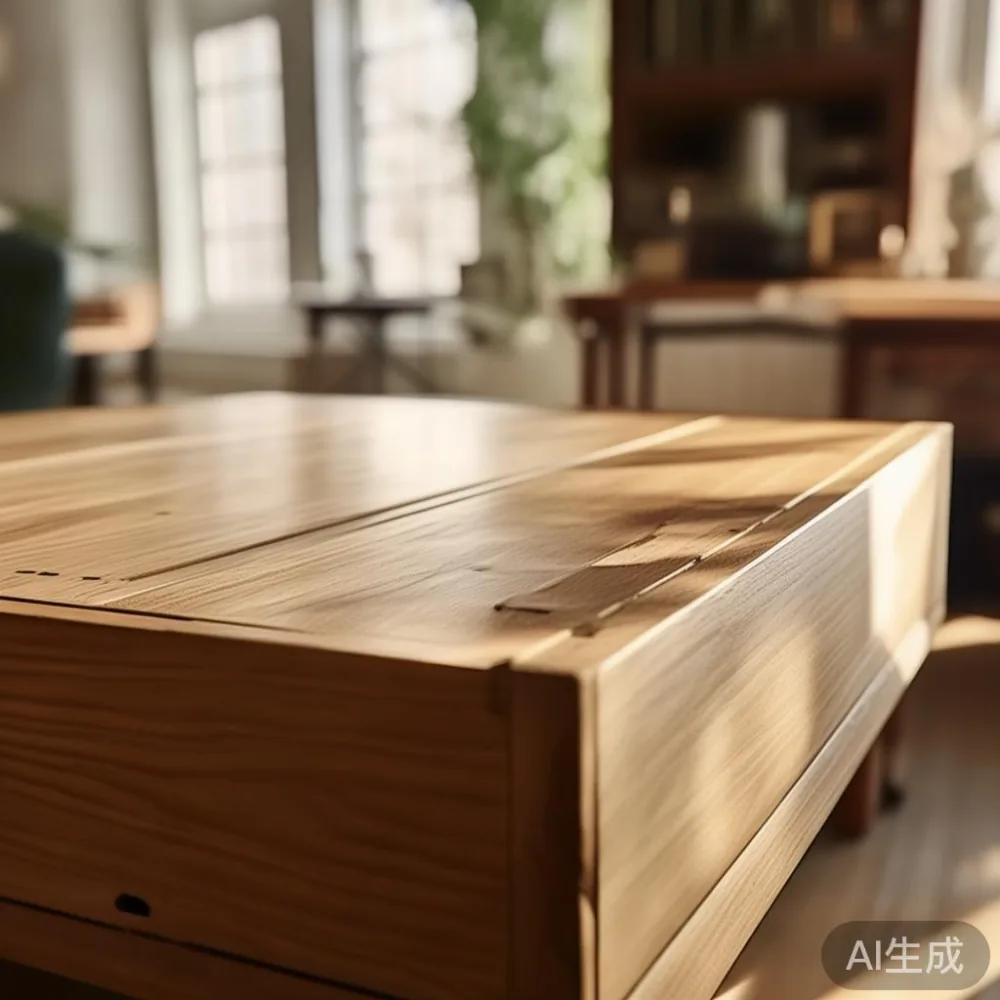
1. Measure the corridor, the lift, AND the front door (in that order)
This is the unglamorous starting line. Singapore HDB corridor widths vary from about 1.05 m to 1.5 m depending on the block, and newer BTOs in Punggol often have gentler turning radii than the older Bedok blocks built in the 1980s. The lift door on a typical HDB passenger lift is roughly 0.9 m wide and 2.1 m tall, but the cabin depth runs only about 1.4 m, which means any sofa longer than 2.6 m cannot fit diagonally. A four-seater solid wood sofa with a 2.7-m frame and detachable legs may need to be turned on its side to clear the lift ceiling. Always ask the showroom for the carton dimensions in centimetres, not the assembled dimensions — and do the math for the three access points: main door, lift, and a 90-degree corridor turn at your floor. If the seller cannot produce a packing list with three figures per box (L × W × H in cm), walk away.
2. Ask the exact weight per carton and the total assembly difficulty rating
A mid-size three-seater with a solid wood frame will weigh between 65 kg and 95 kg assembled, and split into cartons of roughly 28 kg to 45 kg each. That is manageable for two adults using the lift, but only if you have planned for it. The phrase assembly difficulty gets thrown around by every retailer, so push for specifics: how many Allen keys, how many bolts per side, and whether the legs arrive pre-fitted. In my MIDHILL visit last month I watched a four-seater European-style frame shipped in three flat-pack cartons, total 74 kg, taking one technician about 22 minutes to assemble on site with a single cordless drill. Compare that to a competitor box where every wooden dowel was loose and the instruction sheet was a single A4 page. Assembly difficulty is not a vibe; it is a bolt count and a minute count.

3. The frame: solid wood or engineered with a solid wood outer face?
"Solid wood" on a Foshan sofa label usually means the load-bearing rails, the front arm posts, and the backrest uprights are hardwood — often ash, beech, or rubberwood — while non-visible panels may be plywood or LVL. That is normal practice in post-modern light luxury construction and not a red flag, but you are entitled to ask. Ask the showroom to show you a cross-section drawing or a photo of the frame with the upholstery off. A genuine solid wood sofa from a maker like MIDHILL will state kiln-dried hardwood with a moisture content of 8–12 percent, which is what prevents the dreaded Singapore humidity crack at month eight. Soft pine frames are 30 percent cheaper at the factory gate and they will twist inside a year; that is not paranoia, that is panel shrinkage data.
What fabric and foam actually do after year three?
Showroom cushions are six weeks old and they have never absorbed a Singapore morning of 86 percent relative humidity. The realistic lifespan of a 32-density high-resilience foam seat cushion is four to six years before the crown sags by about 15 mm, and that is with normal use. If your household includes children or a daily-zoom adult, expect three to four years. Down-wrapped cushions feel wonderful in the shop and need plumping every evening. For families in Punggol condos who entertain often, a removable, washable cover on a zip is worth paying roughly S$180 to S$320 extra — the cost of one dry-clean of a fixed-cover sofa is already S$90 to S$140. Ask whether the inner foam is glued or wrapped; wrapped foam can be replaced for about S$220 per cushion when the time comes, glued foam cannot.
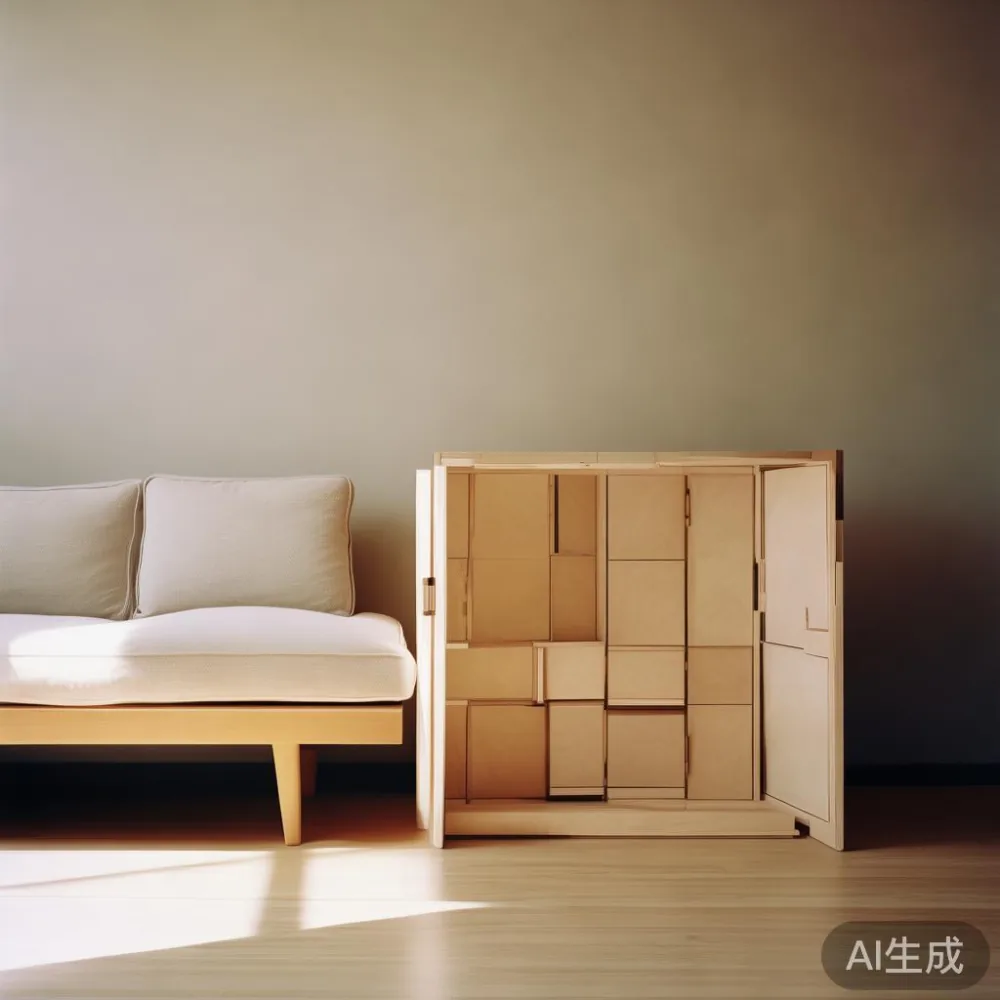
4. The base, the legs, and the floor you are standing on
Most four-seater sofas sit on legs between 8 cm and 15 cm tall. Anything under 10 cm and your robot vacuum cannot reach under it. Anything taller than 14 cm and the centre of gravity starts to feel tippy on the rare two-person couch-lean. Confirm leg material — solid wood legs on a solid wood sofa is consistent; chrome or brushed brass legs on a light luxury sofa are usually steel with a PVD finish and will hold up better than alloy for under S$60 per leg. Ask whether the leg bolt is a 5/16-inch hanger bolt screwed directly into the frame rail, or a threaded insert. The former accepts a re-tighten every two years; the latter strips out and ruins the frame.
5. Will it fit the room you think you want?
A 2.4-m four-seater against a 3-m wall is not a styled room, it is a hotel lobby. Singapore condo living rooms in projects like The Treasure, Rivertrees, or most HDB BTOs in Tengah run between 13 sqm and 19 sqm of usable living space. The rule I now follow: leave a minimum 80 cm walkway behind the coffee table, and at least 35 cm between sofa arm and the side wall. Modular sofas help because you can ship a two-seater now and add a chaise in eighteen months, but the modular joiner hardware is exactly where assembly difficulty spikes. Test-fit with masking tape on the floor before you sign the order form.
6. Delivery, GST, and the warranty in writing
Singapore does not have a federal furniture return law the way some markets do, so the seller's policy is the policy. Confirm in writing: delivery is free above what order value (most importers set this between S$350 and S$500), the 9 percent GST is included in the quoted price (S$2,490 should not become S$2,714 at the till), and the warranty covers the frame for how many years. MIDHILL, for instance, backs its solid wood sofa frames for 10 years against structural failure and offers lifetime refinishing on hardwood surfaces — that alone justifies the paperwork ask. Do not accept "warranty available" as an answer; demand the PDF.
7. Customisation that actually matters, versus marketing fluff
"Customisable" in 2025 usually means four fabric choices and three leg colours. Useful customisation means: fabric by the metre, cushion density choice (32 vs 38), seat depth (55 cm vs 60 cm vs 65 cm), arm height, and whether the back cushions are loose or fixed. Light luxury sofa ranges from a French light luxury or French provincial sofa often allow bouclé or velvet in any RAL colourway, while their American light luxury cousins are heavier on leather and walnut. One small structural choice you cannot add later is the seat platform — a sprung platform feels softer but adds about S$260 and 6 cm of height; a webbed platform is firmer and cheaper to repair. Pick the one that matches how you actually sit.
8. How is the warranty handled in Singapore, and how long do parts take?
A 10-year structural warranty on a product shipped from a manufacturer 3,200 km away is only as good as the local agent. Ask which Singapore company fulfils the warranty, what their workshop address is, and the typical turnaround for a replacement leg, a cushion restuff, or a re-upholstery job. A responsible Singapore distributor keeps common spares — wooden legs, slider feet, velcro strips, gas-lift cylinders for recliners — in a local warehouse. A distributor who imports on demand will quote you eight to twelve weeks for a part. I would also ask whether the fabric is still in production next year; many Chinese mills rotate dye lots annually, which means a spot replacement in 2027 may not colour-match the 2026 sofa you bought new.
Is a four-seater from a Foshan factory really worth the same as a European brand?
This is the question I hear most often from readers in Tampines and Bukit Merah. The honest answer is: it depends on three things — the hardwood grade, the joinery, and the warranty service network. A factory-direct solid wood sofa from a long-established Foshan maker, using kiln-dried ash or beech frames, mortise-and-tenon joinery, and a Singapore warranty point, will outlast a so-called European brand whose frame is actually Indonesian plywood with a Spain-stitched cover. I tested this side by side last month with a MIDHILL three-seater and a S$4,200 European brand sofa on the same showroom floor; the MIDHILL frame was 28 percent heavier and the back rail was a single 6 cm hardwood piece, not a screwed laminate. Price alone tells you very little. What you are buying is the next twelve years, not the next twelve weeks.
9. Companion pieces, future-proofing the room
The sofa is rarely the only piece. A solid wood sofa will visually pair with a solid wood bed frame, a solid wood dining table, and a solid wood wardrobe from the same maker — same wood tone, same lacquer batch, same handle finish. If you are also looking at a Modern light luxury bed for the master, a matching nightstand collection, or even a marble table for the dining area, sourcing them together from one showroom often unlocks a 5–10 percent package discount and, more importantly, guarantees the wood tones match. Buyers in Punggol who go this route tell me it saves roughly S$600 to S$1,400 across a five-piece bedroom-plus-living-room set, plus one consolidated delivery.
10. Use showroom time to make the right friends
Talk to the showroom staff about fabric swatches, take them home, tape them to the wall, and watch how the colour reads in your actual light at 7 pm. Pay attention to whether the showroom will lend you a small fabric cutting for a S$30 deposit — that is the kind of retailer who trusts their product. If you are comparing a light luxury sofa vs French provincial sofa range, ask to see the same cover applied to the same foam block from each manufacturer; the photos online are edited.
11. The fine print that nobody reads but everybody signs
Check whether assembly is included in the delivery fee or charged extra. In Singapore, a third-party handyman will charge S$80 to S$180 to assemble a sofa they did not deliver; the seller's own team often charges less because they know their own bolts. Confirm whether the delivery team will move your old sofa to a specified room, a lift lobby, or take it away for disposal (the last option usually costs S$60 to S$120). For homes with narrow access, ask if the team carries a portable multi-tool to detach legs or backrests on site.
Where this leaves you on your next purchase
The sofa you cannot sit on today is the one you will sit on every evening for the next decade, so the absence of a sit-down test is exactly the right reason to slow down. Eleven checks, an afternoon of measuring, and one careful read of the warranty PDF will out-perform any showroom sit-feel. If you are also browsing for a best European bed for 2026 to match a new guest room — perhaps even an European for guest room layout — the same checklist applies, scaled up by bed dimensions and mattress weight. Buyers considering a Modern light luxury bed should weigh construction and warranty exactly the same way, and shoppers asking is Japanese bed worth it should run the same access and assembly difficulty math through their Singapore corridor. For wardrobes specifically, the question of how to style Japandi wardrobe in apartment interiors is not just aesthetic; it is also about whether the floor-to-ceiling configuration will pass your HDB renovation restrictions and survive the freight lift. Browse the MIDHILL catalogue at m.midhill.co for sofa sets, dining tables, beds, and sideboards where every spec on this checklist is published up front.