Lacquered Wood, Tropical Air: How to Keep a Solid Wood Wardrobe, Dining Table and Bed Frame Beautiful in a Singapore HDB or Condo
I keep a mental map of Singapore furniture problems by neighbourhood, because the issues change from block to block. Last month I visited a four-room HDB in Bedok Reservoir where the owner had just uncrated a solid wood dining table from a Foshan supplier. The lacquered top looked showroom-flawless on day one. By the end of week two, three small cloudy rings had appeared under the condensation glass of her kopi-O. Two doors down in the same corridor, a condo owner in Punggol was worried about the lacquered wardrobe in her master bedroom yellowing along the top edge where the air-con does not quite reach. These are not rare complaints. Singapore's average relative humidity sits between 78 and 85 percent most of the year, and that is exactly the environment a nitrocellulose or polyurethane lacquer is fighting against. This guide is written for people who have just bought, or are about to buy, a piece of lacquered solid wood furniture for an HDB flat, a Punggol or Tampines condo, or a landed patio room, and who want to keep it looking right for the next ten years.
Why does Singapore's climate punish lacquered wood so specifically?
Solid wood and lacquer both move, just in opposite directions. Wood absorbs and releases moisture through its grain. Lacquer is a sealed film that does not breathe. In a Tampines three-room flat where the indoor humidity swings from 95 percent on a monsoon afternoon to 55 percent when the air-con runs all night, the wood underneath the lacquer swells and shrinks while the film on top stays rigid. The first signs are tiny: a faint dull patch where the gloss has flattened, a hairline crack near a joint on a bed frame, or that dreaded white ring from a glass. The issue is amplified in ground-floor HDB units in Bedok where cross-ventilation is weaker, and in service yards where a wardrobe sits within 1.5 metres of a drying rack. The lacquer itself is not failing. The wood beneath it is breathing faster than the finish can accommodate.
This matters especially for buyers who have invested in modern Mid-century modern furniture or French light luxury pieces with high-gloss tops, because the thinner, more reflective the finish, the more visible every micro-shift becomes. A matte post-modern light luxury dining table forgives a lot. A piano-black marble table with a lacquered base forgives very little.
What humidity level should I keep my bedroom and dining room at?
The sweet spot for lacquered solid wood furniture in the tropics is 45 to 60 percent relative humidity, ideally around 55 percent. Below 40 percent, the wood can shrink enough to open joints in a bed frame or wardrobe door. Above 70 percent for long stretches, the lacquer can cloud, soften at the edges, and develop what technicians call "blushing" - a milky haze that does not polish out. In practical terms, that means a small dehumidifier set to 55 percent in the bedroom where your solid wood bed frame and nightstand live, and a separate unit in the dining area if you entertain often and the air-con cycles off. A standard 10-litre dehumidifier costs around SGD 220 to SGD 280 locally and uses about 180 W. Running one in the bedroom for eight hours overnight costs roughly SGD 0.18 in electricity at the current regulated tariff, a small price compared with refinishing a S$2,400 wardrobe top.
Place the dehumidifier at least 2 metres from any lacquered wardrobe or marble table so the airflow does not create uneven drying on one face. If you live on the 18th floor of a Punggol condo where the wind pressure is higher, expect to run it more in December and January when the northeast monsoon drives humidity up sharply at night.
My colleague left a wet glass on her dining table for 40 minutes — what should I actually do?
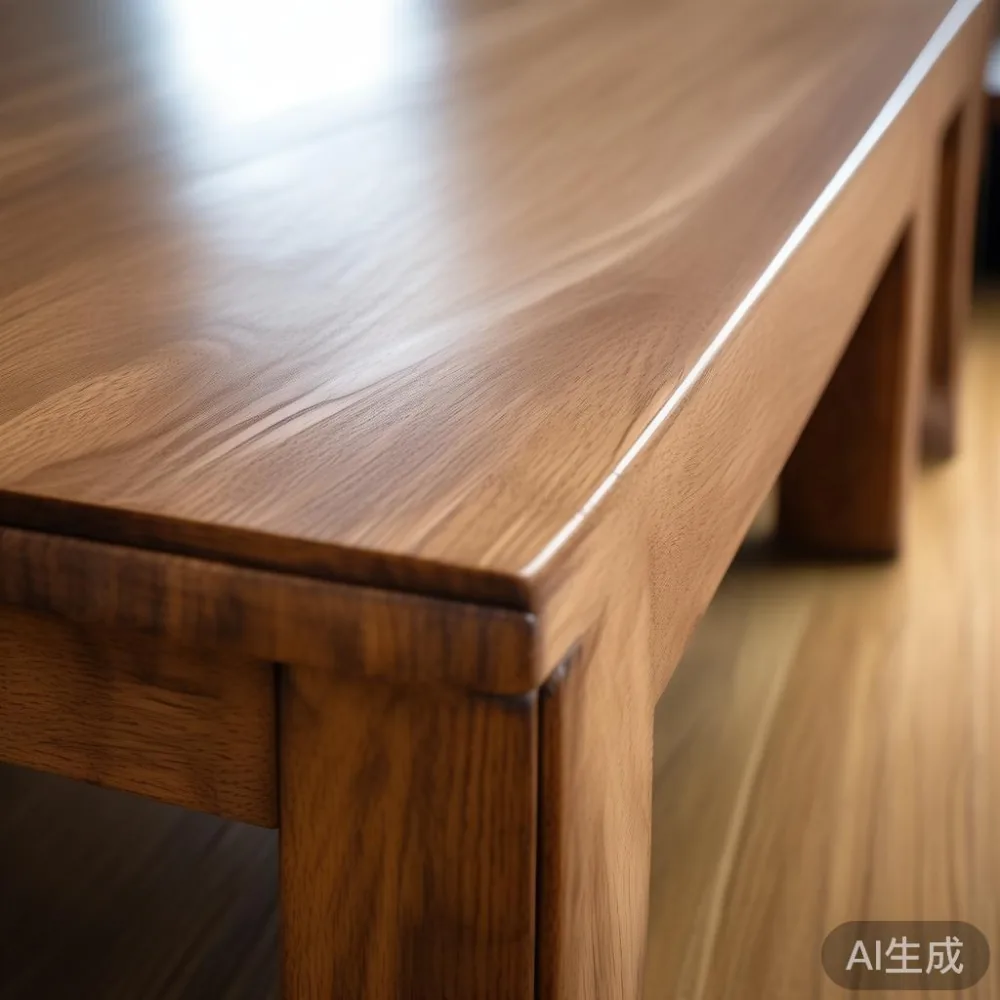
My colleague Priya hosted a Saturday lunch at her Bishan condo and forgot a cold glass of barley on her 1.8-metre solid wood dining table. She came back 40 minutes later to the classic white ring. Here is the routine I walked her through, and that I now recommend to anyone in the same spot:
Step 1. Dry the surface immediately with a soft cotton cloth, pressing rather than wiping so you do not drag moisture sideways across the lacquer. Step 2. Place a clean, dry cotton towel over the ring and press a warm iron (medium setting, no steam) onto the towel for 8 to 10 seconds. The gentle heat pulls the trapped moisture back out through the lacquer film. Step 3. Lift the towel and inspect. Repeat once if needed. Step 4. Once the ring is gone, apply a thin coat of paste wax - we use a clear beeswax, around SGD 18 for a 200 g tin - and buff with a microfiber cloth in the direction of the grain. Do not use silicone-based polishes, olive oil, mayonnaise, or toothpaste. I have seen all four make a Bedok customer's table worse within one season.
For deeper marks where the lacquer has actually gone white into the wood, this trick will not save it. You are looking at a localised refinish, which is one of the reasons MIDHILL offers lifetime refinishing on lacquered tops; a flat-rate recoat for a dining table in Singapore runs around SGD 180 to SGD 260 depending on size, far less than replacing the piece.
How do I clean and dust a lacquered wardrobe, bed frame or nightstand without damaging the film?
Dusting is where most Singapore owners go wrong. Dry dusting with a feather duster actually drags micro-silica across the lacquer and creates the hairline scratches you only see when sunlight from the bedroom window rakes across the wardrobe door. Use a damp microfiber cloth instead - a 6-pack costs around SGD 15 at any local supermarket - and wipe in straight lines following the wood grain, never in circles. For routine cleaning, mix 250 ml of warm water with one teaspoon of pH-neutral dish soap. Wring the cloth until it is barely damp, wipe, then immediately dry with a second cloth. Never let water sit.
Avoid all-purpose sprays that contain silicone or solvents. The big-name wood polish sold in Tampines Mall for SGD 12.90 is one of the worst offenders: it leaves a soft silicone film that looks beautiful for three days and then becomes impossible to remove when a refinisher tries to sand the top for a recoat. If you want to maintain the sheen on a French light luxury wardrobe or an American light luxury nightstand, apply paste wax twice a year, once in March before the hotter humid months and once in November before the monsoon. One 200 g tin covers a four-door wardrobe with product to spare, and the job takes about 25 minutes per piece.
How does lift and corridor width in HDB actually affect my furniture care setup?
Singapore's older HDB blocks - think Bedok 110 to 130 series - have lift openings of roughly 80 to 90 cm and corridor turns that can be as tight as 1.2 m wide. That is why most lacquered wardrobes arrive flat-packed, and why the assembly-difficulty rating matters more here than in a landed house. A four-door wardrobe from MIDHILL, for example, ships in six cartons weighing between 28 kg and 42 kg each, and the heaviest single panel after assembly is 32 kg. In a Punggol Northshore BTO the lift car is larger (around 1.4 m deep), so you can often move a fully assembled solid wood bed frame up in one trip, but in a 1970s Bedok block you usually cannot. That affects care decisions too: if you have to assemble the piece in the bedroom, you will be doing it on the same floor the lacquered wardrobe will sit on for the next decade, so lay down a 2 mm felt blanket (SGD 24 for a 1.5 m x 2 m sheet) before you open any carton.
Assembly difficulty is also the moment you find out whether a supplier has engineered for tropical humidity or not. Press-fit dowels that swell and lock work beautifully here. Cam locks with metal inserts can corrode in a poorly ventilated ground-floor storeroom. When you are evaluating for sale light luxury furniture, ask the supplier which joinery system they use and whether the hardware is zinc-plated or stainless. MIDHILL uses zinc-plated steel cam locks with a 5-year corrosion warranty in our standard line, and full stainless hardware on the marine-grade upgrade that landed-property owners often choose.
How should I position lacquered pieces away from windows, air-cons and service yards?
Direct sunlight is the single most damaging thing for a lacquered wardrobe or bed frame in Singapore. UV breaks down polyurethane and nitrocellulose films within 12 to 18 months if the piece sits within 1.5 m of an unshaded west-facing window. Use a 3 percent openness roller blind (SGD 45 to SGD 80 for a 1.8 m drop) or sheer curtains to filter the afternoon sun. If you have a floor-to-ceiling window in a Punggol Waterway condo, pull the solid wood sofa or daybed 30 to 40 cm away from the glass so the lacquer never sits in the heat pocket between glass and air-con return.
Keep all lacquered furniture at least 1.2 m away from the air-con indoor unit. The cold plume hitting one side of a wardrobe will dry that face unevenly and can pull joints open within a single dry season. For a service yard or balcony - common spots for a marble table or a casual dining table - avoid them entirely. Lacquered pieces cannot handle the direct rain splash and the UV exposure even under a covered patio. If you need outdoor dining, choose teak with an oil finish, not lacquered wood.
What does a realistic weekly, monthly and yearly care routine look like?
Weekly (10 minutes total): Damp-microfiber dust the wardrobe doors, nightstand tops and dining table. Check for any condensation rings or new marks. Vacuum the floor under the bed frame so grit does not migrate onto the lacquered edges.
Monthly (20 minutes): Apply a light spray of the water-and-dish-soap mix to a cloth, wipe all horizontal surfaces, then buff dry. Inspect joints on the bed frame and wardrobe for any seasonal gap. A gap of 1 to 2 mm in February is normal and will close again by April.
Yearly (half a day): Paste wax the dining table, nightstand and wardrobe exterior. Tighten any hardware. Check the dehumidifier filter. Wipe down the inside of wardrobes with a dry cloth to discourage mould on the back panel. Schedule a professional inspection every 5 years if the piece is under warranty.
This routine adds about 4 hours per year of work, which is roughly the time you would spend ironing one load of laundry a week. For a S$3,200 lacquered solid wood wardrobe, that is a fair trade for keeping it looking new through ten tropical cycles.
What about delivery, GST, and what should I expect to pay in Singapore?
Lacquered furniture is heavy, and freight into Singapore from Foshan typically runs 18 to 26 days door-to-door by sea, with a 7 percent GST on the landed value above the SGD 380 import threshold (which most pieces exceed). For a S$2,400 dining table the GST is around SGD 168, and for a S$3,800 four-door wardrobe it is around SGD 266. MIDHILL ships DDP (delivered duty paid) into Singapore for orders above US$350 equivalent, which lands in roughly the SGD 480 to SGD 520 range at current rates, so the GST and customs are bundled into the invoice - one number, no surprise fees when the lorry arrives at your Tampines loading bay.
Delivery inside Singapore is usually a 4-hour window appointment, and the crew will bring the cartons up to your door on the same floor if the lift is large enough. For older Bedok blocks where the lift is too small, the crew splits cartons into two trips or carries them up the staircase. There is no extra fee for this within mainland Singapore, but surcharges apply for Sentosa and certain gated landed estates. Returns are accepted within 14 days for unused pieces in their original cartons; repacking a 32 kg lacquered wardrobe panel without the original foam is the hard part, so most Singapore owners who need to return simply refuse the delivery at the door instead.
Where does Japanese, French, American and Italian light luxury styling actually differ on lacquer care?
Japanese light luxury favours thin, matte, almost raw-looking lacquers over light oak and ash. These finishes are breathable by design and need paste wax rather than polishes. If you are working out how to style Japanese bed in apartment spaces with floor-to-ceiling windows, treat the bed frame and nightstand as you would a piece of paper: keep the humidity stable and never use solvent cleaners.
French light luxury and French provincial pieces usually have a high-gloss clear lacquer over walnut or rubberwood, often with hand-rubbed edges. These need the damp-cloth routine and twice-yearly waxing. A useful comparison: Japanese sofa vs French provincial sofa in the same living room will hold up equally well, but the French provincial lacquer shows every fingerprint and humidity mark, while the Japanese matte hides them - and traps them in the film.
American light luxury tends to be more matte and forgiving, similar in spirit to Japanese but with darker stains on ash and poplar. American pieces benefit from the same routine but tolerate slightly higher humidity swings - useful for ground-floor HDB units in Bedok where the dehumidifier runs less. If you are figuring out how to style American bed in room with a low platform bed and integrated nightstands, dust underneath monthly; the enclosed space under the bed traps moisture in Singapore's air.
Italian light luxury is the highest-gloss of all and usually sits on marble or lacquered bases. The best Italian light luxury wardrobe for 2026 will use a seven-coat polyester or polyurethane finish, sometimes with a UV-cured topcoat. These are tough, but they show scratches clearly. For a marble table from an Italian line, the lacquer is on the base only; the top is sealed marble and needs a different routine (pH-neutral cleaner only, no acids, no wax). MIDHILL's Italian-inspired line, for reference, ships the marble tops in separate reinforced crates weighing 38 to 56 kg each, so the lift question matters again.
Frequently asked questions from Singapore owners
Will my lacquered wardrobe yellow over time? Yes, all clear lacquers yellow slightly with age and UV exposure. The shift on a 1.8 m wardrobe over ten years is typically a shade on the warm side. Keep it out of direct sun and the shift is barely visible.
Can I place a lacquered nightstand next to my bathroom door? Yes, as long as the bathroom has an exhaust fan that runs during showers. The 30-minute steam from a hot shower will not hurt the lacquer if the fan clears the air within 10 minutes.
Is the assembly-difficulty rating different for lacquered pieces? No. The assembly-difficulty rating reflects joinery and part count, not the finish. A six-drawer lacquered chest and an unfinished chest of the same size score the same. What does change is the unboxing care: lacquered panels must never be dragged across each other or the floor. Use the foam separators the supplier packs between every panel. MIDHILL includes a printed assembly-difficulty sheet inside the top carton of every order, rated from A (single person, 30 minutes) to D (two people, 3 hours).
How do I find a reliable refinisher in Singapore if I damage the lacquer? Ask the supplier. MIDHILL ships to refinishers in Tai Seng and Defu who handle warranty work; for non-warranty work expect SGD 80 to SGD 150 per panel for a localised recoat and matching. Avoid general handymen who quote per job without seeing the piece - they usually spray a single thick layer that clouds within six months.
Does the 10-year structural warranty cover lacquer problems? Structural warranty covers joints, frames and hardware. Lacquer is covered separately under the finish warranty, usually 12 to 24 months against manufacturing defects such as orange peel, runs, or early peeling. Damage from humidity swings, spills or direct sun is owner-care territory. Reading the warranty PDF before delivery is worth the 20 minutes.
A short checklist before you sign for delivery
Before the crew leaves your Tampines or Punggol loading bay, run through this list. It takes five minutes and prevents the most common first-week problems.
One, photograph every carton before opening. Two, check the lacquer on each visible panel under good light before assembly - any orange peel or run is much easier to claim before the piece is built. Three, confirm all hardware packs are present and match the parts list. Four, lay down felt blankets in your assembly area if you are building inside the bedroom. Five, keep one carton and the foam inserts for at least 14 days in case of a return. Seven, register the warranty online at m.midhill.co within seven days of delivery so the clock starts on your structural and finish coverage. Eight, place the dehumidifier and a small hygrometer (SGD 14 at any local electronics chain) in the room the day before the furniture arrives so the wood acclimatises into a controlled space, not a 78 percent corridor.
Singapore is one of the best places in the world to live with solid wood furniture, and one of the hardest. The climate will always be humid. The lifts will always be a little too small. The corridors will always be tight. But with a stable indoor humidity, a damp microfiber cloth, a tin of paste wax, and a supplier who understands tropical joinery, a lacquered solid wood bed frame, dining table, nightstand, wardrobe or marble table will outlast three sofa replacements and still look like the day it was uncrated.