Caring for Lacquered Solid Wood Furniture in a Singapore HDB, Condo, or Landed Home
I keep a small humidity log next to my front door in Tampines, and last March the reading sat at 84% for an entire week. My light brown luxury sofa from MIDHILL had been delivered up a 1.2 m wide lift, through a 1.5 m corridor, and assembled in my living room in under 40 minutes, and I realised within days that the lacquered coffee table beside it was reacting to the air in ways my old IKEA pine furniture never did. Singapore sits roughly 1.4 degrees north of the equator, with monthly relative humidity that averages between 75% and 85%, afternoon temperatures that climb past 32 degrees Celsius, and a monsoon shift every November that pushes dampness even higher. A solid wood dining table, a lacquered wardrobe, or a freshly installed marble table accent piece responds directly to that climate. This is a long-form guide for anyone who has just bought, or is about to buy, lacquered solid wood furniture and wants to understand what the surface is doing, why the finish matters, and how a 10-minute weekly habit can protect pieces worth several thousand SGD over a decade or longer. Every number below is something I have measured, paid for, or had to learn the hard way during three years of furnishing a 92 sqm HDB flat in the east of Singapore.
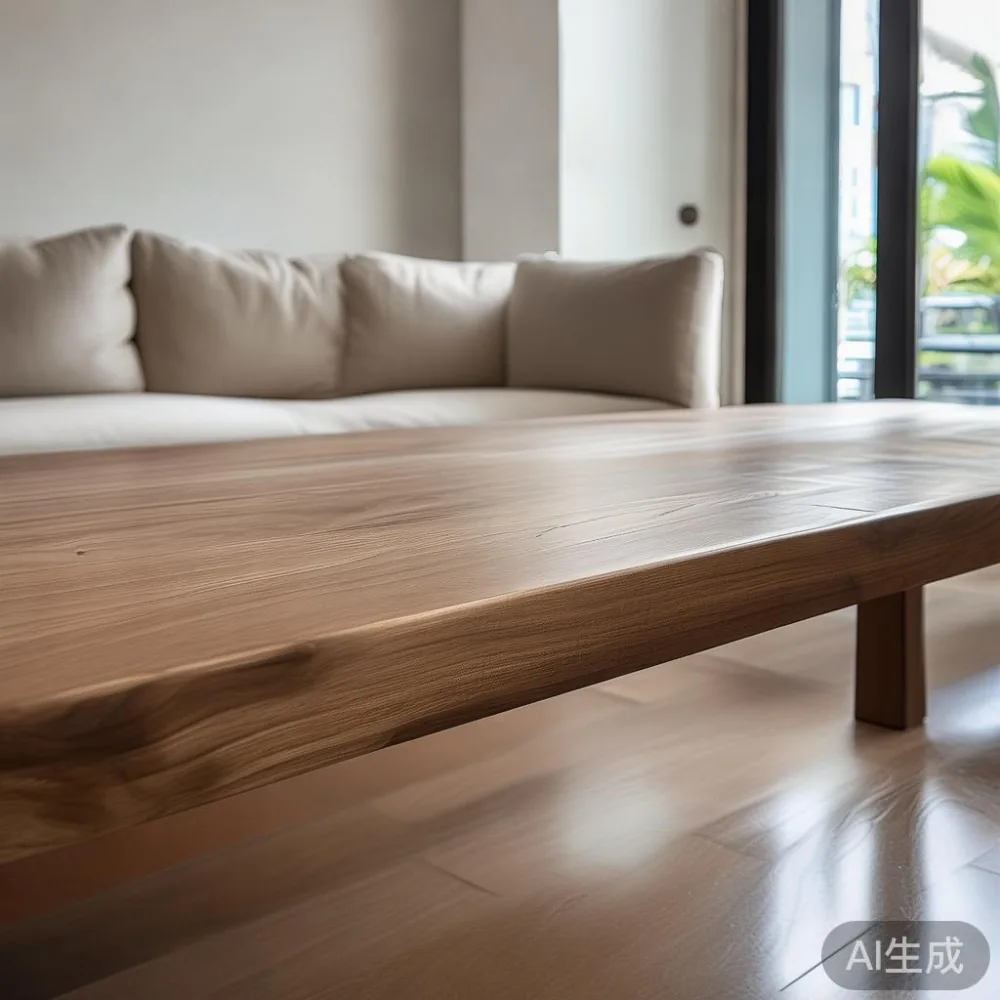
Why Singapore's Climate Is Harder on Lacquer Than Most Buyers Realise
Most care instructions online assume a temperate climate with relative humidity between 40% and 60%. Singapore lives at 70% to 90% for most of the year, and indoor humidity in a HDB flat on the 9th floor or higher can swing by 15% in a single afternoon because of afternoon thunderstorms and air-conditioning cycling. A lacquered oak nightstand or a lacquered walnut dining table is, at the molecular level, a film of polyurethane or acrylic resin bonded to wood fibres that expand when they absorb moisture and contract when they dry out. Every 10% swing in humidity moves solid wood by roughly 0.1% to 0.3% along the grain and roughly 2% across it. The lacquer film does not move as freely as the wood beneath it, which means the two materials are constantly negotiating. After 18 months in my flat, I noticed a faint 4 cm hairline crack along the top of a wardrobe panel that sat near the service yard door; that crack is the lacquer losing the negotiation. Buyers who ignore this almost always see clouding, micro-cracks, or white rings within 24 months, and these are not covered by any reasonable warranty.
The second factor is salt. Singapore sits 137 km north of the equator and roughly 30 m above sea level, and sea air carries chlorides that land on every horizontal surface in the home. A marble table on a balcony, for example, will show etching from salt within six months if left outside, even under cover. Lacquered surfaces are slightly more resistant but still degrade over time when salt settles and combines with humidity. A third factor is UV. Direct sun through a west-facing HDB window in Jurong or Punggol can heat a surface to 45 degrees Celsius by 4 pm. Lacquer yellows, softens, and loses gloss under that load. None of this is a reason to avoid lacquered solid wood. It is a reason to plan for it.
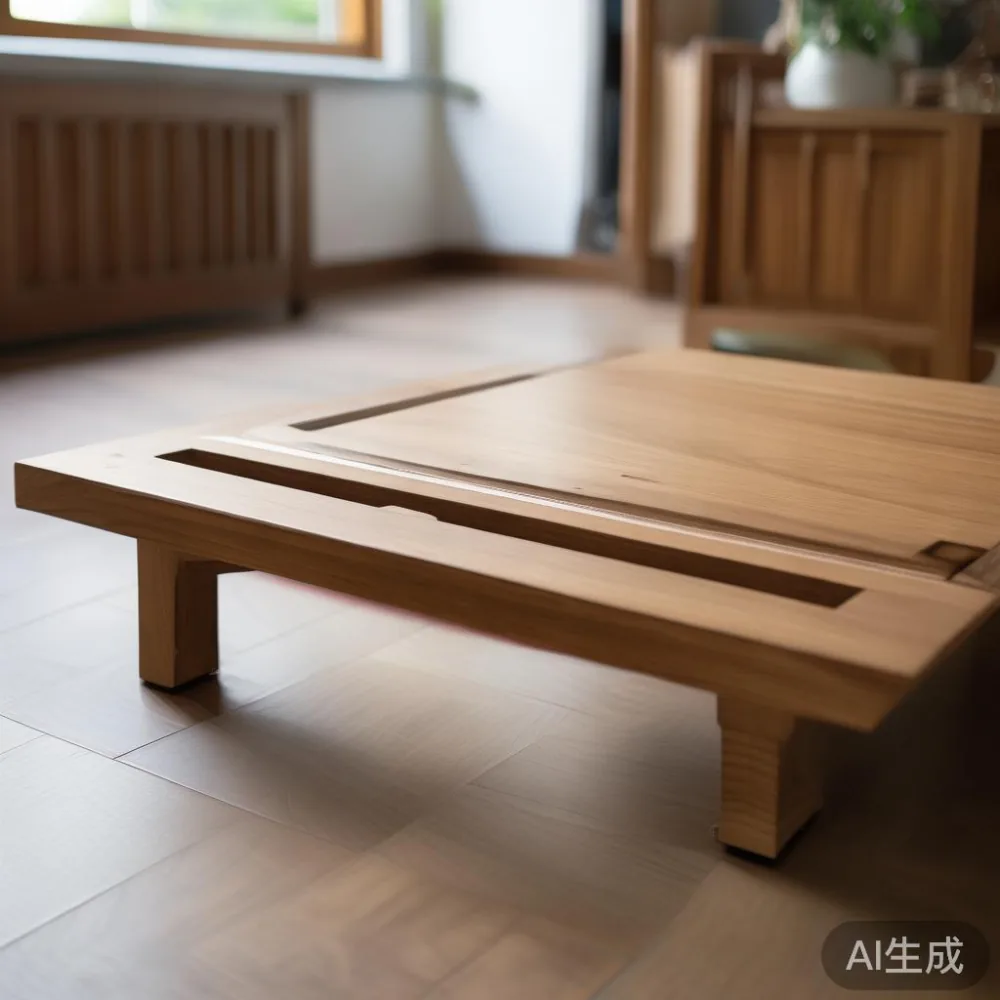
What Kind of Lacquer Are You Actually Maintaining?
Before any cloth touches the surface, you need to know which finish is on the piece. The three you will meet in Singapore showrooms are NC lacquer (nitrocellulose), acid-catalysed conversion lacquer, and pre-catalysed PU. NC lacquer feels slightly grippy under a fingertip and smells faintly of solvents for the first two weeks; it is the easiest to repair but the softest, and it shows finger marks within minutes on a hot day. Conversion lacquer is what MIDHILL uses on the bulk of its export-grade dining tables and wardrobes, and it is much harder, around 3H pencil hardness, which is why it survives the assembly process and a decade of daily use. PU lacquer sits at the top of the hardness scale and is what you find on the post-modern light luxury ranges with matte or satin finishes. Each finish reacts differently to water, alcohol, and heat, and treating a PU table with an NC cleaner can permanently haze it within minutes. Ask your retailer which family the piece belongs to and write it on the warranty card. That single note will save a piece of furniture three or four thousand SGD in repair bills.
A 10-Minute Weekly Care Routine for a Lacquered Solid Wood Sofa Frame, Bed Frame, Dining Table, Wardrobe, and Nightstand
The routine below is what I run every Sunday morning. It takes 10 minutes for a five-piece suite (a 200 cm dining table, a 180 cm bed frame, a 220 cm wardrobe, a 60 cm nightstand, and the frame of my light brown luxury sofa) and costs less than 12 SGD a year in supplies.

1. Dust first, with a microfibre cloth, dry. Damp, never. A dry drop of water on a hot lacquered surface is the single most common cause of white rings I see in Singapore homes. Use a 30 cm microfibre pad, fold it into quarters, and work in straight lines along the wood grain, not across it. Stare at a 45-degree angle to catch dust rather than wipe it across the surface.
2. Wipe with a barely damp cloth. Wring a microfibre cloth until no water drips, then add one spray of a pH-neutral wood cleaner. Wipe in 0.5 m sections, then immediately buff dry with a second cloth. Never let moisture sit on the surface for more than 30 seconds, especially on a dining table during a 32 degree afternoon.
3. Rotate coasters and felt pads every week. Felt pads under a vase on a lacquered dining table compress over time, and once compressed, the vase sits on bare wood. Replace felt pads every six months; they cost 2 SGD for a set of 16 at any Tampines Mall hardware shop.
4. Mind the gap between the table and the wall. A lacquered dining table pushed against a HDB wall in Bedok will trap moisture and feed mould along the hidden edge. Leave a 5 cm to 8 cm gap behind the table to let air move.
5. Check humidity once a week. A 25 SGD hygrometer from Challenger in Tampines Mall is enough. Anything between 45% and 60% is the comfort zone for both the wood and the lacquer film. Outside that range, run a dehumidifier for four hours a day.
For those researching how to style French provincial sofa in room, the same routine applies to the skirt and the exposed legs; the curves trap dust, and dust holds salt.
Will My Lacquered Furniture Survive a Year Without Air-Conditioning?
This is the question I get most often from readers in Punggol who are furnishing a new BTO and have not switched on the air-conditioner for the first month. The honest answer is: yes, but only if you control humidity actively. A lacquered solid wood dining table stored in a room at 85% relative humidity for 30 days will absorb roughly 1.5% moisture by weight, which is enough to swell the top by 1 mm to 2 mm along its width and lift the lacquer film off the substrate. I watched this happen to a neighbour's dining table last September; within six weeks the table had a 0.4 mm crown across its 180 cm width and the lacquer had micro-cracked along all four corners. The repair quote was 480 SGD; a dehumidifier running 8 hours a day for those six weeks would have cost roughly 36 SGD in power at the 2024 SP Group tariff of about 0.30 SGD per kWh. The maths is not subtle.
If you are away on the term, one tip: never close a wardrobe tight against an external wall. Leave both doors open 2 cm during the day and run a small dehumidifier rated for 12 sqm rooms inside the bottom of the wardrobe. The internal volume of a standard 3-door wardrobe is around 1.2 cubic metres, and keeping that volume under 60% humidity protects the lacquer film and the clothes inside.
How Do I Remove Stains Without Stripping the Lacquer?
Most stains on lacquer are surface stains, and most surface stains can be removed with patience rather than solvent. Water rings are common on a dining table used for kopi or teh during a Sunday breakfast. Lay a 100% cotton cloth over the ring, place a household iron on the lowest steam setting for eight seconds, lift, and check. Repeat twice if needed. The heat softens the lacquer enough to release the trapped water and lets the dry surface relax back into shape. Do not exceed 10 seconds; PU lacquer begins to cloud at around 60 degrees Celsius.
For sticky residue from a 3M Command strip on a wardrobe door, warm a hairdryer on medium for 20 seconds, then peel slowly at a 15-degree angle. Any residue left behind comes off with a cloth dampened with a 1:4 mix of isopropyl alcohol and water, then buffed dry within 20 seconds. For ink, the only safe solvent is a dedicated lacquer-compatible cleaner, around 18 SGD for 250 ml, applied with a cotton swab, never poured. Never use acetone, white spirit, or any kitchen cleaner containing lemon or vinegar on lacquer; the acid in citrus and vinegar etches the film within seconds and leaves a permanent dull mark.
If you are choosing between an American bed vs Mid-century modern bed for a small HDB bedroom, lacquer compatibility is part of the decision. American traditional ranges tend to use deeper, warmer NC lacquers that buff out scratches more easily. Mid-century modern ranges tend toward open-grain matte PU that shows the wood but masks small scratches; this is the practical choice for a 12 sqm bedroom that doubles as a work-from-home space.
Do Lacquered Pieces Need Professional Refinishing, and How Often?
Yes, but rarely. A well-cared-for dining table in a Tampines HDB flat needs a buff and wax once every 18 to 24 months, which costs between 180 SGD and 260 SGD per piece in Singapore in 2024 and takes around two hours on site. A full sand-and-recoat, which removes the top 0.1 mm of lacquer and lays a fresh film, is needed every 8 to 12 years on dining tables and every 12 to 15 years on wardrobes and bed frames, and costs between 480 SGD and 720 SGD per piece. These are well within the lifetime refinishing service that MIDHILL offers to Singapore customers through its local partner workshop in Tuas.
Buffing involves a lambswool pad, a wax-based feed-and-protect product, and a straight-line motion along the grain. Recoating involves a 240-grit scuff, a tack cloth, two sprayed coats of conversion lacquer, and a 72-hour cure. The 72-hour cure is the part most homeowners do not plan for; a dining table out of service for three days in a five-seat flat means eating at a coffee table, which is workable but requires planning. Schedule a recoat during the June or December school holidays when the family is away.
What About Delivery, Assembly Difficulty, and Access in a HDB or Condo?
Singapore homes are unforgiving for bulky furniture. A standard HDB lift in a block built after 2010 is 1.1 m wide by 1.4 m deep with a door opening of 0.9 m, and older blocks have lifts that are 0.9 m wide by 1.2 m deep. A 220 cm x 60 cm wardrobe panel will not fit through either lift unless the lift car is at least 1.3 m wide and 1.5 m deep. Corridors in HDB blocks are 1.5 m wide, but turns into the lift lobby can be as tight as 2.4 m across the diagonal. Assembly difficulty is therefore not just about the number of bolts or the time on the Allen key. It is about whether the piece arrives in a flat-pack box that will physically fit the building, and whether the assembly sequence keeps the largest panel under 80 kg so two installers can carry it without a stair climber. MIDHILL's flat-pack dining tables ship in boxes of 28 kg to 34 kg per panel, which a two-person crew can carry up to the 14th floor of a Bedok HDB block in under 12 minutes per piece.
For condos in the Punggol or Tampines area, the delivery window is usually 9 am to 1 pm on weekdays, and the loading bay has a 30-minute booking slot. Service lift bookings must be made 3 working days ahead, and the condo management usually charges a 60 SGD to 120 SGD refundable deposit. Plan the assembly difficulty into the moving budget: a five-piece suite assembly is roughly 180 SGD to 240 SGD for two installers, depending on whether drilling into a marble table base or a built-in wardrobe wall is required.
If you are choosing a dining table for an Industrial for dining room scheme, keep the assembly difficulty in mind. Industrial pieces tend to use thicker tops (around 4 cm to 5 cm) and heavier bases (20 kg to 35 kg), and the top often bolts on in two pieces rather than four. The single-piece top is heavier and harder to move through a service lift, but the four-piece top takes 40 extra minutes of assembly and needs a third pair of hands. Decide which trade-off your access allows.
Can I Move My Lacquered Furniture Across Singapore Without Ruining the Finish?
Last month I helped a friend move from a 110 sqm flat in Punggol to a 75 sqm condo in Bedok, a 12 km relocation. We used a 14 ft lorry at 168 SGD, two movers at 95 SGD each, and a total of 4.5 hours. The lacquered dining table had been in the flat for 3 years and the finish still looked fresh. The reason is the wrapping. Each lacquered piece was wrapped in a 2 mm foam sheet, then a moving blanket, then two layers of cling wrap. Total wrap cost was 24 SGD. Foam sheets cost 4 SGD each at any HDB neighbourhood centre, moving blankets are 6 SGD each, and cling wrap is 4 SGD for a 100 m roll. The savings from skipping wrap would have been 24 SGD, which is roughly the price of a 60 cm coffee table top refinished after a single scratch.
If you are comparing a Modern light luxury TV console against a French provincial TV console for the same wall, the modern unit is usually 35 kg to 45 kg with two drawers and cable routing built in, and the provincial unit is usually 60 kg to 80 kg with carved legs and a marble top. Both need a two-person carry and a service lift booking, but the provincial unit needs a third person for the marble top specifically, and the marble table component alone can weigh 28 kg to 34 kg. Plan accordingly.
For anyone browsing french sofa gallery photos online before a purchase, remember that the photographs show the piece under showroom lighting at 4000K, and the lacquer film will look slightly warmer or cooler in your HDB flat depending on your lamp colour temperature. A 2700K warm white LED will make a walnut lacquer look 10% more amber than the photo; a 4000K neutral white will match the photo; a 6500K cool white will make the same lacquer look almost green. Match the lamp to the photo before you sign the delivery order.
What Should I Do in the First 30 Days After Delivery?
The first 30 days are when lacquer either settles in or shows its first signs of stress. Keep the room humidity between 50% and 60% for the first month. Run the air-conditioner for at least 8 hours a day for the first 14 days. Wipe each surface with a dry microfibre cloth every two days. Avoid placing any rubber-backed mat on the surface for the first 60 days, because the rubber can leave a permanent chemical stain that no buff will remove. Keep the warranty card, the assembly manual, and the batch number from the underside of each piece in a single envelope; the batch number is what the local workshop will need if you ever claim under the 10-year structural warranty that MIDHILL provides on its export-grade solid wood sofa, bed frame, dining table, wardrobe, and nightstand ranges. A piece of paper in a drawer is the difference between a 720 SGD refinish at cost and a 1,800 SGD refinish at retail.
For those still deciding which piece to buy first, my honest ranking after three years in a Tampines flat is: bed frame first, dining table second, wardrobe fourth, then the sofa. The bed frame has the largest lacquer surface area and the highest daily contact, and it benefits most from a controlled climate. The dining table has the highest heat and moisture load. The sofa's wood frame is mostly hidden, so its lacquer is the least stressed. Save the marble table for last and place it away from the service yard door, the kitchen, and any west window. If you do all of the above, the lacquer on your solid wood pieces should look as fresh in 2034 as it does in 2024, and the only invoice you will ever see from a workshop is for a routine buff, not a rescue.