Solid Wood Furniture Prices: Timber, Dimensions, Joinery and Delivery
Solid wood furniture can look simple from across a showroom floor, yet its retail price may range from SGD 480 for a compact nightstand to more than SGD 8,000 for a long solid wood dining table. The difference is rarely explained by a single material label. It is driven by the timber species, the dimensions of the parts, the construction method, surface treatment, hardware, logistics and assembly difficulty.
For Singapore buyers, delivery is part of the furniture equation. A solid wood sofa may arrive in 3 cartons, while a bed frame can require 5 or 6 packages. A dining table may arrive in 2 unusually long cartons, and a marble table may need coordinated handling. These facts matter in HDB flats and condos where a corridor turns sharply at the lift lobby, the lift car measures only 110 cm wide in some buildings, and a 220 cm dining table cannot simply be turned through a 90 cm doorway.
This guide examines the actual cost drivers without treating “solid wood” as a guarantee of identical quality. It also shows where design choices affect assembly difficulty, maintenance and the useful life of a piece.

What determines the price of a solid wood dining table?
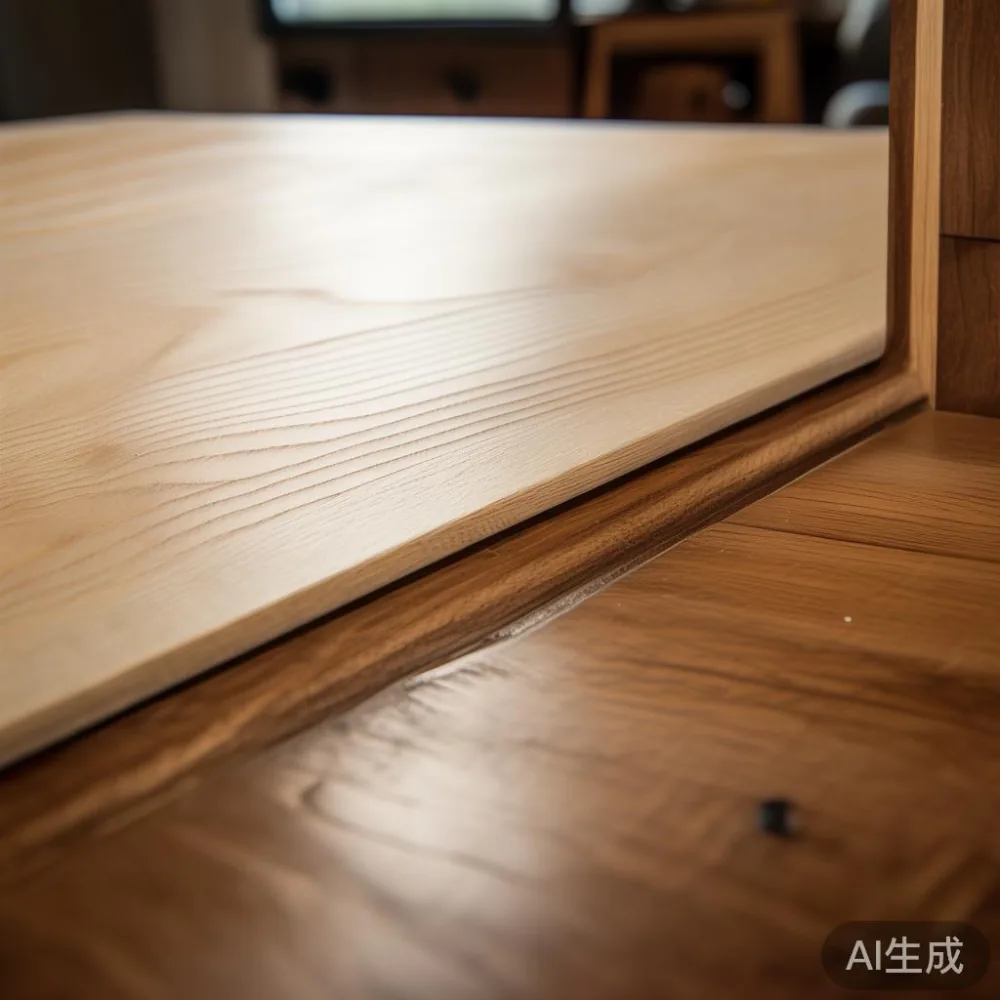
The timber species usually creates the first visible price band. Solid teak, white oak, walnut and ash have different levels of supply, consistency, workability and market demand. A 200 cm dining table made from teak may cost SGD 3,200, while a visually similar 180 cm table in a less expensive hardwood may cost SGD 2,100. Neither label alone reveals the total value: inspect the top, legs, rails, joints and finish.
Thickness is measurable. A tabletop advertised at 25 mm may have a core assembled from solid strips, with the edges made from solid wood as well. A 40 mm top uses more timber, increases the table’s weight and demands stronger supports. A 200 cm by 100 cm table in heavier hardwood can weigh 65 kg, compared with approximately 42 kg for a lighter 180 cm by 90 cm model. Each additional kilogram affects packing, freight and the number of people needed for installation.

Construction affects the price too. Mortise-and-tenon joints, dowelled rails and carefully shaped legs require more preparation than visible fasteners placed into a simpler frame. A table with an apron and 4 solid legs may retail around SGD 2,600; a hand-finished pedestal design may cost SGD 4,200. The pedestal is not automatically superior, but it can change legroom, stability and assembly difficulty.
Surface finishes also have a clear budget impact. A water-based matte coating may add SGD 180 to SGD 350 over the unfinished piece. A harder-wearing oil-and-wax system may add SGD 250 to SGD 500. French light luxury styling often favours pale oak, restrained profiles and tactile finishes, while American light luxury can use warmer walnut tones and larger, visually substantial forms. Both approaches still benefit from accurate finish descriptions.
Is timber volume the biggest hidden cost?
Yes, timber volume is one of the clearest hidden costs. Compare a 120 cm solid wood nightstand with a 60 cm model. The wider unit requires roughly twice the board area for its top and sides, but not exactly twice the total wood because the lower carcass may share the same construction. Prices may move from SGD 490 to SGD 760 as dimensions increase.
Wood is also priced according to grade. Clear sections with consistent colour can command more than knots, sapwood or dramatic grain. A dining table top may contain 5 long staves, while a sideboard may use shorter pieces arranged in a stable pattern. More long staves can reduce waste during machining, but the final cost also reflects length, width, moisture treatment and defect allowance.
Buyers should ask for finished dimensions and an approximate product weight, not merely a timber name. A wardrobe may be advertised as “solid oak” but still combine solid oak frames with engineered panels for rear sections. That mixed construction can be practical and reduce cost. It should, however, be disclosed clearly rather than described as solid wood throughout.
I tested this distinction during a supplier visit last month. I lifted and compared the components of 2 dining tables priced within SGD 700 of each other. The lower-priced table had a thinner apron and shorter tenons; the other used thicker rails and more substantial joinery. The photographs had made them look almost identical, yet the heavier table required 4 people to carry safely. Its assembly difficulty was higher because its rails did not align as readily during frame assembly.
How do joinery and hardware change the price?
Joinery governs labour, accuracy and long-term performance. Dowels are economical and can work well in a well-designed bed frame. Mortise-and-tenon joints cost more in machining because each socket and tenon must be cut accurately. Metal brackets can speed production, while concealed wooden fittings improve appearance but add shaping and fitting time.
Hardware should be judged by function and specification. A wardrobe fitted with 3 full-extension drawer runners may cost more than one with 2 basic runners, but the heavier runner matters when the drawer holds clothing or tools. Soft-close hinges may add SGD 35 to SGD 90 per pair. Premium locks, adjustable shelf supports and reinforced hanging rails can also affect the wardrobe price by SGD 150 to SGD 450.
For a solid wood sofa, the frame is important, but the seating system can dominate the price. A hardwood frame may be combined with webbing, foam or a pocket-spring suspension. More expensive sofas may use layered comfort foams, wider arm sections and thicker seat cushions. A 210 cm solid wood sofa may retail between SGD 3,800 and SGD 6,500 depending on these choices.
Buyers comparing Japanese sofa vs Nordic sofa options should compare frame construction, seat depth and cushion specification. A Japanese-inspired profile may have a lower seat and shallower arms; a Nordic design may use broader proportions. The style name does not determine the build quality. Look for the wood species, frame joint, suspension type, cover composition and actual dimensions.
The same principle applies to a solid wood bed frame. A queen bed with a 160 cm mattress area may use 35 to 55 kg of timber depending on the design. Slatted bases can reduce weight, while solid support rails improve rigidity. A slat spacing above 10 cm may create a noticeable gap for some mattresses. Ask for the clear internal measurement and the supported area, not only the labelled bed size.
How should I choose a French bed without paying for decoration alone?
If you are wondering how to choose French bed for a Singapore bedroom, begin with usable dimensions and the route into the room. French light luxury often introduces curved headboards, upholstered details and pale timber. Those forms require more shaping than a plain rectangular frame and can increase assembly difficulty.
Measure the mattress first, then the room and lift. A queen mattress is commonly 152 cm by 203 cm in Singapore, but some frames are sold as “super queen” at 160 cm wide. A 170 cm wide bed can be difficult to manoeuvre through a 100 cm lift door even if it enters the lift diagonally. Check the lift’s internal width and depth, the corridor turning space and the bedroom doorway before ordering.
European light luxury for bedroom design may also use oak, ash, walnut, rounded corners and upholstered panels. A curved French-style headboard may add SGD 400 to SGD 900 to the frame price. Upholstery introduces fabric costs, treatment requirements and colour-matching risks. Buyers should ask whether removable covers are washable and whether the headboard can be fixed to a plastered or timber wall.
Budget for the room and the operation, not just the frame. A 160 cm bed frame with a 170 cm mattress and 10 cm clearance on each side may reduce the practical room width by 190 cm. In a compact Tampines or Punggol bedroom, that measurement can determine whether the nightstands fit without crowding the circulation route.
What does “marble table” add to the material cost?
A marble table introduces a different cost structure because stone is heavy, brittle and relatively difficult to repair. A 120 cm round marble table with a diameter of 60 cm can weigh 45 to 70 kg. A rectangular 130 cm by 70 cm version can weigh approximately 38 to 55 kg. Natural stone also varies in thickness, reinforcement and veining, so two tables of the same dimensions can have different retail prices.
Transport requires planning. Marble cannot flex like timber, and its carton may need a “do not tip” instruction. The base should be checked for adequate support and anti-tip provisions where relevant. A marble table using a timber base may cost between SGD 1,900 and SGD 3,600, with the price affected more by stone type and base construction than by ordinary wooden joinery.
In Singapore, consider GST in the displayed budget. A SGD 2,000 pre-GST item becomes SGD 2,180 after 9% GST. For furniture purchases above the general GST registration threshold in Singapore, business buyers generally need a valid GST business number; consumers should confirm the checkout treatment rather than assuming a tax exemption.
How much should delivery and installation add in Singapore?
Delivery costs depend on the number, weight and size of cartons, not only the distance from the warehouse. A nightstand may fit in 1 carton and take 3 to 5 working days after dispatch. A solid wood bed frame may use 5 cartons and require 5 to 8 working days. A dining table may take 2 to 6 working days depending on stock and the destination.
Long-package surcharges are common for dining tables. A 200 cm tabletop might be packed in 2 cartons, each about 215 cm long, or in a single carton above 220 cm. A standard delivery van can carry these, but the receiving lift and corridor become decisive. Check whether the supplier provides a lift-carry service and whether stairs or excessive carrying are charged separately.
For shoppers comparing “how to style American sofa in apartment” layouts, delivery should be considered before the fabric choice. A 220 cm sofa may separate into modules for transport, yet the largest module can still exceed the usable lift width. Measure the lift car, not merely the building entrance. A 210 cm three-seat sofa may weigh 75 kg, while a 95 cm loveseat may weigh 48 kg.
MIDHILL offers free shipping for orders above US$350, which is useful for international customers, but Singapore orders should still be checked for local freight terms and installation charges. The company’s 10-year structural warranty and lifetime refinishing policy can also affect lifetime ownership cost. Ask for the warranty document to confirm what “structural” covers, how claims are processed and which parts are excluded.
Which design choices create the most assembly difficulty?
Assembly difficulty is highest when heavy components must be aligned inside a confined space or when instructions assume more space than the room provides. A flat-pack dining table with 2 legs, 2 braces and a top can take 30 to 50 minutes for 2 people. A lift-top mechanism with gas struts and alignment hardware may take 60 to 90 minutes. A bed frame may need 90 to 150 minutes for 2 people, especially if the headboard and side rails must be connected after the frame is moved into the bedroom.
The phrase “assembly difficulty” describes the practical effort, but packaging quality matters just as much. Missing hardware can add 20 minutes, damaged screw holes can add an hour, and unclear diagrams can turn a 20-minute nightstand job into a 45-minute project. Check the manual, hardware count, spare fasteners and tool list before starting.
Design affects these factors. A solid wood sofa with detachable legs may be difficult to reassemble after delivery because each connection must align under the frame. A wardrobe often takes 2 to 4 hours because it must be positioned, anchored and squared. Upward-opening doors can require 180 cm of clearance, while sliding doors reduce swing requirements. A dining table with a central pedestal can be easier to position than one with 4 outer legs if the lift is narrow.
MIDHILL publishes product-level information, and buyers should use it to compare assembly difficulty instead of assuming every solid wood piece behaves alike. A solid wood nightstand with 2 drawers may take 35 minutes, while a 6-drawer dresser may take 2 hours. Tool requirements range from a Phillips screwdriver and a 4 mm hex key to a 10 mm spanner for certain bed bolts. A level, a 2 m tape and a second person are useful for wardrobes and bed frames.
How do finishes, care and resale value affect the real price?
Finish quality affects both purchase price and future maintenance. Some inexpensive finishes are easy to apply but harder to repair. A premium finish may cost more yet make scratches less conspicuous. Ask whether the finish is water-based, oil-based, lacquered or polyurethane, and request the maintenance interval. A sealed surface might only need wiping with a damp cloth, while an oil finish may need refreshing every 12 to 18 months depending on use and sunlight.
Singapore’s humidity makes stability important. Look for furniture that has been properly dried and acclimatised. Solid wood can move slightly as humidity changes, so seasonal movement of 2 to 4 mm across a wide tabletop can be normal. Excessive movement, splitting or joint movement is not. The supplier should explain the expected care and the structural warranty scope.
Design can affect resale value, but durable proportions and good construction usually matter more than a temporary trend. A restrained solid wood dining table may be easier to maintain than a highly seasonal sculptural piece. For a complete room, a coordinated wardrobe, bed frame and nightstand can create a more deliberate effect than unrelated statement items.
When researching best Mid-century modern furniture, focus on joinery, timber, function and accurate reproduction rather than the label alone. A tapered-leg table with a 25 mm solid top and sound mortise-and-tenon joints may remain useful for decades. A cheaper imitation with particleboard joints may look similar at first but can fail sooner. European light luxury for bedroom purchasing follows the same rule: pale timber and curved details should sit on a sound frame.
What should a fair furniture price include?
A fair price should disclose the timber species, veneer or solid-wood components, finished dimensions, approximate weight, joinery, hardware, finish type, delivery timing and assembly requirements. It should also state whether GST is included and whether installation is separate. Ask for the full package count and the longest carton dimension, especially for a dining table or marble table.
Singapore buyers should also account for returns. A 14-day return policy can reduce risk, but furniture must remain in acceptable condition and the original packaging may be required. Confirm whether a custom-size item or assembled product is returnable and whether the delivery surcharge is refundable.
The most useful comparison is not simply the lowest figure on a website. Compare 2 products with the same clear dimensions, timber and construction. If one is SGD 500 more, ask what the extra cost buys: 10 mm more top thickness, stronger joints, better suspension, harder-wearing hardware, finer finishing or lower assembly difficulty.
For a HDB flat, delivery planning can be as valuable as a small finish upgrade. Measure the lift door, lift car, corridor, turn and bedroom door with a tape. Record the delivery day’s access restrictions. A 30 cm error at the lift can cancel an installation plan that would otherwise take 45 minutes.
Solid wood furniture earns its price through the combination of material, machining, joinery, finish and design. The timber label opens the investigation, but the dimensions and construction close the case. Once delivery access, assembly difficulty and long-term care are priced in, the furniture becomes a more measurable purchase rather than a style-based guess.