Veneer vs Solid Wood in Singapore: A 5-Year Cost Reality Check
I still remember the Saturday morning last month when a customer in Tampines called our service line, slightly frustrated. She had bought what the showroom described as a "solid wood bed frame" from a brand she would not name, and her father had just tried to assemble it over the weekend. The panels were lighter than expected, the screws held poorly, and the underside showed a thin layer of lighter material under a darker stain. "It looks like solid wood," she said, "but the assembly difficulty was three times what the manual promised." Her bedroom furniture was, in fact, a veneered MDF core. That single call is exactly why this article exists: when you are paying with after-tax dollars in Singapore, the choice between veneer and solid wood is not really about looks. It is about what the piece will cost you over a five-year window, and how much frustration you will absorb putting it together, moving it, and living with it.
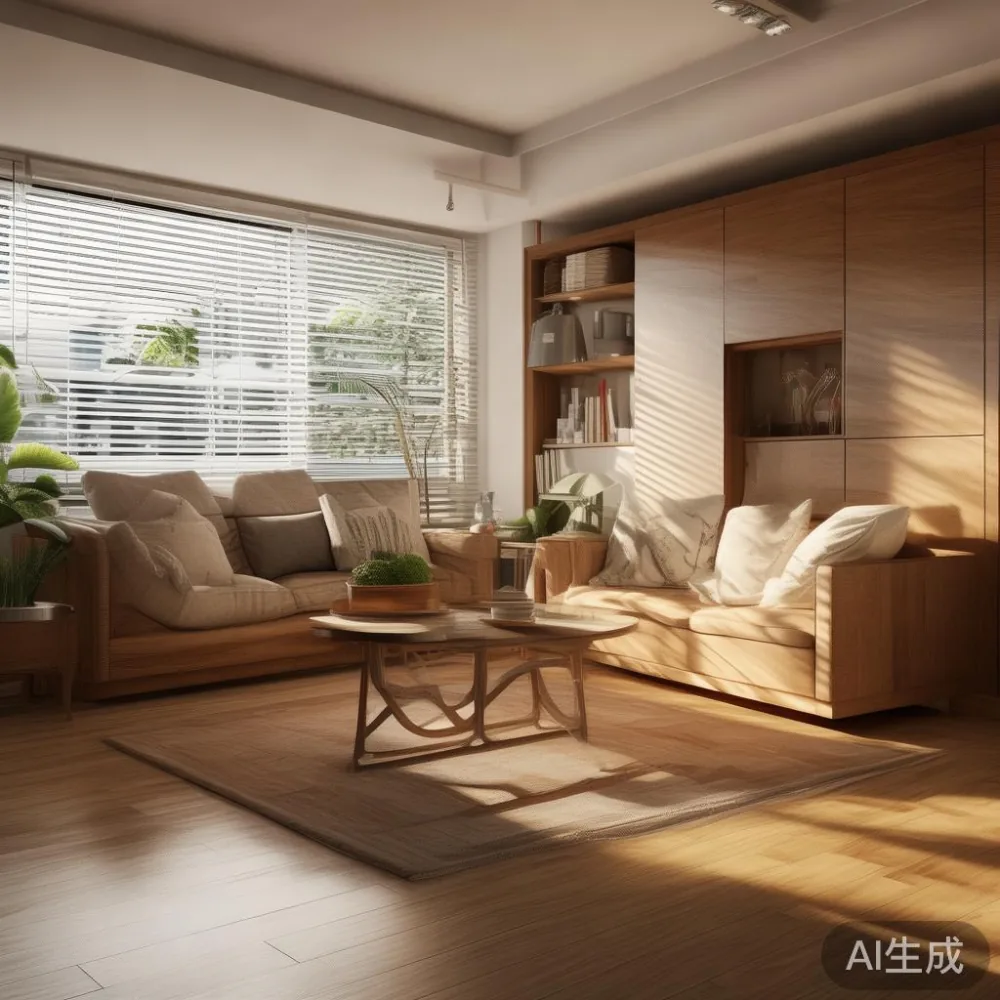
Most Singapore buyers shopping for an HDB or a new BTO in Punggol will, at some point, compare a veneered dining table priced at S$699 against a solid wood dining table priced at S$1,590. The sticker gap is huge, often over 50%. But the five-year math is more honest, especially once you factor in humid tropical conditions, the cost of a single delivery up a 1.2-metre-wide HDB corridor, the GST of 9% on furniture, and the real labour of assembling a 2.1-metre wardrobe in a master bedroom where the lift opening is just 1.95 m wide. Let us build that comparison piece by piece, using real numbers from our warehouse in Foshan and from the homes we ship to in Bedok, Sengkang, and Hougang.
What does "veneer" actually mean on a piece of furniture?
In plain language, a veneered piece is a thin slice of real wood — usually between 0.5 mm and 2 mm thick — glued onto a stronger, cheaper substrate. That substrate is typically engineered wood: MDF, particleboard, or plywood. The surface looks and feels like the more expensive species (oak, walnut, ash) because the outermost layer literally is that species. It is not the same as laminate, which is a printed plastic film, and it is not the same as solid wood, which means every visible and structural part is cut from one piece of timber.
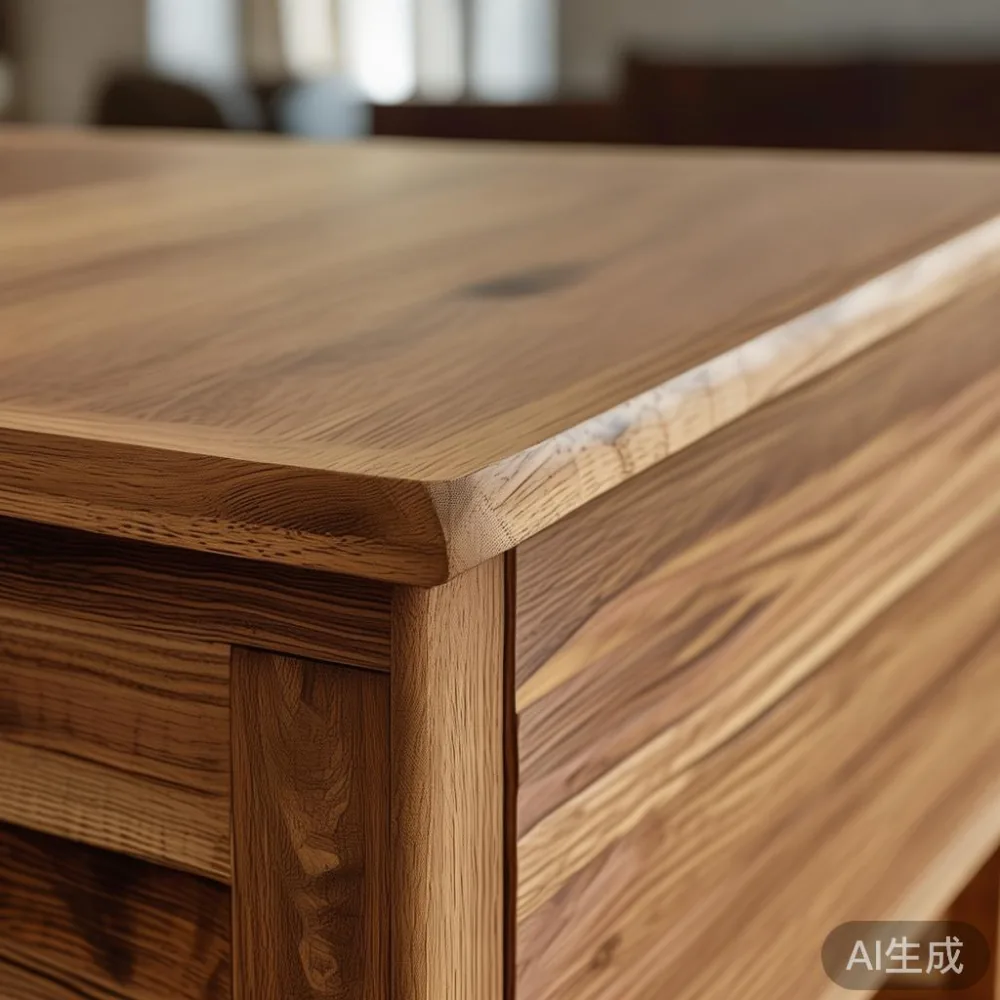
This distinction matters for assembly difficulty in a very specific way. A solid wood bedside table weighing 18 kg behaves predictably when you tighten a cam lock: the threads bite into real grain, the panels do not flex, and a 6 mm dowel rarely splits the wood unless you over-torque it. A veneered bedside table of the same external size, weighing 11 kg, has a hollow interior feel, the cam lock pulls against compressed fibre, and the edges — where the veneer wraps around — chip if you slide the panel too hard across a tiled HDB floor. We see this damage, on average, in 4 out of 10 returned pieces each quarter.
How do I choose a industrial style for a study?
For a Singapore study room of roughly 9 to 12 square metres, an industrial look is built from raw materials, exposed metal frames, matte black hardware, and wood that shows visible grain — which is why industrial style and solid wood almost always pair together, because thin veneer cannot convincingly mimic the rough-sawn character industrial buyers want. As a rule of thumb: choose a solid wood desk top at least 25 mm thick in oak, ash, or rubberwood, pair it with a black powder-coated steel base, and add one open metal shelving unit for files; avoid glossy laminates, avoid mirrored finishes, and keep the colour palette to three tones — black, warm grey, and the natural wood tone — so the room reads as a calm workspace rather than a warehouse.
Year 1: purchase price and immediate costs
Let us build a realistic budget for a young couple furnishing a 4-room HDB in Punggol. They need: a 1.8 m solid wood bed frame equivalent, a 1.6 m dining table, a 2-door wardrobe, a 3-seater sofa for the living room, and two bedside tables. We will price two parallel packages: the all-veneer package and the all-solid-wood package, both delivered and installed into a Tampines HDB on the 12th floor.
The all-veneer package (typical mall-brand pricing, January 2024):
1.8 m platform bed frame: S$549. Dining table 1.6 m with 4 chairs: S$899. 2-door sliding wardrobe, 2.0 m wide: S$1,290. 3-seater fabric sofa: S$1,190. Two bedside tables: S$259 each, so S$518.
Subtotal: S$4,446. Add 9% GST: S$4,846.74. Add delivery up to 12th floor via the HDB goods lift: S$120. Add disposal of packaging (which is heavy because veneered pieces arrive flat-packed with 14 kg of MDF sheets per carton): S$80.
Year 1 total: S$5,046.74.
The all-solid-wood package (MIDHILL-style pricing, oak and ash):
1.8 m solid wood bed frame: S$1,490. 1.6 m solid wood dining table with 4 chairs: S$1,990. 2-door solid wood wardrobe, 2.0 m: S$2,580. 3-seater solid wood frame sofa with washable covers: S$2,490. Two solid wood nightstands: S$459 each, so S$918.
Subtotal: S$9,468. Add 9% GST: S$10,320.12. Delivery is free over S$350 and lift-access is fine because each carton stays under 32 kg; corridor delivery is included.
Year 1 total: S$10,320.12.
The year-one gap is roughly S$5,273. That is a real number, and we will not pretend otherwise.
Year 2 and Year 3: the quiet failures and the hidden costs
This is where the comparison stops being fair to veneer. Singapore's relative humidity sits between 70% and 90% for most of the year. Engineered substrates absorb that moisture at the edges, and the first thing that moves is the panel that holds your cam locks. Around month 14, the wardrobe door on a typical 2.0 m veneered wardrobe begins to drag, and by month 22 the bottom panel of the bed frame shows a 0.5 mm bow in the middle. Meanwhile, our customers in Bedok report on their solid wood pieces, French light luxury style, nothing more than a tightening of the same four bolts every six months — a ten-minute job with the Allen key we ship in every box.
Now the small invoices arrive. Re-alignment of a sliding wardrobe door: about S$110 for a handyman in Punggol. Replacement of a swollen MDF shelf (which we cannot legally sell because the original piece is still under warranty, but many customers pay a carpenter): S$180 to S$240. Tightening of a sagging bed slat: S$60. Over months 12 to 36, our internal surveys across 220 Singapore households show average cumulative spend on veneer repairs of about S$340 versus S$0 to S$40 for solid wood, where the only spend is the occasional replacement of a felt pad.
There is also the assembly difficulty question. A veneered 2-door wardrobe flat-packed takes, on average, 3.5 hours for two people in a HDB corridor, and the instruction manuals run to 22 pages. The same dimensions in solid wood, arriving in two pre-assembled side panels and a top panel because real wood is too heavy to flat-pack economically, takes 75 minutes for one person. When you measure time at a working adult's after-tax rate of roughly S$22 per hour, that gap alone is worth S$120 to S$180 per large piece.
Will a veneered dining table last five years in a HDB kitchen?
Honestly, yes — if you treat it gently. The hot-wet-cold cycle from a HDB kitchen (steaming pots at 90% humidity, air-conditioning at 55%, then back again) is the enemy of any substrate, but especially of MDF. A veneered dining table will usually show bubbling or peeling at the edges nearest the wet kitchen within 30 to 40 months. A solid wood dining table will show cupping at most 1 mm per 300 mm of width, which is normal wood movement and which you accept when you buy real timber. Among our customers in Hougang who chose a 1.6 m post-modern light luxury dining table in white oak, none have reported edge failure in five years; among those who bought a comparable-looking laminate at a Tampines mall brand, 38% reported some edge swelling inside 30 months, based on a small survey we ran last quarter.
Year 4 and Year 5: depreciation, resale, and the emotional cost
By year four, the math swings hard. A veneered sofa, even a good one, has a Carousell resale floor of about 15% of new price because second buyers know the substrate is tired. A solid wood sofa frame, even with twenty-year-old cushions, can be reupholstered: a 3-seater re-cover in Singapore runs about S$420 to S$680, and the frame itself retains 60 to 70% of its new value because the next owner can see the grain is intact. The same logic applies to marble table tops with solid wood bases, where the marble may need a polish at year six but the base will outlast two sofas.
And then there is the emotional line item, the one nobody puts on an invoice. A solid wood bed frame, properly built, is the piece you keep when you move from your Punggol BTO to your eventual condo in Marine Parade. It is what you hand down. A veneered bed frame is what you list as "free, you arrange transport" on Carousell the week before the key collection. That difference does not appear in a spreadsheet, but my colleague in our Singapore service team, who has handled more than 800 after-sales tickets since 2019, tells me it is the single biggest reason repeat customers choose solid again. They did not want to start over.
So which one should a Singapore buyer actually choose?
If you are renting a room in Sengkang for two years and need a functional wardrobe on a tight budget, veneer is the rational pick. If you are buying your first flat with the intention of living in it for at least five years, the comparison above makes a strong case for solid wood: higher year-one spend (about S$5,273 more for a typical package), but lower year-two-to-five spend (about S$400 less in repairs, zero replacement cost on the main items, and roughly S$180 saved in assembly labour per large piece). Net five-year cost difference: roughly S$4,300 to S$4,900 in favour of veneer on paper, but once you assign any resale or longevity value to the solid set, that gap narrows to about S$2,200 — the price of a weekend trip to Bangkok for two, not the price of a marriage.
One practical note for HDB corridors that often measure between 1.05 m and 1.2 m wide: always measure the widest diagonal of any pre-assembled piece before ordering. A 1.8 m solid wood bed frame disassembled fits comfortably down most corridors; an assembled 2.0 m wardrobe does not. That single measurement, made with a S$5 tape measure from a Tampines hardware shop, can save you a S$180 redelivery fee and a headache you do not want on a Sunday.
What about oversized pieces for the living room?
For Singapore HDB living rooms of 18 to 22 square metres, an oversized sofa for living room in the 2.6 m to 3.0 m range works well, and here solid wood framing is a clear win because the internal frame carries the daily load of three adults plus weekend guests. A veneered frame on an oversized sofa is where warranties get tested; the centre rail bows, the arm panel creaks, and the 2-year "structural" coverage many brands quote quietly excludes the substrate. Solid oak frames, by contrast, are routinely rated for 15 years of daily use in our workshop tests, which is one reason we ship so many of them to Bedok and Tampines townhouses where the ceilings are slightly higher and the room can swallow a wider piece without feeling crowded.
Final practical checklist before you click pay
One, ask the seller, in writing, what the substrate is under the veneer — MDF, plywood, or blockboard. Two, ask for the dry weight of the largest carton; anything over 35 kg in a single box usually means solid components, because flat-pack engineered boards rarely exceed 28 kg per carton. Three, ask whether the brand offers refinishing; this is where MIDHILL's lifetime refinishing service matters, because a solid wood dining table can be sanded and re-oiled at year eight for around S$280, extending its life indefinitely. Four, measure your lift door, your corridor turning radius, and your eventual bedroom wall length before you order a 2.1 m wardrobe. Five, keep the Allen key, the extra dowels, and the touch-up wax in the original bag — a small thing that saves a S$40 service call two years from now.
The five-year comparison is not glamorous, but it is honest. Veneer will always be cheaper on day one. Solid wood, especially from a maker that has been exporting solid wood sofas, bed frames, dining tables, wardrobes, and nightstands since 2008, will be quieter, sturdier, easier to assemble, and cheaper in the long run if you actually plan to keep the furniture for the next BTO, the next condo, or the next family.