Veneer vs Solid Wood: What Will Your Furniture Really Cost in 5 Years?
Choosing between veneer and solid wood is rarely just a comparison of the price on a showroom label. For Singapore households furnishing an HDB flat in Tampines, a Bedok condo, or a compact Punggol home, the decision also involves delivery access, cabinet dimensions, assembly difficulty, heat and humidity, repairs, and what happens when one component needs replacing after 5 years.
This guide compares a typical solid wood dining table, bed frame, wardrobe, nightstand, and sofa package over a 5-year period. The example budget is SGD 8,600 before GST for 4 dining chairs and excludes a marble table because marble is normally paired with either construction method without changing the calculation. Prices are planning estimates, not fixed quotes. Furniture dimensions, timber, finishes, and site access can change the final amount.
For context, MIDHILL is a Foshan solid wood furniture maker established in 2008, with a 10-year structural warranty and lifetime refinishing service. Its models are sold internationally, while Singapore buyers should still request a written quotation because freight, GST, and delivery arrangements vary.
What are the real differences between veneer and solid wood furniture?
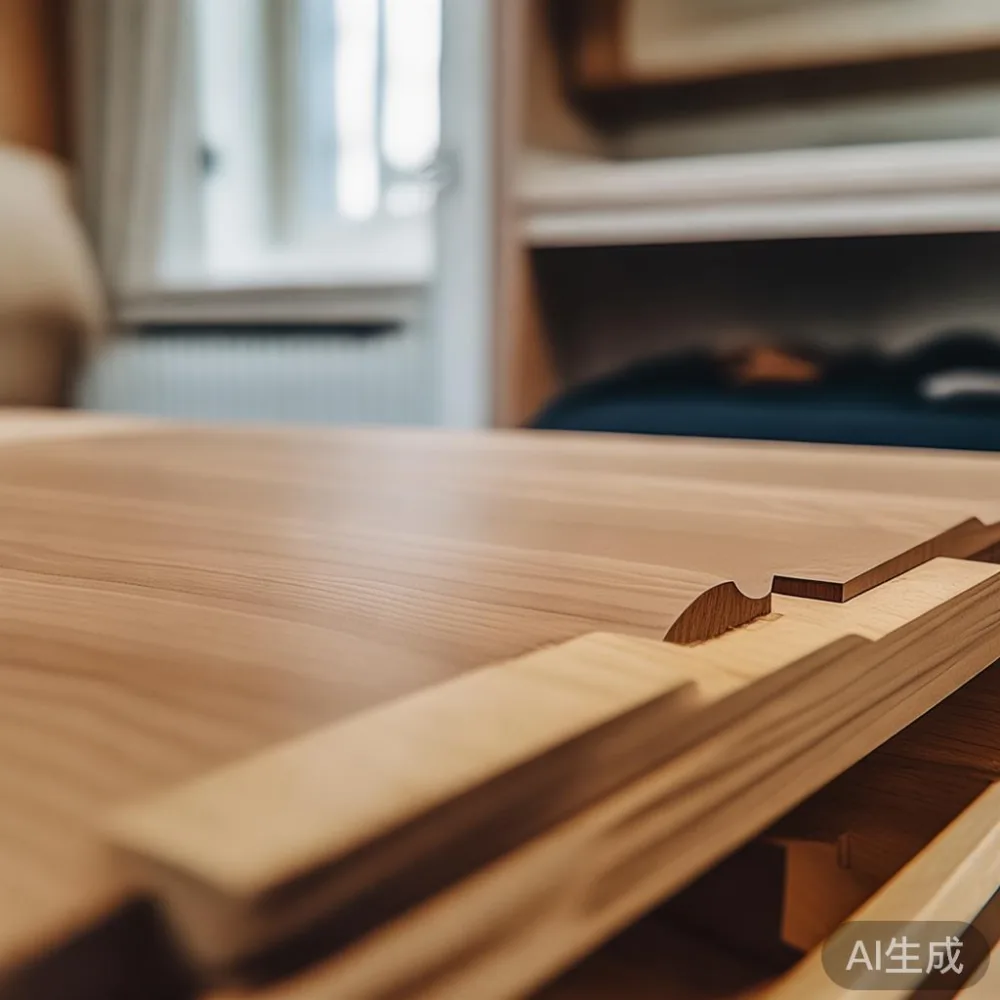
Veneer furniture uses a thin layer of timber, usually about 0.6-1.2 mm thick, bonded to a panel made from engineered board, particleboard, or plywood. Solid wood furniture uses solid timber components, although hidden structural pieces may still be plywood or another engineered material. A drawer box, door frame, or table apron can also combine materials even when the product is described as solid wood.
The visual difference can be subtle for 1-2 years. The long-term difference depends on edge treatment, joinery, moisture control, and maintenance. Veneer can provide more consistent colour across a large wardrobe front because sheets are cut from the same log. Solid wood may show grain variation that some owners appreciate and others regard as a defect.
For a Singapore home, relative humidity of roughly 60-75% and continuous use of air-conditioning matter. Neither material should be placed directly against an exterior wall that becomes damp. Solid wood can move slightly as it responds to humidity, while poor-quality veneer can lift, crease, or delaminate if its substrate or adhesive fails.
Cost is only one side of the comparison. A veneer wardrobe might cost SGD 1,250, while a comparable solid wood wardrobe might cost SGD 2,450. Over 5 years, that initial gap can narrow if one sideboard is replaced, a veneer edge is repaired, or a veneer table needs refinishing. It can widen if the solid piece remains in service and can be refinished repeatedly.
How much do veneer and solid wood furniture cost over 5 years?
Consider this sample package for an HDB family home:
- Dining table: veneer SGD 1,180; solid wood SGD 2,280.
- Bed frame: veneer SGD 1,360; solid wood SGD 2,680.
- Wardrobe: veneer SGD 1,250; solid wood SGD 2,450.
- Nightstand: veneer SGD 290; solid wood SGD 590.
- Three-seat sofa: veneer SGD 1,320; solid wood SGD 2,320.
- Four dining chairs: veneer SGD 680; solid wood SGD 1,280.
The total is SGD 6,080 for the veneer package and SGD 11,600 for the solid wood package before GST. The mixed package sits around SGD 8,600. Add 9% GST to these illustrative figures: veneer SGD 6,627, mixed SGD 9,374, and solid wood SGD 12,644.
Delivery is not automatically free for every order. A sample Singapore delivery is estimated at SGD 90 for curbside delivery in Tampines, SGD 120 for Bedok, and SGD 140 for Punggol. A lift-in service adds SGD 40-80 per item when the lift reservation is needed. If furniture must be carried through a corridor measuring only 85-95 cm wide, the legs or panels may need to be removed.
The 5-year calculation below includes delivery, assembly, consumables, and one realistic repair scenario. It does not assume damage from flooding, impact, or misuse. It also treats resale as optional rather than guaranteed. A used solid wood dining table might sell for 35-50% of its original price, while a well-maintained veneer table might sell for 20-35%. These are market ranges, not promised values.
Which material costs more to maintain in Singapore?
For routine care, both materials can be economical. Dusting a nightstand twice a week and wiping it with a damp cloth twice a month takes about 15 minutes per item. Owners of a solid wood dining table should avoid pouring a full 200 ml glass of water onto the surface. Veneer owners should avoid steam at the seams, particularly around curved edges.
A practical 5-year maintenance allowance is SGD 180 for veneer and SGD 260 for solid wood. The veneer figure covers 2-3 small edge repairs and replacement fittings. The solid wood figure covers 1-2 waxing sessions, minor hinge adjustments, and sanding or spot repairs. A full refinishing service may cost SGD 35-70 per hour, depending on the piece and the current finish.
The furniture-care market also creates labour differences. A solid wood table may need its top inspected after 18-24 months, while a veneer table needs closer attention to edge banding and veneer seams. Neither schedule should be treated as compulsory; condition matters more than the calendar.
Cleaning products should be chosen carefully. Use a pH-neutral wood cleaner, test it on a 10 cm by 10 cm area, and keep the cloth damp rather than wet. Avoid silicone sprays, ammonia, and abrasive pads. In humid areas, leave 5-8 cm of ventilation space behind a wardrobe where practical.
How difficult is assembly for veneer and solid wood furniture?
Assembly difficulty is often underestimated. A veneer flat-pack bed frame may arrive in 4 boxes, with a completion time of 70-100 minutes and 2 people. A solid wood bed frame may arrive in 3 boxes and take 90-140 minutes because the heavier rails require more careful alignment. The additional time does not always reflect poor design; it often reflects higher component weight.
For the dining table, veneer assembly might take 35-50 minutes with 2 people. Solid wood may take 55-80 minutes because the legs, braces, and fasteners need precise engagement. A wardrobe can take 2.5-4 hours for either material, particularly if the unit is 220-240 cm tall and must be anchored. The nightstand may take 20-35 minutes, while the sofa may take 40-70 minutes.
Assembly difficulty is higher in HDB flats with older stairwells or narrow corridors. Measure the lift opening, lift car, landing, and turning space before ordering. A lift car might measure 110 cm wide by 140 cm deep, but the usable diagonal still constrains a 220 cm wardrobe panel. If the wardrobe must be flat-packed into sections no longer than 180-200 cm, check whether the supplier will assemble it inside the bedroom.
Solid wood requires more care during installation. Protect a 75 kg dining table with moving blankets and lift it rather than dragging it across a 5 mm threshold. Veneer panels are lighter but can chip at exposed edges. Assembly difficulty should therefore be included in the 5-year cost even when professional assembly is only SGD 120-260 per large item.
What happens when veneer or solid wood needs repair?
The clearest long-term example is the dining table. A 4 cm-thick solid wood top can be planed, sanded, stained, and refinished. After 5 years, one damaged corner might require SGD 220-420 in restoration. A veneered top with a 3-5 cm MDF core may need SGD 380-680 to replace the veneer, repair the substrate, and match the finish. Matching grain across a repaired panel is rarely exact.
For the bed frame, a broken veneer headboard panel might cost SGD 180-350 to replace. A cracked solid wood rail might cost SGD 90-180 to repair if the joint remains sound. The difference changes if the whole component must be replaced: a new veneered headboard could cost SGD 280-520, while a matching solid wood component might cost SGD 450-850.
Wardrobe doors reveal another issue. Veneer doors may suffer swelling along their edges after moisture exposure. A repair might cost SGD 90-180. Solid wood doors can warp too, but a skilled carpenter may adjust them for SGD 40-100. If hardware is the cause, replacing a hinge at SGD 18-45 each may solve the problem in either material.
Solid wood repairability supports a higher initial purchase price. MIDHILL offers lifetime refinishing on qualifying purchases, which can reduce future refinishing costs. The service should be confirmed in writing, including transport, collection, and whether the original finish or a current colour will be used.
Can a solid wood sofa fit into a Singapore HDB flat or condo?
A solid wood sofa frame is often paired with upholstered cushions, spring suspension, and foam. The frame may weigh 55-80 kg for a 3-seat model, while the complete sofa can weigh 85-120 kg. A veneer or engineered-frame alternative may weigh 55-85 kg. The difference can affect lift planning and assembly difficulty.
Before delivery, record the sofa's packed dimensions, not just its product dimensions. A 210 cm sofa packed for transport might be 188-198 cm long, 72-82 cm wide, and 42-55 cm high. If the lift car is only 110 cm wide, check whether the sofa must be turned on its side and whether the corridor has a 90 cm handrail projection.
Style is another factor. A Modern light luxury sofa with a solid wood frame and restrained upholstery can suit a compact condo, but a bulky seat depth of 95-105 cm may reduce circulation. Look for a seat depth of 78-88 cm in a family room. French light luxury styling can work with pale woods, curved profiles, and muted fabrics, while post-modern light luxury can use a simpler frame with geometric upholstery.
Owners asking how to style Japandi sofa in room should consider a light oak or ash finish, low-profile legs, and a neutral rug measuring at least 160 by 230 cm. For a dining setting, a solid wood table can be paired with curved backs and warm lighting, but leave 90 cm around a 160-180 cm table for chairs and movement. Allow 75-90 cm between a bed frame and wardrobe where possible.
Which option is better for light-luxury interiors?
Neither material defines light luxury by itself. A well-proportioned veneered wardrobe can look refined, and a poorly detailed solid wood bed frame can look ordinary. Light luxury depends on timber tone, grain, joinery, edge profiles, hardware, proportions, and the surrounding room.
For a European light luxury for small living room scheme, solid wood can add convincing depth around a solid wood sofa or dining table. Its visible grain and repairable surfaces suit layered lighting, framed art, textured curtains, and restrained ceramics. A marble table can provide contrast beside a wood dining table, but the stone base should be checked for weight; a 120 by 70 cm marble top can weigh 75-110 kg.
Design research such as top 10 European light luxury furniture can show how materials are coordinated, though buyers should compare construction rather than country labels. In a local resale market, descriptions involving wholesale Italian light luxury furniture may attract attention, but the material, joints, dimensions, and finish should be verified by photographs and samples.
For wardrobes, research on how to style European wardrobe in room can be useful for selecting colours and handle finishes. Avoid matching every item exactly. One warm solid wood bed frame, pale dining chairs, and a matte-finish wardrobe can create a coherent scheme without making a 70-90 sqm flat feel crowded.
How do delivery time and returns affect the 5-year cost?
Sample delivery windows are 12-20 business days for in-stock veneer pieces, 18-30 business days for made-to-order solid wood items, and 25-45 business days for some upholstered products. These estimates should be checked against the actual production schedule. Singapore delivery usually requires a scheduled 2-hour window, and lift reservation fees may apply.
A 14-day return policy can reduce the risk of an unsuitable fit, but it does not remove freight charges. Confirm whether return delivery, restocking, and custom-finish exclusions apply. A made-to-order solid wood wardrobe with a specific stain may not be returnable, whereas a standard-finish nightstand may be. Request photographs of the packed carton and measurements before dispatch.
Freight quotes should be compared over the full 5-year horizon. A veneer order with lower product cost may still carry higher after-sales expenditure, while a solid wood order may spread more value over time because of refinishing and repairability. Add a realistic resale credit only if the furniture remains clean, structurally sound, and correctly documented.
The example shows veneer at SGD 6,627 after GST, a mixed package at SGD 9,374, and solid wood at SGD 12,644. After estimated maintenance, one repair, and a conservative resale credit, the 5-year totals can land near SGD 6,450-7,000 for veneer, SGD 8,900-9,600 for mixed, and SGD 11,700-12,800 for solid wood. The figures indicate planning bands rather than guarantees.
What should a Singapore buyer choose?
Choose veneer when the budget is limited, the piece can be dry-protected, and visual consistency across large panels matters. Choose solid wood when the furniture will be moved less often, exposed to normal family use, or expected to remain for 8-10 years or longer. A mixed approach is often sensible: solid wood dining table and bed frame, with a carefully selected wardrobe and nightstand based on humidity and budget.
Before ordering, measure the lift opening and the narrowest corridor point. Ask for the packed dimensions, assembly time, weight, warranty exclusions, refinishing terms, and return conditions. Add GST at 9% and retain a 10-15% installation contingency for HDB or older condo access.
Solid wood usually carries the higher 5-year cost, but it can offer better repairability and longer service life. Veneer can deliver strong value for occasional or lower-impact rooms. The right comparison is not simply purchase price; it is the cost of ownership across 5 years, including assembly difficulty, maintenance, repair, delivery, and realistic resale.