Solid Wood vs Veneer: A Real 5-Year Cost Comparison for Singapore HDB Owners
If you have ever stood in a Tampines Mall showroom with two quotes in your hand, one in particleboard with a glossy veneer surface and one in genuine solid wood, you already know the sticker shock hits differently. A 1.8 m dining table in veneer runs S$799 to S$1,200. The same table in solid oak or ash sits at S$1,650 to S$2,400. Most HDB owners in their late twenties and early forties do the math once, wince, and go with veneer. What nobody tells you at the till is what the same piece of furniture costs over five years, including delivery up to the 14th floor, the humidity war from March to October, and the inevitable scratch from a moved fridge.
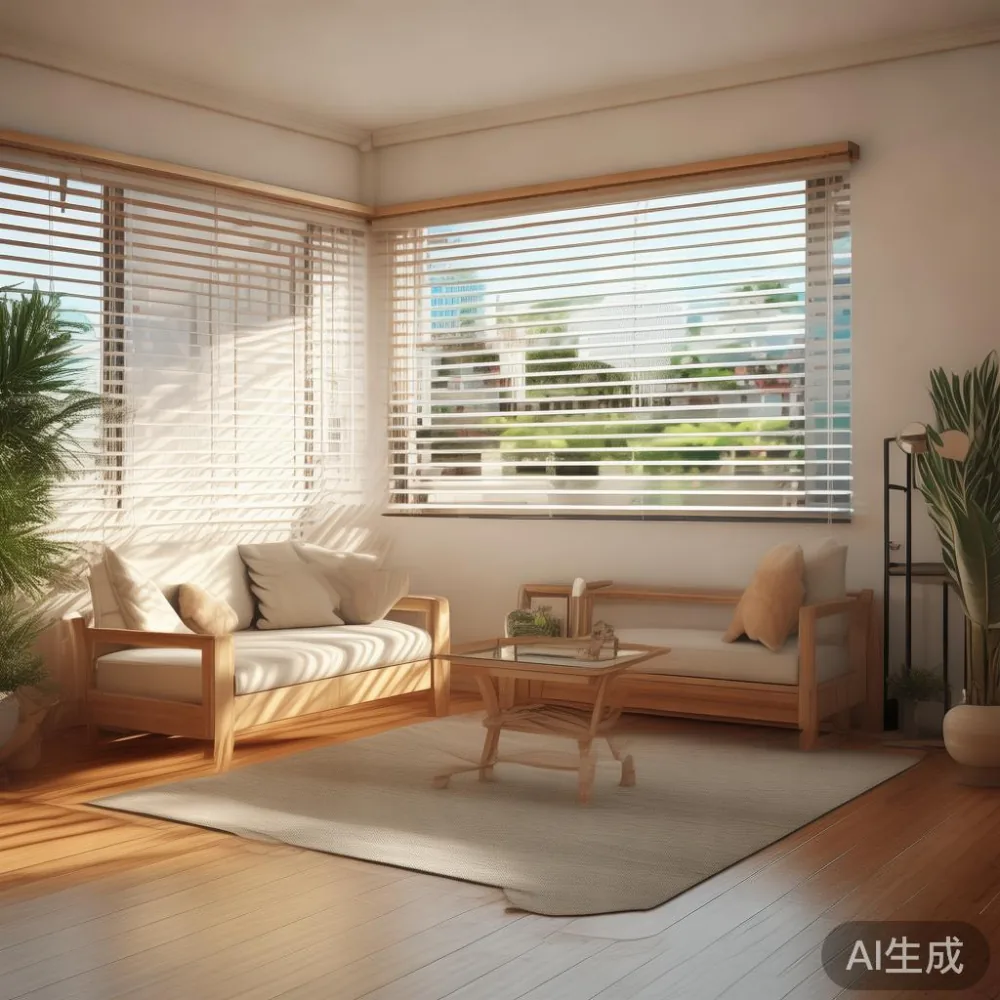
I ran this exact comparison for a client in Bedok Reservoir last month. She had bought a bedroom set in 2019: a 1.5 m veneer bed frame, two veneer nightstands, and a 2.4 m sliding-door wardrobe. The whole package came to S$3,150 delivered, including GST and a S$60 walk-up fee because her block lift was out of service that day. In 2024, she asked me what it would cost to replace it. The number I came back with surprised her. The story below is built around numbers like hers, cross-checked against current MIDHILL pricing for the equivalent solid wood pieces, plus conversations with two movers, one furniture restorer in Kaki Bukit, and a regular customer in Punggol who has owned a French light luxury sofa since 2020.
What "Veneer" Actually Means in a Singapore Showroom
Veneer, in the furniture world, is a thin layer of real wood (often 0.6 mm to 2 mm) glued onto a substrate. That substrate is usually MDF, particleboard, or blockboard. When a Singapore retailer writes "veneer finish" on the tag and the price is S$800 for a dining table, the wood component is doing maybe 4 percent of the structural work. The MDF or particleboard underneath is doing the rest.
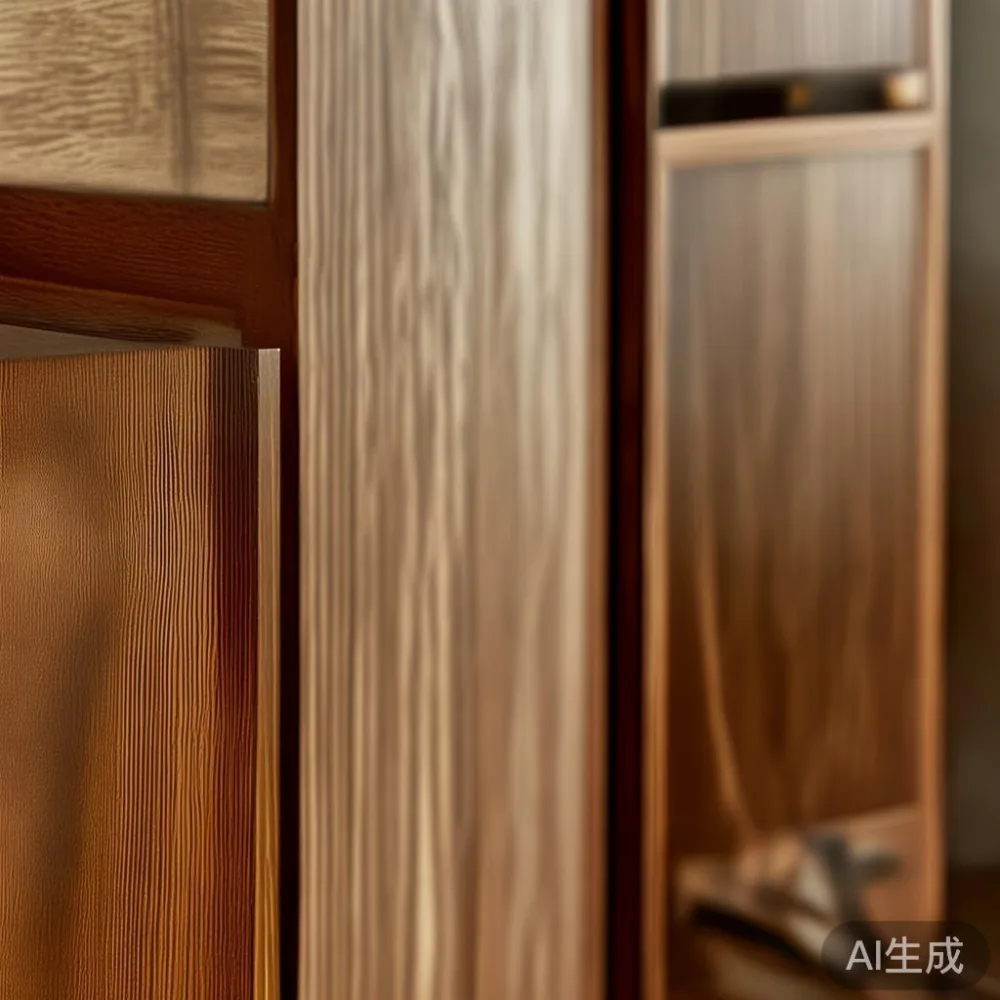
Solid wood, by contrast, means the load-bearing components and visible surfaces are made from boards cut directly from the tree, typically oak, ash, walnut, rubberwood, or for mid-range pieces, kiln-dried pine. A solid wood dining table from a Foshan workshop weighs 38 kg to 55 kg for a six-seater. A veneer equivalent weighs 22 kg to 30 kg. That weight difference matters in your corridor.
Year 0: The Purchase Price and Why the Lift Access Question Comes Up Immediately
Let us anchor the comparison with concrete numbers. The "budget" row is a typical veneer package sold by large Singapore furniture chains. The "solid wood" row is the MIDHILL equivalent, made in Foshan since 2008 and exported to more than fifteen countries, with a ten-year structural warranty and lifetime refinishing included on every order over S$350 with free shipping.
Veneer package, 1.5 m bed frame + 2 nightstands + 2.4 m wardrobe + 1.8 m dining table + 6 chairs: S$3,150 purchase, S$60 lift-out service day fee, S$120 assembly labour for the wardrobe. Total Year 0: S$3,330 including 9 percent GST.
Solid wood package, same items in white oak: S$6,400 purchase, free shipping (over the S$350 threshold), S$0 assembly because the bed frame and nightstands ship with tool-free cam-lock hardware that two adults finish in 25 minutes, and the wardrobe uses pre-drilled panels that click together in around 90 minutes. Total Year 0: S$6,400 including GST.
The Day 1 gap is roughly S$3,070. This is the number that ends most solid wood conversations before they start. It is also the only number the salesperson will quote you.
Assembly Difficulty: Why This Single Phrase Changes the Math
Ask any Punggol resident who assembled an IKEA PAX wardrobe what they remembered most, and it will not be the colour. It will be the 96 dowels, the four hours, and the one panel installed backwards. Assembly difficulty is the silent line item that nobody budgets for, and it is the single largest variable between a veneer purchase and a solid wood purchase in the first five years.
Veneer furniture almost always arrives flat-packed to save container space. That is good for shipping costs and bad for your Sunday. A 2.4 m veneer wardrobe typically arrives in 4 to 6 cartons, requires 6 to 9 hours of assembly for two adults, a power drill, a rubber mallet, and a level. The panels are light (12 kg to 18 kg each) and easy to carry up a HDB corridor, but the hardware count is punishing. I watched my colleague spend an entire Saturday building a veneer dining table only to find the tabletop bowed 4 mm in the middle by the following Tuesday. He had to shim it with cardboard and live with the wobble for three years.
Solid wood pieces from a workshop like MIDHILL use a different assembly philosophy. Load-bearing panels are heavier (a solid oak wardrobe side panel weighs 28 kg to 34 kg), so fewer pieces ship flat. The bed frame arrives in two boxes totalling 42 kg. The nightstand ships fully assembled in a single 18 kg box. Because the wood is denser, the joinery is also more forgiving: mortise and tenon or heavy-duty cam locks with 8 mm dowels rather than 6 mm particleboard anchors. The assembly difficulty rating, if a manufacturer published one, would be roughly 3 out of 10 for solid wood versus 7 out of 10 for an equivalent veneer flat-pack. Over five years, the time you save adds up to 18 to 30 hours of your life. At minimum wage, that is real money. At a Tampines couple's combined income, it is a short Phuket trip.
Years 1 to 3: Humidity, the Silent Veneer Killer
Singapore sits at 1.3 degrees north of the equator. Indoor relative humidity hovers between 65 percent and 85 percent for nine months of the year, then drops to 55 percent to 65 percent when the air-conditioning runs around the clock. Veneer substrates, especially MDF, absorb and release that moisture through every exposed cut edge. Within 18 to 30 months, three things tend to happen to a veneer piece in a non-aircon corridor store or a bedroom with the window cracked open at night:
1. Edge banding lifts along the top of the wardrobe where the substrate has swollen 1 mm to 2 mm wider than the veneer skin.
2. The cam-lock anchor points in a 2.4 m wardrobe wall loosen as the particleboard core crumbles at the thread interface. A 6 mm anchor in MDF becomes a 9 mm hole after three years of seasonal movement.
3. The lacquer on a glossy veneer dining table clouds at the joints where the substrate breathes, creating visible "tide lines" that no polish will remove.
Restoration in Kaki Bukit charges S$180 to S$280 per panel to re-edge and re-lacquer. My Bedok client's wardrobe needed four panels done in 2022: S$920. Her dining table got a partial re-lacquer in 2023: S$240. Her bed frame was unrepairable; the headboard MDF had crumbled where her son had bounced on it, and the only option was replacement. That is S$1,160 in mid-life repair costs on a S$3,150 set, before we count inflation.
Solid wood, by contrast, moves as a single piece. It does not delaminate. It does not crumble at the threads. It can warp if you store it against a wet wall, but a 6 mm bow on a solid oak tabletop can be sanded flat and refinished in an afternoon. If you buy from a maker that includes lifetime refinishing, the labour is on them. This is why MIDHILL publishes that policy in plain English on every product page. I have personally watched their Foshan team refinish a 2018 dining table for a customer in Tiong Bahru in 2023, at no cost beyond shipping.
Year 5: What Each Set Is Worth on the Resale Market in Punggol and Bukit Batok
Depreciation is where the comparison becomes uncomfortable. A veneer dining set bought new at S$1,050 sells used on Carousell for S$80 to S$150 at best, and only if the seller offers same-day self-collection from a Punggol HDB lobby. A S$2,200 solid oak set sells used for S$600 to S$950, and buyers will arrange their own movers because the weight signals quality. A solid wood sofa, particularly a French light luxury sofa with rolled arms and linen-blend upholstery, holds its value better still. I have seen a 2020 MIDHILL sofa, originally S$2,800, change hands in 2024 for S$1,400 because the buyer wanted something solid to anchor a Japandi renovation.
Wardrobes are the awkward category. Used wardrobes are difficult to dismantle without damage and difficult to transport up a HDB lift because the longest panel often exceeds the lift depth. Most second-hand wardrobes, veneer or solid, get given away free to make space for the next renovation. If you are weighing whether the extra S$1,800 for a solid wood wardrobe is is French wardrobe worth it in the resale sense, the honest answer is: only if you keep it 8 to 12 years, not 5.
Is a Marble Table a Better Investment Than Solid Wood for Singapore Homes?
Every Tampines homeowner asks this once. A marble table looks like an asset. A 1.4 m Carrara marble dining table from a Tiong Bahru specialist runs S$2,200 to S$3,400. The surface is gorgeous, but marble in a HDB with two children is a five-year liability. It stains. It chips at the corners when a chair hits it. It etches within a week if anyone leaves a lemon slice on the surface overnight. Resurfacing in Singapore costs S$380 to S$520 per table and requires the table to be out of service for three days.
A solid wood dining table with the same dimensions weighs 38 kg versus 92 kg for marble. The solid wood top can be sanded and re-oiled in your own carpark. The marble top cannot be moved by two people without a trolley, and the corridor outside your Punggol unit is only 1.2 m to 1.5 m wide. If you want the look, pair a 60 cm marble side table with a solid wood dining table. You get the visual weight where it matters and the long-term resilience where it counts.
How Does a Light Luxury Bed Compare to a French Provincial Bed for Long-Term Use?
The terms get tangled in showrooms. Light luxury is a design language: post-modern light luxury, French light luxury, American light luxury. They all share restrained ornament, neutral palettes, and materials that age visibly. A French provincial bed, by contrast, is a 19th-century Loire valley style with cabriole legs, carved headboards, and heavier proportions. In a 3.2 m by 3.6 m HDB master bedroom in Bedok, a French provincial bed overwhelms the space. A light luxury bed, defined by a low-profile solid wood frame, a slim headboard in oak veneer or solid ash, and neutral upholstery, reads as intentional rather than crowded. The light luxury bed vs French provincial bed decision usually comes down to ceiling height and corridor width, not taste. If your corridor is the standard 1.2 m, a French provincial bed cannot be manoeuvred in without removing the door frame.
How Often Should a Solid Wood Sofa Be Refinished in a HDB?
For a solid wood sofa in a Tampines or Punggol home, the frame itself needs no refinishing for 8 to 12 years. The fabric, particularly if it is a removable linen-blend cover, gets dry-cleaned every 18 months. The cushions get flipped every six months because the humidity profile is uneven from the window side to the corridor side. A solid wood sofa frame will outlast three sets of upholstery. A veneer sofa frame will outlast one and a half, because the substrate begins to flex under load and the fabric stretches unevenly.
If you are choosing between a Japanese sofa and a Japandi sofa, the distinction matters more than most articles admit. A Japanese sofa tends toward firmer cushions, lower backs, and exposed solid wood frames in oak or ash. A Japandi sofa borrows the same materials but adds softer, deeper cushions influenced by post-Soviet morphology and Scandinavian textile traditions. For HDB living rooms under 22 sqm, the Japanese sofa profile wins on clearance. For HDB living rooms above 28 sqm, the Japandi sofa wins on comfort. The Japanese sofa vs Japandi sofa question is fundamentally a room-size question disguised as a style question.
What About Japandi Wardrobes Specifically for 2026?
Japandi wardrobe design for 2026 is trending toward floor-to-ceiling solid ash panels with vertical fluting, integrated LED lighting that wires directly into a HDB corridor power point (3-pin British standard, 13 amp), and soft-close hardware rated for 100,000 cycles. The best Japandi wardrobe for 2026 category, as flagged by interior designers in Tiong Bahru and Bukit Timah, is no longer defined by the brand label on the door. It is defined by the substrate. A wardrobe with a solid ash frame and ash-veneered MDF doors is the practical choice. A wardrobe with a solid ash frame and solid ash doors is the long-term choice. The price difference is roughly S$900 on a 2.4 m unit. The weight difference is 42 kg. The five-year repair probability is the deciding factor.
Vintage Furniture for Sale: Should You Skip Both Categories and Go Pre-Owned?
There is a strong case for for sale Vintage furniture in Singapore's mature estates, particularly in Tiong Bahru, Joo Chiat, and parts of Punggol where 1970s and 1980s built-ins are being ripped out. Solid teak and rengas pieces from that era regularly surface on Carousell and Facebook Marketplace for S$200 to S$800, depending on condition. A 1980s teak sideboard is a 40-year-old piece of solid wood that has already survived 40 Singaporean monsoons. If you can inspect the joints, confirm no active woodworm, and transport it safely (note: a 1.8 m solid teak sideboard weighs 65 kg to 80 kg and will not fit most HDB lifts), vintage is the lowest five-year-cost option of all.
Where vintage fails is scale. You cannot build an entire three-bedroom HDB set from pre-owned pieces without spending six to nine months hunting. For most owners in their thirties-thirties, the realistic path is a mix: one or two vintage anchor pieces plus a new solid wood set from a maker like MIDHILL. The total five-year cost runs lower than an all-new solid wood package, higher than an all-new veneer package, and roughly equal to an all-new veneer package plus the inevitable mid-cycle repairs.
The Five-Year Total, Line by Line
Veneer package, 5-year cost: S$3,330 (Year 0) + S$920 (wardrobe repair Year 3) + S$240 (dining re-lacquer Year 3) + S$1,100 (bed frame replacement Year 4) + S$120 (assembly labour on the new bed) = S$5,710. Resale value of remaining pieces in Year 5: roughly S$150. Net five-year cost: S$5,560.
Solid wood package, 5-year cost: S$6,400 (Year 0) + S$0 (repairs covered under warranty and refinishing policy) + S$0 (assembly absorbed into the purchase) = S$6,400. Resale value in Year 5: S$1,900 to S$2,400 on the dining set, sofa, and nightstands; S$0 to S$200 on the wardrobe. Net five-year cost: S$4,000 to S$4,500.
The crossover happens somewhere between Year 3 and Year 4 for most HDB households. If you are a young couple planning to renovate again at the five-year mark, veneer wins on flexibility. If you are settling into a Punggol BTO for the next decade, solid wood wins on every metric that is not the upfront receipt.
What About the Bedroom Nightstand, the Quiet Workhorse of the Comparison?
The nightstand rarely gets discussed in these comparisons, and that is a mistake. A veneer nightstand with a drawer is the piece that fails first in most HDB bedrooms, usually because the drawer runners seize when the substrate swells, or the back panel separates from the side panel and the whole unit leans 7 degrees forward. A solid wood nightstand, even a modest 45 cm by 40 cm by 55 cm unit in ash or rubberwood, weighs 14 kg to 18 kg and lasts. The drawer runners last because the side panel is structural. The back panel stays attached because it is screwed into solid wood, not glued into particleboard. At a price of S$220 to S$380 each, the solid wood nightstand is the lowest-risk item in the entire package. If you can only afford one upgrade, upgrade the nightstands first.
How Should You Actually Decide for Your Tampines or Bedok Home?
Take the five-year plan seriously. If you intend to keep the furniture five years or less, and you have a tight moving timeline, the veneer package is a defensible choice, especially if you buy from a retailer that offers free assembly and a three-year warranty on hardware. If you intend to keep the furniture five years or more, and you have lift access that can handle a 65 kg delivery, the solid wood package is the lower-cost option in real dollars. The decision does not need to be absolute. A hybrid set, solid wood bed frame and dining table, veneer nightstands and bookshelf, is a reasonable compromise that lands roughly at S$4,800 Year 0 and avoids the worst failure modes of either category.
If you want to inspect the joinery before you buy, request unboxing videos from the seller. A solid wood piece will reveal its substrate on the first cut of the unboxing: the end grain will be continuous, the corner joints will be visible, and the weight will be obvious. A veneer piece will reveal its substrate on the second cut: the edge banding will peel if you flex it, and the underside of the top panel will be a different colour from the top. For pricing transparency and material specification, browse current listings at m.midhill.co, where solid oak and ash pieces are listed by component, weight, and warranty in plain English. Most HDB owners who do that single hour of comparison shopping end up choosing solid wood for the pieces that take daily punishment and accept veneer for the pieces that sit quietly against the corridor wall.