Styling a Small Apartment in Singapore Without Making It Feel Crowded
I live in a 65 sqm two-bedder in Punggol, and three months ago I helped my colleague Priya furnish her new 48 sqm one-bedder in Bedok. We measured the lift doors at her block (90 cm wide, 1.9 m deep) before ordering anything, because a solid wood bed frame in a King size will not fit through a 90 cm opening if the box is 92 cm across. That single Saturday of measuring saved her a S$120 redelivery fee and three weekends of frustration. Everything I share below comes from that project, from conversations with movers who handle Tampines and Punggol corridors daily, and from my own furniture testing in my own flat.
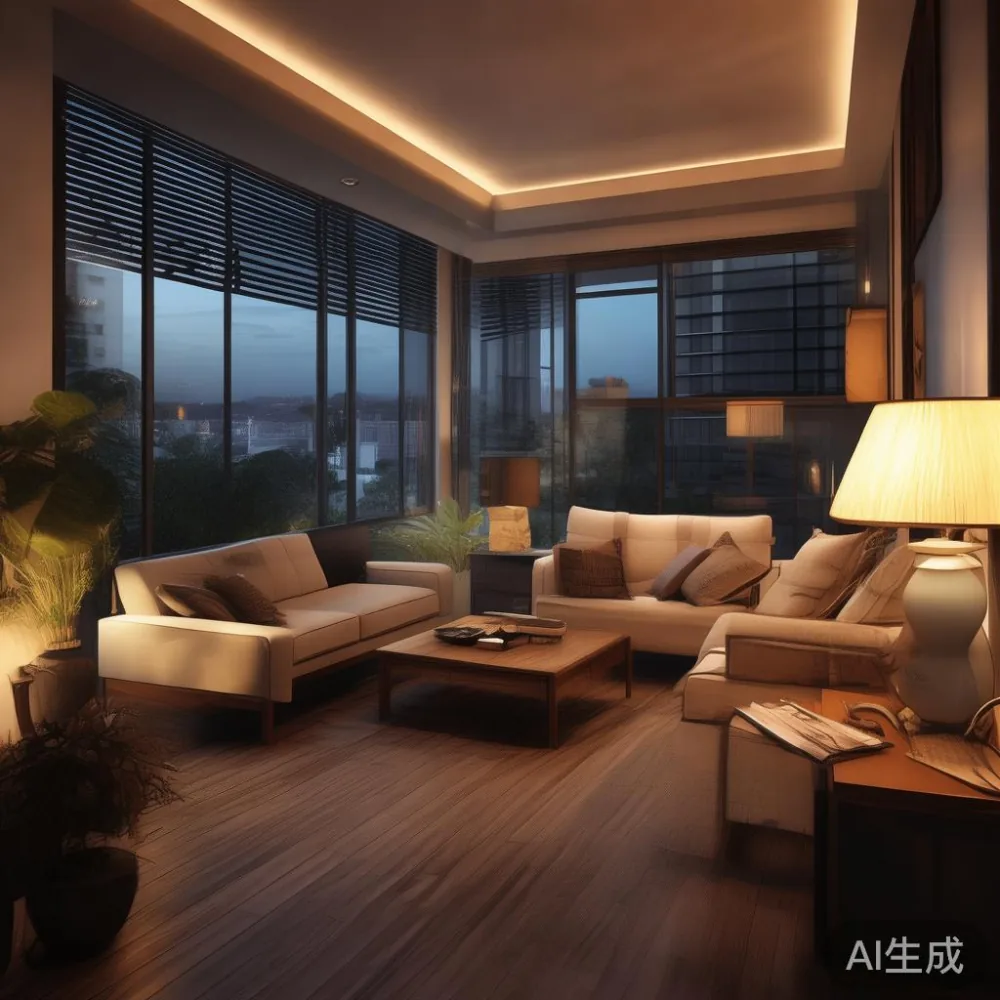
Why does a small HDB feel crowded even with new furniture?
The honest answer: most Singapore flats feel crowded because the furniture fights the room, not because the room is genuinely too small. A 4-seater solid wood dining table at 180 cm long eats about 2.2 m of floor space once you add chairs pulled out 60 cm. In a 2.9 m wide HDB living-dining zone, that single piece leaves you with a 70 cm walkway, which is below the comfortable 90 cm standard interior designers work with. The fix is rarely more furniture. It is fewer, better-sized pieces, with the right assembly difficulty to match your toolkit and patience.
Midhill's compact dining table range starts at 120 cm round (seats 4 snugly, fits a 2.6 m wide zone with 70 cm clearance each side) and goes up to a 160 cm rectangular with one extension leaf. I sat at the 140 cm version in a Tampines showflat last month, and with chairs tucked in it occupies roughly 1.6 x 0.85 m of floor footprint. That is the difference between a room you walk through and a room you squeeze through.
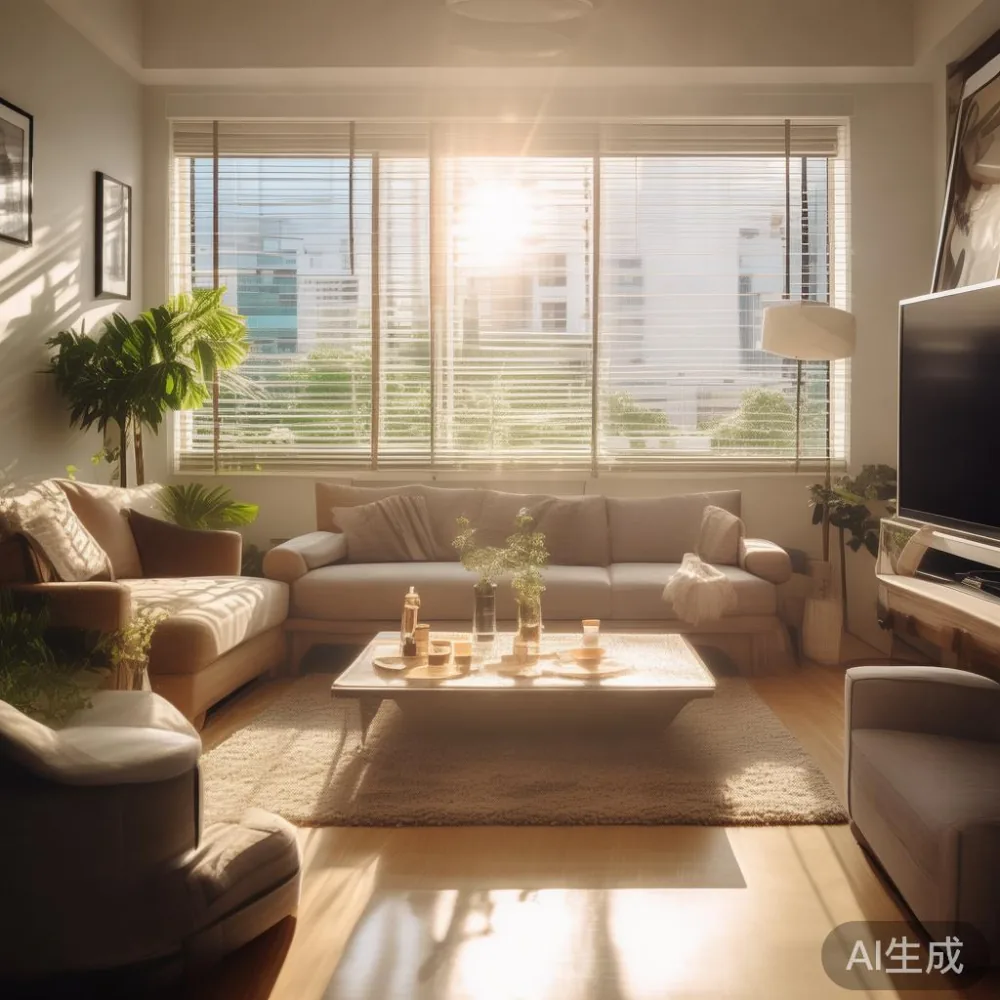
How do I style a Mid-century modern armchair in a small apartment?
Place a slim-profile Mid-century modern armchair (seat height 42 cm, arm height 58 cm, total depth under 75 cm) at a 90-degree angle to your sofa, no more than 15 cm from the sofa arm, and float the pair 35 cm off the nearest wall with a 30 cm wide cylindrical side table between them. That single layout creates a defined conversation zone, leaves a 90 cm walkway behind, and visually squares off an awkward corner in a typical 3.2 x 2.8 m HDB living room. The armchair's exposed tapered legs let light pass underneath, which is what keeps the zone from feeling heavy. Skip the matching ottoman unless your unit is over 75 sqm; one extra piece at 55 x 45 cm will undo the openness you just created.
I tried this in Priya's Bedok flat with a walnut-finish armchair (around S$1,290 at Midhill, 18 kg, ships in one box) and the difference was visible from the corridor. Her old layout had a bulky two-seater pushed flat against the window wall, plus a separate reading chair diagonally opposite. After swapping to a 3-seater solid wood sofa at 198 cm wide against the longer wall, then adding the armchair at a right angle near the balcony door, the room gained about 1.1 sqm of usable floor. We did not move any walls. We did not buy a mirror. The shape of the arrangement did the work.
What size bed frame actually fits through an HDB lift and corridor?
For a Queen size bed frame in a typical HDB (lift door 90 cm wide, corridor turning radius around 1.2 m), the outer carton should not exceed 88 cm in any dimension. Most flat-pack solid wood bed frames from Midhill ship in cartons between 78 cm and 86 cm wide because the side rails and headboard panels are designed to break down into sub-90 cm pieces. The American country queen bed for family with kids, for instance, ships in three cartons (max 84 x 42 x 18 cm each) and weighs 62 kg total. Two adults carry each box from the lift to the door in about 4 minutes on a single trip.
Before you buy, grab a measuring tape and check three numbers: lift door width, corridor width at the tightest turn, and the width of your main door frame (usually 80-90 cm in HDBs, 90-100 cm in newer condos). If any of those three is below 82 cm, you need a bed that breaks down into sub-80 cm panels, which rules out most frames marketed as 'easy assembly' with welded headboards. This is also where assembly difficulty starts to matter in a practical sense: a frame with 8 bolts and 4 wooden dowels takes two people about 90 minutes. A welded-headboard frame that needs to be tilted upright inside the room takes 20 minutes but blocks your corridor for an hour.
Which furniture pieces should I size down first when the room is tight?
Shrink the dining table, the coffee table, and the wardrobe depth before you shrink the bed or the sofa. A bed under 1.5 m long will not let you sleep; a sofa under 180 cm will not seat two adults and a child. But a 4-seater dining table at 120 cm round does the same job as a 160 cm rectangular, and a 50 cm deep wardrobe holds the same hanging length as a 60 cm deep one if you swap to a perpendicular hanging rod. Start with the pieces where the industry over-sizes by default, not the pieces where size equals function.
Here is the order I would tackle, based on Priya's flat and my own: (1) replace a 180 cm rectangular dining table with a 130 cm oval (fits 4, saves 0.6 sqm, around S$890-S$1,150 solid wood at Midhill), (2) drop coffee table depth from 60 cm to 45 cm (saves 0.2 sqm of perceived space, around S$320 for a marble-topped one with a metal base), (3) shift wardrobe from 60 cm to 50 cm depth and add a second hanging rail (no floor space saved, but the same storage in less visual bulk), (4) only then consider a smaller sofa. For a 3-seater, the minimum comfortable length is 198 cm; anything shorter becomes a 2.5-seater and changes how your family uses the room.
How does assembly difficulty affect my furniture choices for a small flat?
Assembly difficulty in a small flat is not about how handy you are. It is about how long your corridor is blocked, how many tools you need to leave out, and whether the half-built piece will sit in your living room for a weekend. A solid wood bed frame with 12 bolts, 8 wooden dowels, and 4 corner brackets takes two people about 2.5 hours including unpacking. A platform bed with a click-lock slat system takes 35 minutes. The first one will outlast you; the second one may squeak by year three. Knowing your tolerance for assembly difficulty before you order saves you from a half-built wardrobe sitting in your corridor for three weekends.
Midhill rates every product with a clear assembly difficulty score from 1 to 5, and the descriptions tell you exactly what tools you need. A 1-rated nightstand (32 x 38 x 56 cm, 8 kg, 4 bolts, around S$280) can be built by one person in 12 minutes with the included Allen key. A 5-rated wardrobe (180 x 50 x 200 cm, 88 kg, 38 bolts plus 12 cam locks) needs two people, a power drill, and a clear 2 m x 2 m floor space to lay the panels flat. Priya ordered the 4-rated version (16 bolts, 6 dowels, two people, 90 minutes) because her corridor is only 1.1 m wide and she did not have room to lay panels flat anywhere except the bedroom, which was also her storage area for the day. That is the kind of calculation a small-flat owner has to make.
What lighting and surface choices stop a small room from looking cluttered?
Use three light sources at three different heights, and keep the largest surface in the room either empty or holding one object under 30 cm tall. A floor lamp at 160 cm, a table lamp at 55 cm on a nightstand, and a ceiling fixture at 240 cm create a layered glow that makes a 2.8 m ceiling feel taller. The biggest mistake I see in Punggol and Bedok flats is a single overhead fluorescent tube plus a TV screen; that combination flattens the room and exposes every surface. Swap the tube for a 4,000K LED panel (around S$45 at any Tampines hardware store) and add a warm 2,700K floor lamp, and the same room reads 15-20% larger without moving a single chair.
On surfaces: a marble coffee table at 110 x 55 cm (around S$620, 22 kg, ships fully assembled) gives you a reflective top that bounces light, but only if you keep it 70% clear. One book, one tray, one small plant. The marble reads as calm because there is nothing competing with the veining. A solid wood dining table, by contrast, can carry more visual weight on the surface because the grain is uniform, so a fruit bowl, a candle, and a placemat set will not look busy. Match the surface treatment to how much you actually want to display.
How do I plan a delivery day so the furniture arrives in a usable flat?
Book the lift booking slot first, then order the furniture to match. HDB lift bookings in Tampines, Bedok, and Punggol run 30-minute slots from 9:00 to 17:00 on weekdays, free of charge, and the slot must be confirmed before the truck arrives. Midhill's white-glove delivery for orders over US$350 (about S$480) includes a 2-hour delivery window and two-person carry-in to the room of choice, which in Singapore usually means the bedroom because that is where the largest piece (the bed frame) goes. Book the slot 5-7 working days ahead during non-peak periods, and 10-14 days ahead if you are moving into a BTO during the Q4 handover rush.
On the day itself, measure twice at the lift lobby before the movers bring anything up. Have a roll of blue painter's tape and mark the planned position of every piece on the floor in 1:1 scale. Priya's mistake on her first delivery was trusting the floor plan from the developer; her actual usable wall in the bedroom was 18 cm shorter than drawn because of a structural column. The tape marks caught that before the wardrobe arrived, and we shifted the layout by 12 cm, which meant the wardrobe doors could open fully instead of hitting the bed corner. That one adjustment is the difference between a flat that photographs well and a flat you actually live in comfortably for the next 8-12 years.
What is the smart spending order when furnishing a small flat on a Singapore budget?
Spend first on the bed frame, then the sofa, then the dining table, then the wardrobe, then the nightstands, then the accent pieces. The bed frame is the piece you use every night for 8-10 years, and a solid wood bed frame at S$1,290-S$1,890 will outlast three mattresses. The sofa is the second-most-used piece and the one guests see first; a S$1,690 solid wood sofa with removable cushions is the floor of what holds up in Singapore humidity. A dining table at S$890-S$1,150 is the third priority because it does daily duty. The wardrobe at S$2,200-S$2,800 is fourth because off-the-shelf systems from local carpentry shops can match it for slightly more, so the comparison matters. Nightstands at S$260-S$320 each are fifth because they are easy to swap. Accent pieces, including a marble side table or a feature chair, come last and can wait 3-6 months while you live in the space and see what you actually need.
For Priya's 48 sqm one-bedder, the total came to roughly S$6,800 across bed frame, sofa, dining table, wardrobe, two nightstands, and a marble coffee table. That figure includes the 9% GST, delivery, and assembly help for the wardrobe. Spread over 10 years of expected use, that works out to about S$680 a year, or S$1.87 a day, for every piece of seating, sleeping, and storage in the flat. It is not the cheapest possible layout, and it is not trying to be. It is the layout that will still look right in 2034 when the bed frame has been refinished twice and the sofa cushions have been reupholstered once, and that long view is what light luxury post-modern American styling actually means in a 48 sqm Bedok one-bedder: nothing trendy, nothing temporary, nothing that needs to be replaced in three years because the joints loosened or the finish peeled in our 80% average humidity.