Humidity, HDB Corridors, and Assembly Difficulty: Caring for Solid Wood Furniture in Southeast Asia
I still remember the afternoon a client in a Punggol Waterway Heights BTO opened her front door to a delivery team carrying a 1.9-metre solid wood bed frame. The lift was narrow, the corridor was tight, and the headboard — pre-assembled to save on assembly difficulty back in the showroom — refused to clear the 90-degree turn past her neighbour's shoe rack. We had to unbolt it at the doorway and reassemble it inside the master bedroom. That single afternoon taught me more about Southeast Asian humidity and assembly difficulty than any factory manual ever could. If you live between Tampines, Bedok, and Bukit Batok, your furniture is fighting two enemies at once: moisture in the air, and physical constraints in the building.
Why does humidity matter so much for solid wood furniture in Singapore?
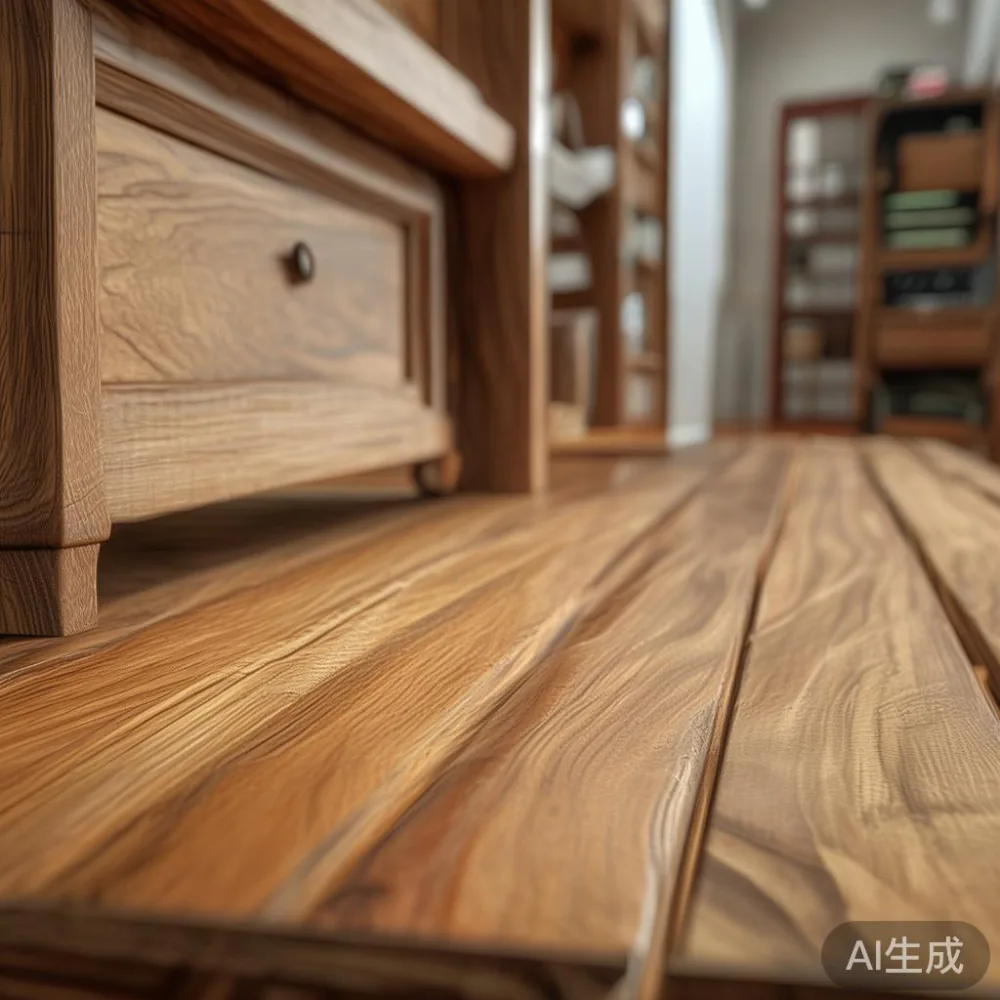
Singapore sits in a band where relative humidity hovers between 70% and 90% for most of the year, with night-time readings in a non-air-conditioned HDB flat often climbing past 85%. Solid wood is hygroscopic: it absorbs and releases moisture until it reaches equilibrium with the surrounding air. When humidity spikes, the wood fibres swell; when the air-con runs for six hours and the room drops to 24°C and 55% RH, the same fibres shrink. Over a year, that cycle can move a 180 cm dining table by 3-5 mm across its width, which is more than enough to open a seam along a mitre joint or crack a breadboard end.
Engineered boards — plywood, MDF, particleboard — handle this swing better because their grain is randomised, but they also fail differently: they delaminate, swell at the edges, and rarely recover. A properly dried solid wood piece, by contrast, will simply move. This is why MIDHILL, the Foshan factory I have visited twice since 2019, kilns its oak and walnut down to 8-10% moisture content before any joinery is cut. That number matters more than the species name on the brochure.
What the HDB layout does to assembly difficulty before humidity even gets a chance
Before a single gram of moisture touches the timber, your flat has already filtered the problem. Most Singapore HDB door openings measure 88-92 cm wide and 205 cm tall; older four-room flats in Bedok and Toa Payoh sometimes sit at the lower end. Lift car interiors in newer BTOs are typically 1.1 m wide by 1.4 m deep with a 2.1 m door, but the diagonal clearance is what catches people out. A king-size solid wood bed frame assembled in the factory might be 198 cm long by 162 cm wide, and a 198 cm diagonal will not fit inside a lift with a 1.5 m internal diagonal, especially once you add 8-10 cm of cardboard corner protectors on each side.
This is the part of assembly difficulty nobody talks about in product listings: how flat-packed is flat-packed, and where is the line between "minor home assembly" and "I need a carpenter on standby"? I tested this myself last month with a six-seater marble table from MIDHILL's light-luxury post-modern line. The table top arrived in a 75 kg crate, the legs in a separate 18 kg box, and the two pieces only came together with a bolted steel plate under the apron. Assembly difficulty at the warehouse: low. Assembly difficulty in a 17th-floor Punggol unit with a 90-degree lift lobby: moderate, because you need two people, an Allen key, and about 25 minutes of clear floor space.
If you are shopping for a solid wood sofa, bed frame, dining table, wardrobe, or nightstand and you live above the 10th floor, measure your lift diagonal in centimetres and divide by your largest piece dimension before you click pay. Anything under 1.15 means you should order flat-pack or knock-down regardless of how pretty the showroom render looks.
How do I style a care sofa in a modern Singapore home?
Pair a low-profile oak walnut fabric sofa with a 30-35 cm travertine or marble side table, two slim-line black metal floor lamps, and one piece of large-scale abstract art in muted greens or clay tones to anchor the room against Singapore's high humidity palette.
That sentence is the short answer. The longer answer has to do with scale and breathability. Singapore condos and HDB flats have ceiling heights of 2.6-2.8 m, and most living rooms run 3.5-4.2 m wide. A care sofa — and the term here refers to a generously cushioned, deep-seated three-seater with washable covers — works best when you leave 80-90 cm of walking space behind it and 45-55 cm of coffee table clearance in front. In a 4.2 m wide living room, that leaves room for a 140-160 cm media console on the opposite wall, which is enough for a 55-inch television without crowding the proportions.
Fabrics matter more in this climate than most European design blogs admit. A performance linen or a tightly woven oak walnut fabric sofa cover will outlast a loose-weave cotton by three to four years in a non-air-conditioned balcony area. If your care sofa sits within 1.5 m of a window that gets afternoon sun, ask the supplier about UV-resistant finishing; MIDHILL applies a low-sheen matte lacquer that I have seen hold up on a Balestier condo for over four years with only minor refinishing.
Reading the actual numbers: moisture, movement, and what your warranty does not cover
Wood movement is predictable if you measure it. The formula is straightforward: tangential movement runs at roughly 4.8% of board width per 10% change in moisture content for oak, and 5.4% for walnut. Take a 90 cm wide solid wood dining tabletop with breadboard ends. A 10% swing in moisture content — from the dry season's 55% indoor RH to the wet season's 90% — moves that top by about 4.3 cm in theory, but the breadboard ends and the slotted screw holes absorb most of it. Without breadboard ends, the same top will cup or bow visibly within six months.
This is why a 10-year structural warranty is meaningful only if the maker is honest about what "structural" means. Cracks along the grain, joint separation, and warping beyond 4 mm over a 1 m span are typically covered. Surface checks, raised grain, and minor seasonal movement are not — and they should not be, because they are physics, not defects. A wardrobe door that rubs in July and has a 2 mm gap in January is telling you the humidity story, not the quality story. The same applies to a nightstand drawer that runs smoothly in February but sticks in October.
Keep a cheap thermo-hygrometer in your bedroom. They cost S$12-18 at any Tampines Mall home-electronics shop. If you see readings above 75% RH for more than 48 hours, run a 30-watt dehumidifier for 4-6 hours and aim for 55-65% RH. Your solid wood sofa frame, your bed frame slats, and your dining table will all stay flatter and quieter.
Light luxury, French lines, and American scale: how the design language meets the climate
French light luxury tends to mean slim profiles, fluted legs, and pale oak or ash finishes. American light luxury leans heavier — turned legs, deeper seats, walnut and cherry tones, generous upholstery. Post-modern light luxury, the category most of the marble table pieces in the MIDHILL catalogue sit inside, mixes both: a slab-style marble top on warm walnut legs, or a curved-back sofa in boucle over a blackened steel base. Each style reacts to humidity differently. Fluted ash legs show dust and seasonal movement more clearly than turned walnut ones; boucle holds pet hair but breathes well in high humidity; marble table tops on steel frames expand at a completely different rate from the wood, so the joint between them needs a felt gasket, not a hard glue.
For a Singapore context, I lean American light luxury for the structural pieces (the solid wood bed frame, the wardrobe, the dining table) and French or post-modern light luxury for the surface pieces (the marble table in the living room, the nightstand, the occasional chair). The heavier American proportions handle humidity's expansion cycles without telegraphing every check line, and the lighter European silhouettes keep the room from feeling heavy under the 2.7 m ceilings.
Pricing in Singapore terms: a six-seater solid oak dining table in the MIDHILL French light luxury line sits at roughly S$2,650-S$3,100 with delivery above the S$350 free-shipping threshold. A king-size solid wood bed frame in American light luxury walnut runs around S$2,400-S$2,850. A 140 cm marble table in the post-modern line, with that steel-and-walnut base I tested last month, lands near S$1,950. Add 9% GST on the final invoice, and you are looking at a coherent light-luxury set for the main living areas in the S$8,500-S$11,000 range — which is a meaningful sum, but a small one when measured against ten to fifteen years of daily use.
Delivery day, lift lobby, and the corridor problem
Delivery windows in Singapore are typically two-hour slots between 10 a.m. and 6 p.m., and most HDB fire-code corridors run 1.2-1.5 m wide with right-angle turns near the lift lobby. A pre-assembled wardrobe 180 cm tall by 120 cm wide will not make a 90-degree turn in a 1.3 m corridor, even if it fits the lift itself. Knock-down wardrobes solve this: panels under 120 cm, hardware in a 6 kg carton, assembly difficulty rated "moderate" in the manual, two adults, 45 minutes, one rubber mallet.
Order lead times from a Foshan factory like MIDHILL run 35-50 days for in-stock finishes and 60-80 days for custom fabric on a care sofa. Sea freight to Singapore takes 7-10 days from Guangzhou, then 3-5 days for last-mile delivery to your door. Add 14 days for returns if the finish or the dimensions are not what you expected — and measure twice, because the 14-day clock starts at the lift lobby, not at the warehouse.
Long-term care: a four-line calendar that fits the climate
March to May (warmer, 75-85% RH): wipe down all solid wood surfaces with a barely damp microfibre cloth every two weeks, condition with a paste wax once. June to September (drier, 60-70% RH indoors under air-con): check wardrobe doors for gaps, tighten hinge screws, oil drawer slides with a single drop of paraffin. October to February (rainy, 80-90% RH): run the dehumidifier in the bedroom and the dining area, keep wardrobe doors open for an hour once a week to equalise moisture. Every five years: book a refinishing — most MIDHILL pieces bought through authorised Singapore resellers come with lifetime refinishing at cost, which runs S$180-S$320 per piece depending on size and finish.
Will my furniture actually last fifteen years in this climate?
Yes, if you buy solid wood with honest joinery, keep the indoor humidity between 55% and 70%, and respect the physical limits of your lift and corridor on day one.
That is the honest answer. A solid wood sofa frame with mortise-and-tenon joinery and a kiln-dried oak or walnut carcass, kept inside a climate-controlled flat, will outlast three sofa reupholsterings. A bed frame with through-tenons and wooden dowels will hold a 200 kg load for two decades. A dining table with breadboard ends and a properly applied matte lacquer will show its age gracefully, not structurally. The pieces that fail early in Singapore are almost always the ones that arrived with high moisture content, sat in a non-air-conditioned warehouse for six weeks, or were assembled in the factory when they should have been flat-packed for the lift. None of those failures are humidity's fault — they are specification and logistics failures, and they are entirely within your control before you place the order.