Veneer vs Solid Wood in Singapore: A 5-Year Cost and Assembly Difficulty Comparison
Five years ago, I helped my colleague Priya furnish her new three-room HDB flat in Punggol. She bought a glossy veneer dining table from a Jurong warehouse for S$899 and a solid wood dining table from MIDHILL's Foshan factory (shipped to her door for S$2,150, free because the order crossed the US$350 threshold at checkout). Last month I went back for her housewarming in the new BTO. The veneer table was at the void deck, marked "free to take." The solid wood table was still in the dining area, with one extra leaf added. That single observation is the spine of this article: a 5-year cost comparison between veneer and solid wood, told through Singapore HDB realities, SGD prices, and the very real headache of assembly difficulty on a 1.1 m wide corridor.
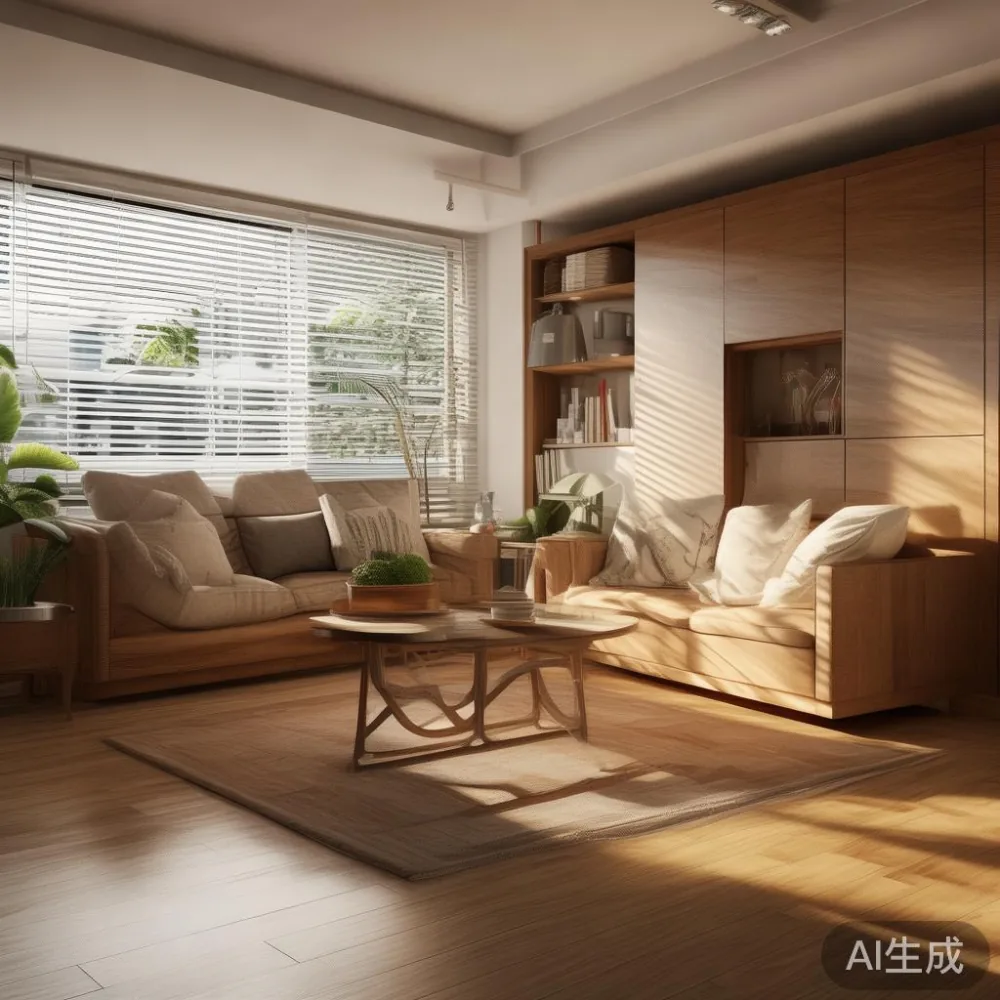
Why Singapore Buyers Compare Veneer and Solid Wood Over a 5-Year Window
In Singapore, furniture does not retire after three years — it survives at least one move, sometimes two. The HDB resale cycle, the upgrading to a five-room flat in Sengkang, or the shift from a Tampines condo to a Bedok executive maisonette means your dining table, bed frame, and wardrobe are packed into a lorry, hauled up a service lift, and slid through a corridor that, by HDB standard, measures 1.2 m to 1.5 m wide. A piece that splits, sags, or arrives with 142 tiny parts will cost you more than its sticker price over five years.
Veneer furniture — a thin layer of decorative wood (often 0.5 mm to 2 mm) glued to an MDF or particleboard core — is lighter, cheaper at checkout, and easier to carry up three flights because the lift in many older blocks at Bedok Reservoir holds only six persons or about 450 kg. Solid wood furniture, by contrast, is heavier. A 1.8 m solid wood dining table can weigh 55 kg to 70 kg, while a comparable veneer version weighs 28 kg to 35 kg. That difference changes how many people you need on moving day and whether the corridor corners forgive you.
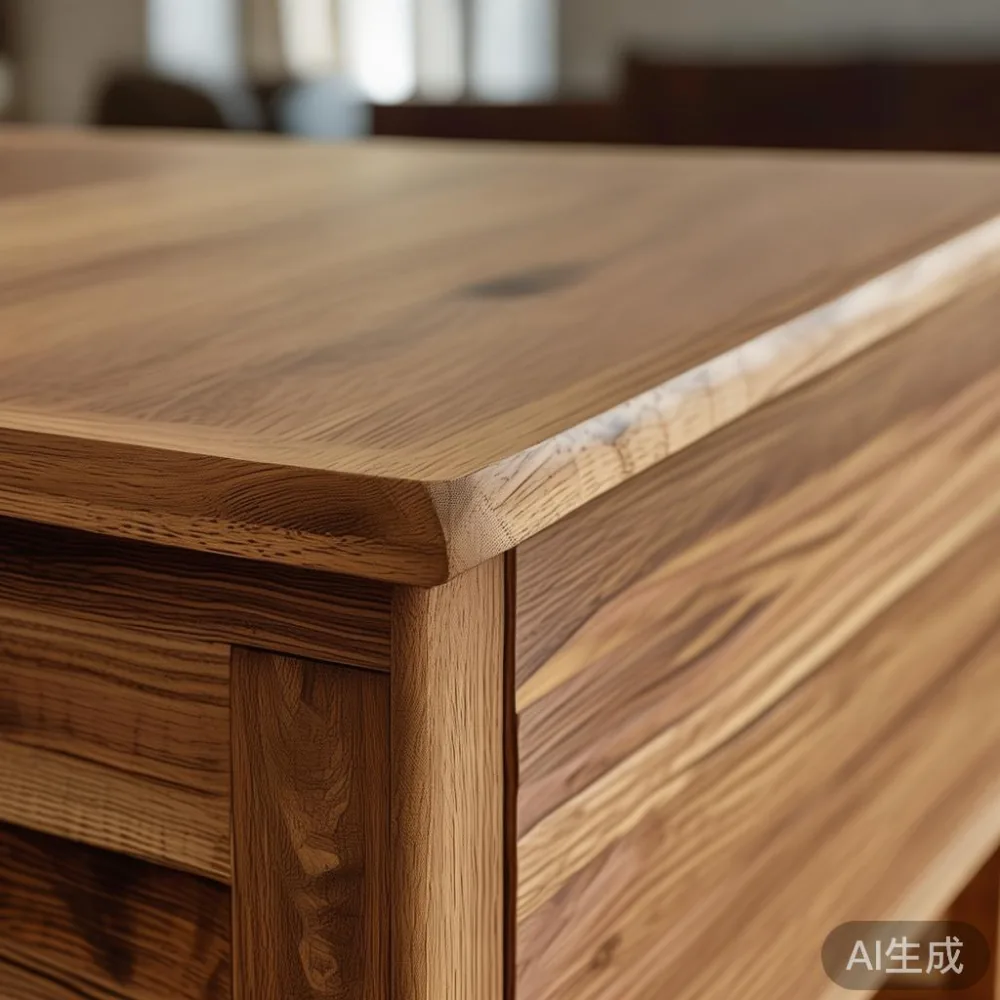
The Real 5-Year Price Tag in SGD
Let me put concrete numbers on the table, with GST (9% as of 2024 in Singapore) included where applicable.
Scenario A — Veneer dining table (180 cm, seats 6):
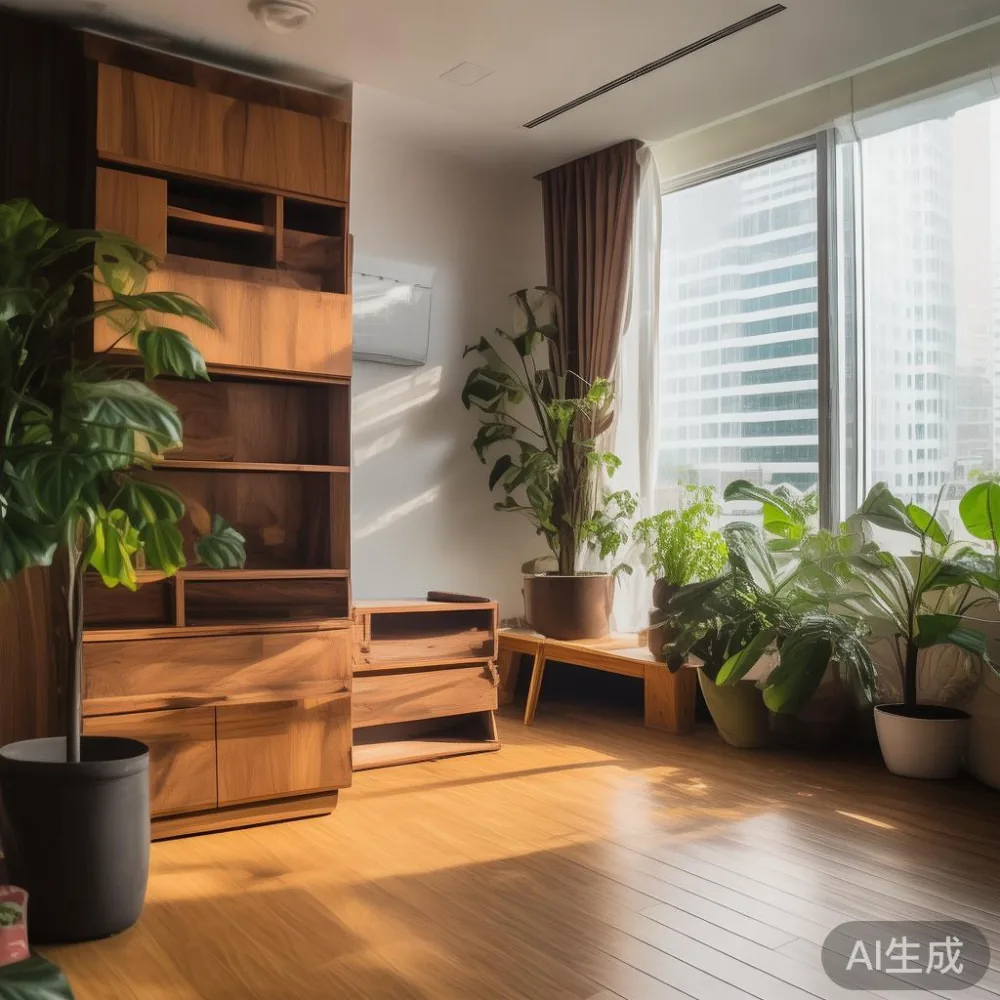
- Retail price in Singapore: S$899 (similar Jurong or Taobao pieces)
- Delivery up three floors with no lift: S$80
- Assembly (90 minutes, 2 persons, Allen key only): S$0 DIY
- Year 2 — chipped edge after a chair bump: S$60 touch-up pen
- Year 3 — swollen panel from a leaking aircon drip: unrepairable, replaced
- Year 5 — replaced at S$950 (price rose 6% due to inflation)
- 5-year total: S$1,989
Scenario B — Solid wood dining table (180 cm, seats 6, oak or ash):
- Retail price shipped from Foshan to Singapore door (MIDHILL, includes free shipping over US$350, ~S$470): S$2,150 including 9% GST
- Delivery to door (courier, not white-glove): included
- White-glove carry-up to 4th floor HDB, Punggol: S$120
- Assembly (45 minutes, 2 persons, four bolts and two legs): S$0 DIY
- Year 2 — light surface scratch, sanded with 400-grit in 15 minutes: S$0
- Year 3 — water ring from a forgotten mug: buffed out with beeswax: S$8
- Year 4 — refinishing coupon used (lifetime refinishing included by MIDHILL for the original owner): S$0 labour, S$40 transport
- Year 5 — still in service, resale value on Carousell: ~S$900 (roughly 42% retention)
- 5-year net cost: S$1,410
The solid wood option ends up cheaper by S$579 over five years, and the table is still alive at the end. Extend the timeline to 10 years and the gap widens to roughly S$1,400 because you will not be buying a second or third veneer replacement.
Assembly Difficulty: The Hidden Cost Nobody Quotes
This is the metric Singaporean buyers complain about most on HardwareZone forums, and it is the reason a dedicated assembly-difficulty section exists on serious furniture sites. Assembly difficulty shows up in three places: time, tools, and the number of times you swear at a cam lock.
Veneer flat-pack: A 180 cm veneer dining table from a typical e-commerce seller arrives in a box weighing 34 kg, with 147 parts, 64 dowels, 28 cam locks, and a four-language instruction sheet printed in 6-point font. Two adults, working carefully, need 90 to 150 minutes. The MDF panels flex slightly when you drive screws, which means alignment drifts and you end up with a 2 mm gap at one corner. That gap is permanent because MDF does not pull back into shape.
Solid wood ready-to-assemble (RTA): A solid wood sofa frame, bed frame, or dining table from a factory-direct maker like MIDHILL typically ships with 8 to 18 parts. The legs are pre-threaded, the bolts are M8 hex (one wrench size, included), and the heaviest single piece is 18 kg to 25 kg — light enough that a 1.6 m wide service lift in a Bedok 1970s block still accepts it. Assembly time: 30 to 60 minutes for two people who have assembled an IKEA bed before.
The corridor test: In a Tampines HDB with a 1.2 m corridor and a 90-degree turn at the unit door, a 1.8 m veneer table top can usually be carried flat because it flexes. A 1.8 m solid wood top cannot flex, so you angle it and pray. I have seen three scratches in five years on solid wood tops moved this way; I have seen nine snapped veneer tops over the same period because the thin laminate layer chipped at the corner.
How does moisture in Singapore affect veneer versus solid wood over 5 years?
Singapore sits at 1° north of the equator with average relative humidity of 78% to 88% year-round, peaking at night. Veneer on MDF behaves badly in this climate because MDF is hygroscopic: it absorbs moisture, swells, and does not return to original dimensions. Solid wood, by contrast, is dimensionally stable when properly kiln-dried to 8% to 10% moisture content (the industry standard for export factories in Foshan and Dongguan). A solid oak dining table will gain or lose 1 mm to 2 mm in width across seasons; a veneer-MDF table will bubble, peel, or split at the seams within 24 to 36 months if a window is left open during a thunderstorm.
How do I style a Nordic sectional sofa in a small apartment?
Choose a low-profile Nordic sectional sofa in light oak or ash with washable linen-blend covers in muted stone, sage, or off-white, then anchor the seating on a 200 cm x 290 cm flat-weave rug to define the zone without crowding the walkway, and finish with a slim black walnut rattan wicker side table that adds organic texture without visual weight.
That single paragraph is enough to make a 90 sq m Punggol BTO look pulled together. The reason a solid wood frame matters here is structural: a 2.4 m sectional sofa with a chaise takes a beating every evening, and MDF-veneer frames loosen at the joints within two years because the cam locks wallow out the soft particleboard. A solid wood sofa frame keeps its shape for 10+ years and the cushions stay aligned.
Bed Frame, Wardrobe, and Nightstand: The Same Math
Bed frame (queen, 152 cm x 191 cm): A veneer bed frame in Singapore retails for S$650 to S$1,200 and lasts 4 to 6 years before the slats bow. A solid wood bed frame (oak, ash, or walnut) retails for S$1,800 to S$3,200 shipped, lasts 15+ years, and supports heavier mattresses up to 60 kg without complaint. Over 5 years, the per-annum cost of the solid wood option is roughly S$360 to S$640, against S$130 to S$300 for veneer — but the veneer unit will be replaced at least once, erasing the savings.
Wardrobe (200 cm x 60 cm x 220 cm, three doors): This is where assembly difficulty hits hardest. A flat-pack veneer wardrobe from a Singapore retailer arrives in four boxes, total weight 110 kg to 140 kg, with 240+ parts. Two adults need 5 to 8 hours and a drill. A solid wood wardrobe from MIDHILL arrives in two crates, 95 kg each, with 60 parts and pre-installed drawer runners. Two adults finish in 3 to 4 hours. The difference in assembly difficulty alone is worth S$180 to S$250 if you pay a handyman at S$45/hour.
Nightstand (50 cm x 40 cm x 55 cm): Both versions are easy — 20 minutes, six bolts. But the marble table top variant (solid wood base with a Carrara marble top, 45 cm round, 12 mm thick) is the piece that turns a plain HDB bedroom into something that photographs well. The marble stays cool, the wood base absorbs knocks, and the combination costs S$380 to S$520 shipped. A veneered "marble-look" nightstand with a printed laminate top costs S$120 but yellows within 18 months.
What are the warranty and after-sales differences in Singapore?
Singapore consumer law (the Consumer Protection (Fair Trading) Act) gives you six months of statutory warranty on most goods, but reputable furniture makers extend this. MIDHILL, for example, offers a 10-year structural warranty on solid wood sofa frames, bed frames, dining tables, and wardrobes — well beyond the statutory floor — and lifetime refinishing on wood surfaces for the original buyer. Most veneer retailers in Singapore offer 6 to 12 months only, and "structural" rarely means the cam lock that holds the wardrobe together. If a joint fails in year 3, you are paying for a handyman.
Refinishing is the line item that flips the math. A solid wood dining table that has been used by a family in Bedok for five years can be sanded, re-stained, and sealed for roughly S$200 to S$350 in Singapore, or free if the maker offers it as part of the package. A veneer table cannot be refinished — the 0.6 mm top layer is gone after one sanding pass. The only option is replacement.
The 14-Day Return Reality
Most online furniture sellers in Singapore offer 7-day returns for unused goods. MIDHILL extends this to 14 days, which matters because you usually need a weekend to assemble, move the old piece out, and decide whether the new one fits the corridor and the aesthetic. For veneer flat-packs, returning a 140 kg wardrobe in its original four boxes is a logistical nightmare and most buyers abandon the attempt. For solid wood, returns are easier because the boxes are sturdier and the parts list is short enough to repack without losing hardware.
French Light Luxury, American Light Luxury, and the Post-Modern Cue
Veneer furniture tends to chase high-gloss lacquer and printed marble patterns — visual cues borrowed from French light luxury catalogues. The problem is that printed marble and high-gloss MDF yellow under Singapore UV. Solid wood furniture, by contrast, leans into American light luxury (clean Shaker lines, honest joinery) and post-modern light luxury (rounded edges, tapered legs, mixed-material tops such as the black walnut rattan wicker side table or a solid wood base under a honed marble table top). These styles age well because the materials themselves carry the design, not a printed foil.
A solid wood bed frame in white oak with a 12 mm Carrara marble nightstand reads as post-modern light luxury without trying. A glossy veneer bed frame with a chrome handle reads as 2014 catalogue and dates the room the moment you sign the HDB key collection form.
Resale Value and the Move-Out Math
When you sell your Punggol BTO or hand back your Bedok condo keys, the buyer will inspect furniture left behind. Solid wood dining tables, bed frames, and wardrobes in good condition resell on Carousell at 35% to 50% of original price after five years. Veneer pieces resell at 5% to 12% and often only as "free to take." The S$900 Priya could still get for her solid wood table in year 5 is real money that offsets the original purchase. Her S$899 veneer table was worth S$0 at the void deck.
Who Should Still Buy Veneer?
Veneer makes sense in three cases: a rental room where you will leave the furniture behind in 18 months, a child's bedroom that will be re-themed at age 10, or a temporary workspace where the next tenant inherits the desk. In all other Singapore scenarios — a young couple's first BTO, a growing family in a five-room flat, or a condo owner in Rivervale — solid wood wins on cost, assembly difficulty, durability, and resale. The sticker price is higher, but the 5-year net is lower and the 10-year net is dramatically lower.
A Short Checklist Before You Click Pay
1. Confirm the lift capacity in your block and the corridor width before ordering anything over 1.5 m long. 2. Ask the seller for the part count and the heaviest single piece. 3. Confirm warranty length in writing and whether refinishing is included. 4. Add GST, delivery, carry-up, and a handyman hour-rate of S$45 to your comparison. 5. Subtract estimated resale value at year 5. The number you get is your true 5-year cost — and in nine out of ten Singapore scenarios, that number favours solid wood.