Veneer or Solid Wood? A 5-Year Cost Comparison for Singapore Homes
Choosing furniture for a Singapore HDB flat or condo is rarely a matter of price alone. A solid wood sofa, bed frame, dining table, wardrobe, or nightstand must fit the lift, turn through the corridor, and feel comfortable in rooms measuring roughly 3.0 by 4.5 metres. Veneer can offer convincing grain and a lighter initial bill, but assembly difficulty, repairability, and resale value change the arithmetic over 5 years.

This comparison uses realistic Singapore prices in SGD, including the prevailing GST where applicable. I tested the practical side last month with a colleague during a delivery to a Tampines HDB flat: the lift opening was 90 cm wide, the internal cabin measured 140 cm deep, and the corridor narrowed to 105 cm at a corner. That experience shaped the assumptions below; this is not simply a showroom price list.
What is the real 5-year cost difference between veneer and solid wood?
For a medium-size Singapore household, a quality veneer dining table might cost SGD 900 before GST, while a comparable solid wood dining table might cost SGD 2,200 before GST. Over 5 years, allowing one repair and modest refinishing, the veneer table could total around SGD 1,010, compared with about SGD 2,340 for solid wood. The difference is approximately SGD 1,330, or SGD 266 per year.

The calculation includes purchase price, delivery, assembly, one repair, and likely refinishing. It excludes electricity, which is the same in both cases. Transport within Singapore may cost SGD 45 to SGD 120 depending on distance, vehicle access, and whether stairs are involved. A second trip for a failed hinge, damaged corner, or loose joint can add another SGD 35 to SGD 90.
Realistically, veneer can remain the lower-cost option over 5 years if it is protected from moisture and impact. Solid wood becomes the stronger financial proposition when a family expects to keep the furniture for 10 to 15 years, move it twice, or repair it rather than replace it. The structural life and repairability of the piece matter more than the appearance of its grain.
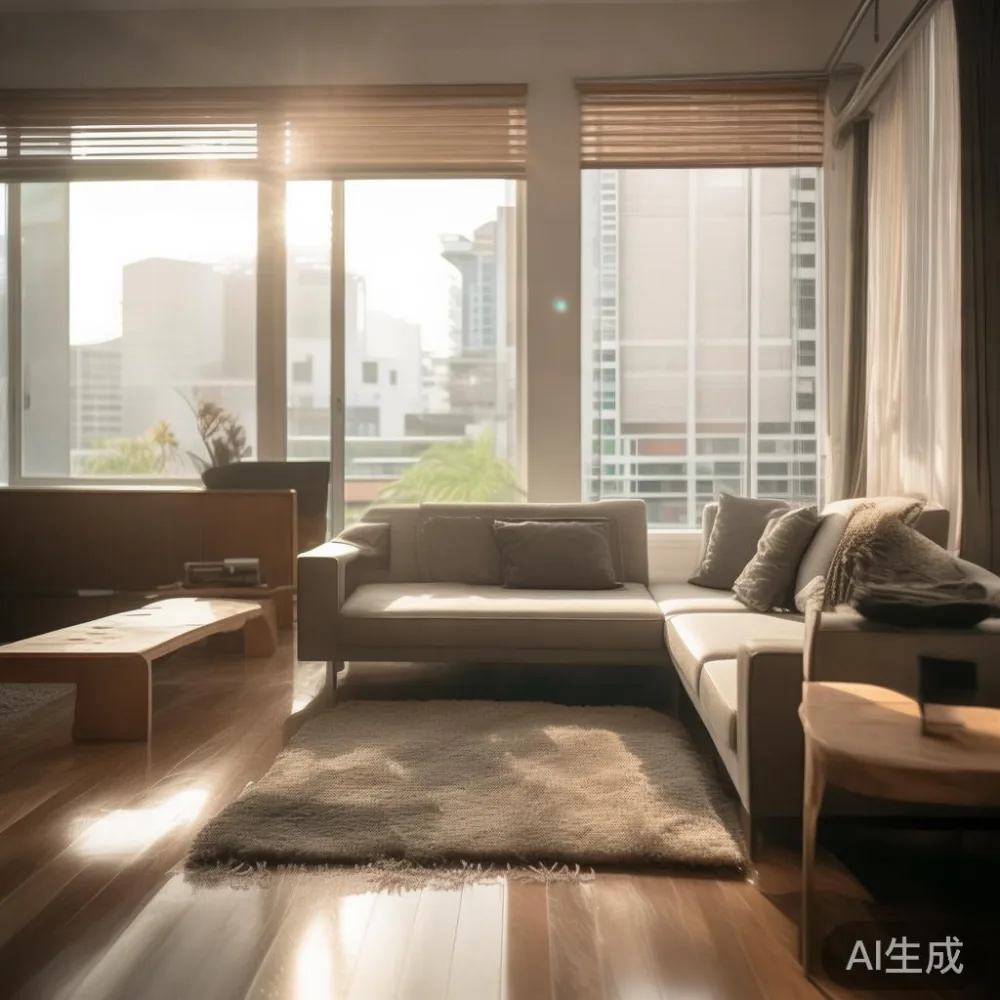
How the two materials perform in HDB flats and condos
Veneer consists of a thin layer of real timber, commonly 0.6 to 1.2 mm, bonded to engineered wood or a board. It can look refined under the warm lighting used in many Singapore condos, and the stability of the core helps reduce seasonal movement. Solid wood uses timber throughout the visible panel, with common choices including oak, ash, beech, and walnut.
Singapore humidity is usually around 60% to 80% for much of the year. Good-quality solid wood expands and contracts across the grain with humidity changes. A 180 cm dining table might move 2 to 4 mm across its width, which is manageable when the frame is designed for movement. Veneer may be dimensionally steadier, but its edge band and surface can chip, peel, or develop visible bubbles if moisture reaches the core.
Storage conditions matter. A wardrobe against a bedroom wall with an air-conditioning unit nearby may stay within 45% to 65% relative humidity. A nightstand beside a less-regulated balcony or bathroom can face more moisture. Solid wood can tolerate a brief damp exposure after drying, whereas veneered particleboard can swell permanently around a sink splash or leaking window.
Appearance also affects perceived value. Veneer is useful for French light luxury styling because it can reproduce pale oak and figured walnut effects without the cost of thick solid timber. Solid wood suits American light luxury or post-modern light luxury interiors, where the grain and joinery are intended to be visible. The practical distinction is that a 2.2 mm veneer may be sanded during refinishing, while a 0.6 mm veneer may not be.
Does assembly difficulty change the 5-year cost?
Yes. Assembly difficulty affects the labour needed on delivery day and the likelihood of damage before the furniture reaches its final position. A flat-pack wardrobe may arrive in 7 to 11 cartons, each weighing 18 to 35 kg. A solid wood wardrobe assembled at the factory may arrive in 2 to 4 protected modules weighing 65 to 120 kg each.
Flat-pack veneer systems often take 4 to 7 hours for 2 to 3 people. A modular solid wood wardrobe may take 2 to 4 hours because the carcass is already squared, but heavy timber doors can still require careful lifting. A solid wood bed frame can take 45 to 90 minutes, while a veneer platform bed may take 30 to 60 minutes. The labour saving on solid wood is therefore not automatic.
In my Tampines test, the 90 cm lift opening ruled out one large wardrobe module, despite its diagonal fitting within the 140 cm-deep cabin. The supplier split the module into 2 sections, added SGD 60 to the delivery charge, and the extra assembly time was about 35 minutes. This illustrates why the quoted dimensions must be checked against the lift door, corridor turns, and stair landing, not only the room.
Solid wood is also heavier. A 160 cm solid wood bed frame may weigh 75 to 110 kg, compared with 42 to 68 kg for a veneered frame. A solid wood dining table may weigh 55 to 85 kg, while a veneer table may weigh 35 to 58 kg. This difference can increase handling charges in a block without a service lift, but it can also reduce assembly difficulty because fewer connecting parts need alignment.
For anyone comparing a light luxury coffee table, note that a marble table can weigh 65 to 120 kg even when its footprint is only 100 by 60 cm. Its assembly difficulty is low, but its delivery difficulty is high. Stone needs proper lifting equipment and a checked route; otherwise, the edge and corners face greater risk.
Purchase, care, and repair costs over 60 months
Over 60 months, both material types require care. Veneer furniture may need edge work, patching, or a complete respray after 4 to 6 years if used daily. Solid wood can be spot-repaired, sanded, and refinished. A full refinishing service for a dining table may cost SGD 280 to SGD 520. Veneer recoating may cost SGD 180 to SGD 400, but it depends on whether the original layer can be repaired without exposing the substrate.
A wardrobe presents the largest five-year budget. A veneer wardrobe priced around SGD 1,200 before GST may total approximately SGD 1,430 after GST, SGD 70 delivery, SGD 120 assembly, and SGD 40 for minor adjustments. A solid wood wardrobe priced around SGD 2,800 before GST may total around SGD 3,480 after GST, SGD 90 delivery, SGD 150 assembly, and SGD 80 for one hinge adjustment.
For bedrooms, the answer to is Mid-century modern wardrobe worth it depends partly on the timber used. A solid wood version can be sanded back and altered as storage needs change; veneer depends more heavily on its core, edge bands, and adhesive. This is one reason a solid wood wardrobe often has a better second-life value, even when its initial cost is higher.
Those planning a bedroom refresh may search for the best Coastal wardrobe for 2026 and wonder about pale finishes. Coastal styling can suit a Tampines or Punggol guest room, but “Coastal” should describe the colour and atmosphere rather than a flimsy material. In a Coastal for guest room scheme, solid wood with a warm white or light oak finish can tolerate repeated scuffing better than a very thin printed veneer.
For a main bedroom, research on how to style American wardrobe in apartment often focuses on dark walnut finishes and surrounding bedding. The material decision should remain practical: check drawer runners, hinge ratings, wall clearance, and whether the wardrobe can be moved in sections. A 240 cm unit may need 18 cm of space behind the doors when opened, and the base may project 58 to 64 cm into the room.
What about moving costs and assembly difficulty after moving?
Singapore moves make repairability especially relevant. Many HDB residents move between towns after 3 to 5 years, while condo owners may reconfigure a unit during a renovation. A solid wood sofa may be moved in 3 sections, but its joints may loosen after several relocations. A good sofa should have dowelled or screwed framing, not only adhesive joints. A veneer sofa can be lighter, yet its frame may be less repairable if the joints are made mainly with particleboard fittings.
Bed frames are easier to compare. A solid wood bed frame may cost SGD 1,100 to SGD 2,400, with a veneer alternative around SGD 550 to SGD 1,150. Disassembly and reassembly can add SGD 90 to SGD 180 per bed. Veneer panels may scratch during dismantling; solid timber can be tightened, planed, and refinished if marks appear.
The dining table remains the clearest example. Veneer can cover a table used for four to eight people, but hot serving trays, water rings, and knife marks concentrate wear in one area. Solid oak can be refinished after those marks have become shallow. Over 5 years, a modest SGD 120 repair allowance can be more realistic for veneer than solid wood unless the entire top is replaced.
Nightstands and coffee tables show similar trends in smaller numbers. A solid wood nightstand may cost SGD 260 to SGD 520, while veneer versions may cost SGD 120 to SGD 280. A small repair or hardware replacement can add SGD 25 to SGD 60. Assembly difficulty is usually low for both, around 15 to 35 minutes, but wall-mounted or narrow-lift locations should be checked before ordering.
For inspiration, a list of top 10 Rustic furniture examples can reveal how solid timber ages, but rustic appearance does not guarantee strong joints. Look for mechanical fasteners, even spacing, and a finish that can be renewed. Those details have more financial value than knots or artificially darkened edges.
How do GST, delivery days, and warranty affect the comparison?
All prices in this comparison are shown before GST unless stated otherwise. Singapore GST is currently 9%, so an SGD 900 veneer dining table becomes SGD 981 after tax, while an SGD 2,200 solid wood dining table becomes SGD 2,398. A difference of SGD 1,300 before tax becomes SGD 1,417 after tax, which is the figure most households should use.
Delivery timing can affect disruption costs. A made-to-order solid wood dining table may take 25 to 45 days, while a stocked veneer table may arrive in 7 to 14 days. In a furnished HDB flat, a 14-day wait may be easier than a 45-day wait; in a new condo handover, the schedule may differ. Some furniture deliveries include installation, while others arrive curbside and need a separate booking.
MIDHILL provides a 10-year structural warranty, lifetime refinishing, free shipping above US$350, and a 14-day return window. Those terms are relevant to the calculation because refinishing can reduce future cost. The 14-day window is also long enough to inspect a dining table or bed frame for movement, finish marks, and assembly damage, provided the customer has the packaging and records the condition.
Convert US$350 into SGD at an illustrative rate of SGD 1.35 per US$1: the threshold is about SGD 472.50 before GST. This can cover one medium dining table or several smaller items, but the conversion will vary with the payment exchange rate. The practical point is to confirm the final Singapore delivery fee and GST at checkout rather than relying on a converted overseas threshold.
Which material gives the better 5-year result for different rooms?
For a dining table used weekly, veneer may offer the better immediate value if the household expects to replace it within 5 years. A realistic veneer budget might be SGD 900 before GST, plus SGD 90 delivery, SGD 100 assembly, SGD 70 repair, and GST. The total is about SGD 1,265. A solid wood table at SGD 2,200, plus SGD 100 delivery, SGD 120 assembly, SGD 180 refinishing, and GST, is about SGD 2,832.
For a bed frame expected to last beyond 5 years, solid wood often makes more sense. Its stronger repair prospects can justify the higher purchase price, especially in a HDB room where the bed is moved once or twice. For a solid wood sofa, check the frame warranty and seat suspension before deciding; timber alone does not guarantee a long service life.
Wardrobes require the largest cost reserve because doors, runners, and moving clearances create more failure points. Solid wood does not automatically suit every HDB bedroom, however. If the available wall is only 160 cm wide, a modular design may offer better assembly difficulty than one large solid timber unit. Measure the room, lift, and corridor before paying for premium material.
Those interested in Foshan Lingzhan production may come across solid wood furniture built around traditional joinery and practical timber selection. That connection is less important than verifying moisture content, board thickness, hardware, and the supplier’s repair process. A credible 5-year budget should include those measurable details, not just a label.
How should Singapore buyers choose between veneer and solid wood?
Choose veneer when the priority is a lower initial cost, a wide range of finishes, a lighter item, and a short expected ownership period of 3 to 5 years. Choose solid wood when the piece will be moved, refinished, kept for at least 10 years, or handed to another owner. The extra spend is an investment in repairability and longevity, not a guarantee of a particular resale price.
Before ordering, record the lift door width, internal depth, corridor turning width, staircase dimensions, and room measurements. For example, compare a 90 cm lift opening with a 92 cm furniture carton: even a shallow diagonal may work, but the route still needs checking. Ask for the carton count, module weight, assembly time, and whether old packaging is removed. These questions directly affect assembly difficulty.
Over 5 years, veneer can save roughly SGD 500 to SGD 1,500 on a dining table or wardrobe, depending on repairs and finish changes. Solid wood can cost more at purchase while offering a longer usable life. For a light luxury coffee table or marble table, delivery planning matters as much as material: measure first, reserve the route, and avoid treating a heavy stone top like a flat-pack carton.