What to Check Before Buying a Sofa You Cannot Sit On: A Singapore Guide to Sofa Assembly Difficulty
A sofa may look comfortable in a showroom and still be impractical in a Singapore home. The seat depth may be too deep for a 168 cm HDB living room. The three-seat frame may not fit through a 90 cm condominium door. The legs may need tools you do not own, or the cushions may remain compressed after delivery. Before you pay, assess the sofa’s dimensions, route through the building, assembly difficulty, comfort, and after-sales terms rather than focusing only on fabric colour.

That assessment matters because a sofa is a large assembled object with several separate tasks attached: carrying it into the flat, fixing the frame, attaching the back, fitting the seats, and removing packaging. Singapore’s lift and corridor dimensions vary by block, and a unit that works in one HDB flat can fail in another. This guide explains what to check before buying a sofa you cannot sit on yet, with practical measurements for Tampines, Bedok, Punggol, and private condominiums.
What dimensions should I measure before ordering a sofa?
Measure the intended space first, then measure the sofa’s largest assembled dimension. A three-seat sofa is often 200–240 cm wide and 85–105 cm deep, but the final specification matters more than a generic size. For a typical 168 sqm HDB flat, leave at least 90 cm between the sofa front and a coffee table, and around 60–75 cm between the sofa and a TV console. Those clearances make the room usable rather than merely filled.

Ask for the packed dimensions as well as the assembled dimensions. A solid wood sofa may arrive in several modules, while a loose-cushion design may need more packaging space. Check that each carton can fit in your lift car: a common HDB lift interior is approximately 110–140 cm wide and 135–200 cm deep, but older blocks and newer lifts differ. Record the lift door width, the narrowest corridor turn, and the width of your flat entrance.
Do not confuse product width with delivery access. A 205 cm sofa can be split into two 102 cm sections, yet one section may still be too bulky for a 78 cm door. Photograph the route, including the shoe ledge, mailbox area, void deck, and any side entrance. If the route includes three tight turns, ask the supplier to confirm the carton count and whether modules can be separated further.
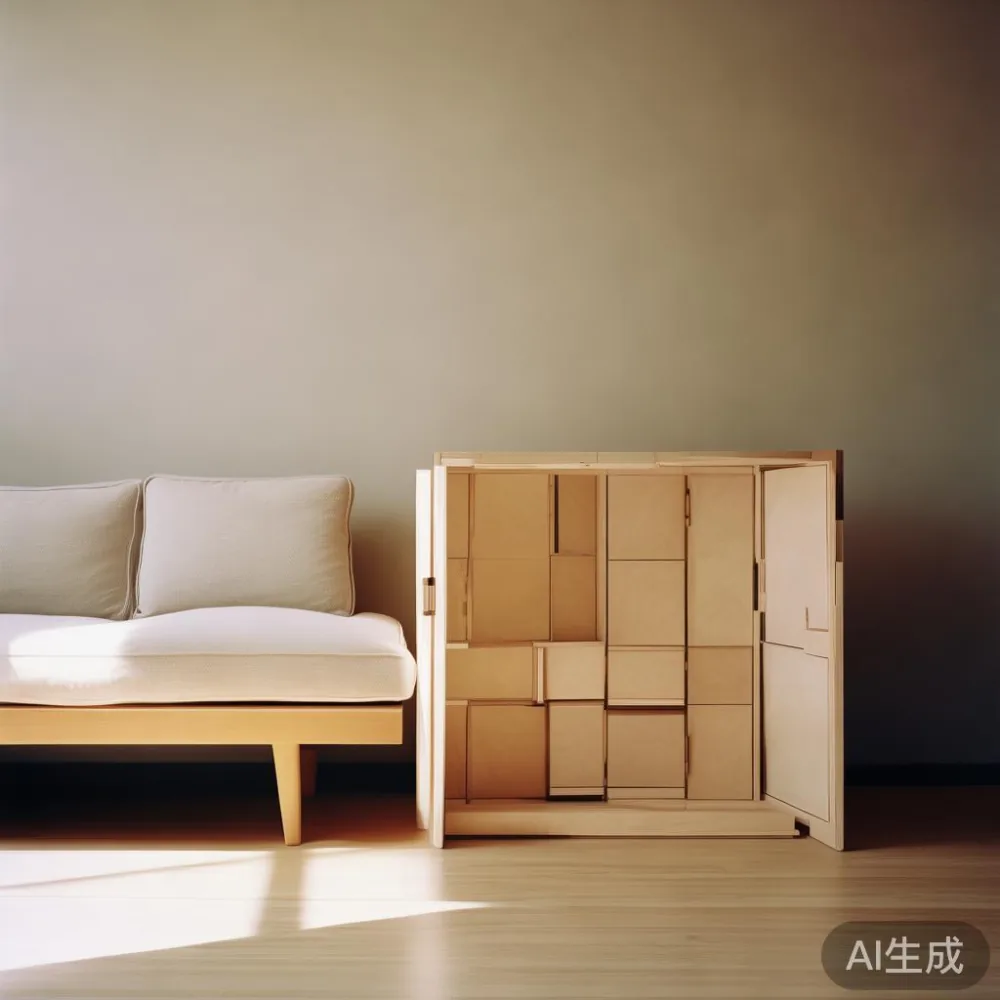
Also measure your existing coffee table and side tables. Moving a sofa into place is much easier if the route is clear, but the final position must still work with a rug, lighting, and circulation space. Check where the electrical sockets are and whether the sofa’s back height is suitable for the wall. Keep the sofa at least 15 cm from a full-height curtain if you want the fabric protected from moisture and dust.
How difficult is assembly difficulty for a solid wood sofa?
Assembly difficulty should be described in actual steps, not by a vague label such as “easy assembly”. Ask whether the frame arrives partly assembled, how many people are required, and which tools are included. For a solid wood sofa, realistic assembly might include fixing 4–6 legs, joining 2–3 frame sections, attaching the backrest, and securing 3–5 cushions. A heavier frame may require 2 people and approximately 20–40 minutes; an unfamiliar flat may take 45–60 minutes.
Request clear photographs of the assembly instructions and a list of hardware. Confirm that hex keys, screws, washers, and any cam locks are in the carton. Check whether the backrest is already fixed, because attaching it inside a narrow living room can be considerably harder than assembling it on the floor of a warehouse. The same issue applies to a marble table: a polished marble top may look manageable in a catalogue but can weigh 40–80 kg and should be moved by at least 2 people with proper lifting.
Another question is whether the sofa can be assembled temporarily outside the flat, such as at the void deck. Building authorities and condominium rules may restrict this, and rain can damage upholstery. Do not assume a ground-floor landing is available. Ask whether the supplier can carry the modules to the lift and whether extra service beyond the lift landing is charged.
For a related bedroom purchase, buyers sometimes ask whether is Mid-century modern bed worth it before thinking through delivery and setup. The useful comparison is not only style. A solid wood bed frame may weigh 45–90 kg, arrive in 2–4 cartons, and require 2 people for 30–60 minutes. A similarly styled frame with fewer joints can be more practical for a compact bedroom. Assembly difficulty includes the number of components, their weight, and whether you must turn the frame upright in a confined room.
What makes a sofa comfortable enough for daily use?
Start with seat dimensions and body shape. A usable seat depth is usually 48–58 cm, while a 60–66 cm depth feels lounge-like but can be difficult for shorter users to sit on comfortably. Seat height commonly falls between 40–46 cm. If you plan to eat at the sofa, choose a firm seat rather than a deep one, and test whether the back supports your shoulders.
Firmness is less useful than the support beneath the cushion. High-resilience foam may provide around 35–45 kg/m³ density, while a soft fibre-wrapped fill can feel pleasant initially but compress more quickly. Ask about the core material, foam density, spring type, and cushion warranty. A light grey luxury sofa may suit a bright HDB interior, but pale fabric shows dust, stains, and colour transfer more readily than a darker textile. Request physical samples and test them for 10–15 minutes in the orientation you normally sit in.
Check the arm and back dimensions too. A low arm of 52–58 cm may ease transfers for an elderly family member, while a broad 70–80 cm arm can support a reclining position. Ensure there is a firm surface beneath loose cushions. Decorative pillows should not be mistaken for structural support, and removable backs may allow more comfort adjustment than a one-piece design.
Look for mechanisms that will be serviced in Singapore. A reclining sofa may include a motor, steel track, power supply, and control unit. Ask whether replacement motors are available locally, how much movement clearance is needed, and whether the mechanism is covered. If a dining table sits close to the sofa, verify that the table’s overhang does not intersect with the recliner.
Can the sofa pass through Singapore lifts and corridors?
Measure the actual route, not just the lift cabin. Ask the building management for lift dimensions where possible. At the lift door, measure the narrowest clear opening and the diagonal needed to rotate a carton. Inside, account for the control panel, handrail, and space used by other residents. A corridor of 105–120 cm may accept a straight carry, while a 90 cm corridor with a right-angle turn can be more demanding.
Provide the supplier with all relevant figures before ordering: flat entrance width, lift door width, lift car width and depth, corridor width, and the number of turns. Carton dimensions should stay below every restriction with at least 10 cm of spare room. If the supplier only gives a vague “delivery to doorstep”, ask specifically whether doorstep means the ground-floor lobby, void deck, lift lobby, or inside the unit.
Many HDB blocks in Tampines, Bedok, and Punggol have managed waste collection points that temporarily obstruct corridors. Delivery teams may need to coordinate with the building’s security desk or facility manager. A scheduled delivery window of 1–2 hours is sensible, and someone aged 18 or above should be present to guide the team.
Stairs change the calculation completely. A three-flight staircase needs the carton tilted and balanced at each landing, which can cause frame or upholstery damage. If there is no suitable lift, ask for a two-person delivery quotation and confirm insurance coverage. A sofa that must climb 24–36 steps is a different service from one moved 8 m through a lift.
Should I compare sofa prices including GST and delivery?
Compare the final payable amount rather than the promotional ticket price. Singapore GST is 9%. If a sofa is listed at SGD 1,990 before GST, the tax-inclusive price is SGD 2,169.10. Add delivery, lift handling, assembly, and any surcharge for a narrow access route. A listed price of SGD 2,500 becomes SGD 2,725 before extra service fees.
For example, a solid wood sofa at SGD 2,290 before GST reaches SGD 2,496.10 after tax. If delivery is SGD 80 and assembly is SGD 45, the payable total is SGD 2,621.10. Check whether the assembly service includes removal of packaging and positioning near the intended wall. A lower-priced model may still cost more if one section cannot fit through the lift and must be dismantled by a carpenter.
Ask what happens if the delivery attempt fails. A written policy should state whether the customer can schedule another attempt, whether a failed-delivery fee applies, and whether repeated access issues are treated as a customer change of instructions. Confirm the expected delivery period, ideally 7–21 days for a made-to-order item, and obtain an estimated date in writing.
Payment terms deserve attention too. Credit cards may provide dispute protection that cash or bank transfer does not. Check the cancellation policy, deposit terms, and whether a custom fabric order is refundable. Custom goods may qualify for fewer return options than standard items, so all relevant measurements should be approved before production begins.
What should a sofa warranty actually cover?
A warranty should distinguish frame failure from normal upholstery wear. Look for a stated period on the solid wood structure, joints, springs, foam, and mechanisms. A 10-year structural warranty can be valuable, but read the exclusions. Does it cover insect damage, moisture exposure, floor-level dragging, commercial use, or damage caused by unauthorised assembly? Ask how a claim is assessed and whether replacement parts are supplied locally.
Assembly instructions can affect warranty coverage. If the instructions require 2 people and the product is installed by 1 person without support, a later failure might be disputed. Keep the instruction sheet, carton labels, delivery record, and product photos. Record the sofa’s condition on the day of delivery, including any marks or compressed cushions.
For buyers comparing adjacent furniture, a dining table has a different delivery profile. When considering Rustic for dining room ideas, check whether the table top separates from the base, whether the top weighs 35–70 kg, and whether the carton can fit through the lift. A wardrobe may arrive in flat panels weighing 5–15 kg each and require careful vertical assembly. Guidance on how to style European wardrobe in bedroom can help with proportions, but an oversized unit may still need 10–15 cm of floor clearance for door hinges and drawer movement.
A French provincial bed, including a MIDHILL French provincial bed, should come with details of the headboard, slat support, centre support legs, and mattress clearance. For a smaller room, a Modern light luxury nightstand may need only one carton, but confirm that its drawer opens without scraping the bed frame. These examples show why delivery and assembly information should accompany every large furniture order, not just the sofa.
How can I test a sofa before paying for it?
Test the showroom model, then request a fabric and finish sample for home viewing. Sit for 15 minutes, change position several times, and check whether the cushion rebounds promptly. Press the seat edges and inspect the seam lines. If possible, open and close any recliner, lift a loose cushion, and look underneath the dust cover. Photograph the showroom dimensions, including the height of the arms and back.
Last month I visited a Singapore showroom to compare a solid wood sofa with a lighter frame. The heavier model had better support, but its two rear legs were fixed close to the frame and required two people to turn upright. The lighter model separated into smaller sections and was much easier to move through a 90 cm corridor. That visit reinforced that comfort and assembly difficulty should be scored separately.
Ask the retailer to provide a written specification: width, depth, height, seat depth, seat height, arm height, frame material, cushion density, cover composition, carton dimensions, module weight, assembly time, and tool requirements. Check the power rating if there is an electric mechanism. For wood products, ask about the wood species, moisture finish, and expected acclimatisation in Singapore’s humid conditions.
What should I confirm before the delivery team arrives?
Confirm the delivery date, access measurements, building rules, and service inclusions at least 2–3 days beforehand. Clear the route and remove fragile items. Protect the floor if the team requests it, but do not place loose plastic sheeting on a polished surface without advice from the building. Make sure the lift reservation process is known, especially in blocks where booking is required.
On arrival, inspect the cartons before they are opened. Photograph the labels, dimensions, and visible damage. Check that all modules and hardware match the order. Once assembled, sit on the sofa before the team leaves, test the cushions and mechanisms, and confirm that the frame sits evenly on the floor. A sofa with a rocking feel may need levelling feet adjusted rather than additional packing beneath one corner.
Check the retailer’s return period, which should be at least 14 days for standard stock under the stated policy. Confirm whether the sofa must be unused, whether the packaging must be complete, and who bears return freight. Custom upholstery or a non-standard fabric can have different terms. If a seam or module is faulty on arrival, document it before assembly hides the affected area.
MIDHILL’s 10-year structural warranty, lifetime refinishing service, and 14-day return policy give useful boundaries for the decision, while free shipping above US$350 is shown in US dollars on the brand’s store. For Singapore buyers, convert that threshold to the supplier’s stated SGD equivalent before comparison, and verify whether GST and local delivery are included.
The safest purchase is not simply one with the most attractive profile or the lowest ticket. It is one whose assembled size fits the room, whose modules fit the real access route, whose seat suits your body, and whose assembly can be completed with available help and tools. Obtain measurements, clear photographs, a full cost breakdown, and a written warranty before ordering. A sofa you cannot sit on is not yet a sofa; it is a delivery project with cushions.