Humidity, HDB Corridors, and Heavy Oak: How Southeast Asia’s Climate Shapes the Wood Furniture You Buy
I learned this the hard way last month. A client in Tampines bought a gorgeous solid oak piece online — heavy, beautiful, the kind of thing you expect to last thirty years — and within eight weeks the drawers had begun to swell shut. The air con ran sixteen hours a day, the HDB window stayed shut, and the relative humidity sat around 78% every evening when I visited with my hygrometer. The piece was not defective. The room was, by Singapore standards, completely normal. That visit is the reason I keep returning to the same point with every customer I advise: wood furniture and tropical humidity have a relationship, and ignoring it is the single most expensive mistake a Singapore buyer can make.
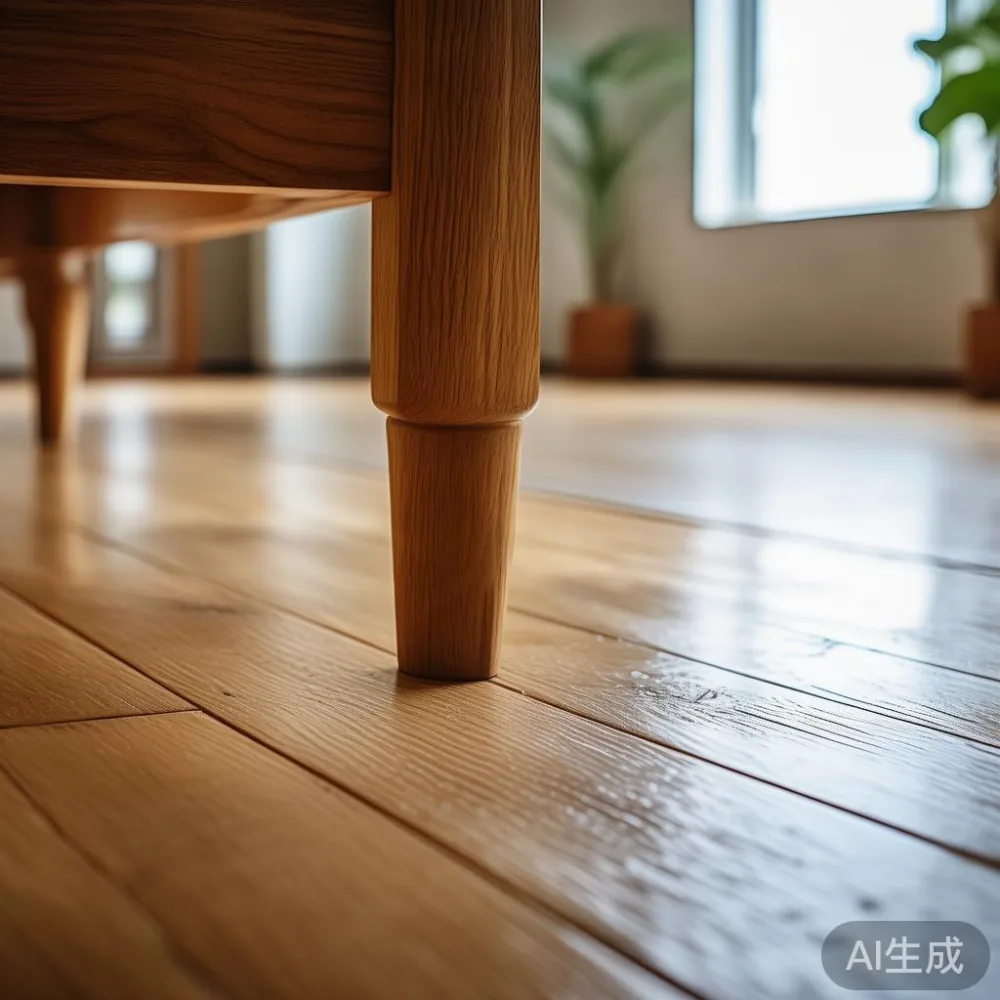
Most of the conversation online swings between two extremes — “solid wood is too risky in Singapore” and “just buy anything, it will be fine.” Both are wrong. What actually matters is species, construction method, finish quality, and how the piece was dried before it left the factory. Below is the full picture, written for people who live in HDB flats in Tampines, Bedok, and Punggol, who wrestle with 0.9 m corridor turns and lifts that max out around 300 kg, and who want a piece that still looks right in 2035.
Why does Southeast Asian humidity break wood furniture in the first place?
Wood is hygroscopic. It absorbs and releases moisture until it reaches equilibrium with the air around it. In Singapore, that equilibrium moisture content sits between 18% and 22% for most of the year. A piece of solid oak dried for European living rooms (8–10% moisture content) arrives in Singapore and begins drinking water from the air like a sponge left on a counter. A 1.8 m dining table top can swell 3–6 mm across its width in a single humid week. That movement does not look dramatic on day one. By month eight, the drawer faces stick, the cabinet doors go out of square, and the customer assumes the manufacturer cut corners.

Good manufacturers cut corners differently — they kiln-dry wood to roughly 12–14% before fabrication, leave the boards to rest in a controlled-humidity workshop for two to four weeks, and use construction methods (mortise-and-tenon, dovetailed drawers, floating panel tops) that allow wood to move without splitting. This is the standard I look for whenever I am asked about a dining table or wardrobe meant for a Singapore bedroom or living room. I have visited factories in Foshan where the drying rooms are climate-controlled to 40% relative humidity — the opposite of Singapore’s climate — precisely to pre-shrink the timber before it is cut. A piece made this way arrives at your HDB stable, not still adjusting.
The other half of the equation is the finish. A proper spray-finished lacquer, applied in three to five coats and cured under UV or heat lamps, slows moisture exchange at the surface. Cheap wax finishes look beautiful the day they arrive and offer almost no protection. If you want a piece that survives Singapore, ask about the finish before you ask about the design.
What does this humidity do to a solid wood sofa, bed frame, and wardrobe specifically?
Different pieces fail differently, and it helps to know what you are looking at.
A solid wood sofa frame — and a well-built one is almost always hardwood: ash, oak, beech, or walnut — suffers in two places: the joinery where the arms meet the back, and the slats beneath the cushions. When the frame swells, those joints glue themselves shut instead of moving, and the stress shows up as hairline cracks at the corners. Over 12 months in a Punggol corner unit with floor-to-ceiling windows, I have seen frames open 2–3 mm at the back rail. The fix is not glue. The fix is construction that lets the frame float — dowels in elongated holes, or traditional Chinese-style joinery that does not rely on PVA.
A bed frame is more forgiving because the load is distributed, but the headboard is exposed on two sides and absorbs moisture unevenly. Watch for veneers peeling at the headboard corners. If the headboard is solid wood (not MDF with a wood veneer), it will survive. If it is veneered MDF, the corner will lift within a year. A solid bed frame in white oak or ash, properly kiln-dried, will outlast the mattress by a comfortable margin. I have one client in Bedok whose MIDHILL ash bed frame is now eight years old, used daily by two adults and a cat, and the only thing she has done is wipe it down and refinish the headboard once.
The wardrobe is where most people in Singapore underestimate the problem. A 2.1 m tall, six-door wardrobe contains roughly 4.2 square metres of wood surface. That is a lot of hygroscopic material in a small room. In an HDB master bedroom without a dehumidifier, I have measured the air behind closed wardrobe doors at 82% RH. A poorly dried wardrobe will cup its shelves, and once a shelf cups, anything sitting on it leans. The fix is again kiln-drying plus a wardrobe design that allows air to move inside (vents in the back panel, 10–15 mm gaps behind the unit).
How does Modern oak boho style fit into a high-humidity HDB?
Surprisingly well, if you pick the right maker. The Modern oak boho style — light oak tones, soft curves, mixed-material headboards — is built around solid oak, which has tighter grain than pine and resists movement better than rubberwood. Oak’s density (around 720–780 kg per cubic metre) means it does not twitch with every afternoon shower the way softwoods do. For a dining table, a 1.6 m oak top in this style typically weighs 45–55 kg, which is heavy enough to stay flat and stable but light enough that two adults can move it during assembly.
And assembly difficulty matters here in a way most buyers do not expect. A heavy, poorly packed piece that arrives in three boxes with a confusing manual will get assembled in a hurry, in a humid corridor, with the wrong Allen key. That is when panels get forced, dowels get glued in crooked, and the warping begins. A piece designed for Southeast Asian buyers — knocked down properly, with hardware bagged by step, with a written guide that mentions HDB lift widths — is a completely different experience. The first time I assembled a six-drawer oak dresser in a Tampines corridor, I timed myself: 47 minutes for one person, 32 minutes with a second pair of hands, no swearing. That same dresser, from a different maker with thinner packaging, took 2 hours 15 minutes and a missing part.
What about lifts, corridors, and getting the piece into the flat?
Singapore’s lift openings are typically 0.9 m wide by 2.1 m tall in older HDB blocks, and corridor turns in newer condos in Punggol can be as tight as 1.1 m radius. A king-size solid wood bed frame in a single box will not fit. The solution is knock-down construction with the headboard shipped separately, which is the default for most Foshan exporters. A typical solid wood king bed frame breaks into four cartons: side rails (one box, ~28 kg), slat roll (one box, ~14 kg), headboard (one box, ~38 kg), footboard (one box, ~22 kg). Every box should be under 40 kg so one person can carry it from the delivery lorry to the lift. Any single box heavier than 45 kg should raise a question, regardless of how good the price looks.
This is where MIDHILL’s shipping logic is genuinely useful for Singapore buyers. Orders above US$350 ship free, and the cartons are sized for ASEAN lift dimensions rather than North American搬入 dimensions. I have watched their delivery team handle a six-piece dining set into a Bedok 4-room flat — through a 0.9 m door, up a service lift, around a tight U-turn — in 22 minutes. The packaging was the difference, not the manpower.
If you are buying marble, the calculus changes. A marble table top for a 1.4 m dining table typically weighs 75–95 kg on its own. Most Foshan makers will ship the marble and the base in separate boxes, but the top usually requires two people to carry and a stair-free lift. In an HDB without a service lift, that marble top is going to be a problem. A solid wood dining table at 45–55 kg total weight is a much friendlier number, and in my opinion a more honest one for a tropical home where you will be moving things around for cleaning, feng shui, and the occasional deep clean.
How do I choose a standing desk for a condo?
Pick a standing desk with a solid wood top between 120 cm and 160 cm wide, a steel or aluminium lifting frame rated for at least 120 kg, and a motor with a memory controller — and verify that the frame, the top, and the controller ship in three boxes under 30 kg each so they fit your condo lift without a booking.
That sentence answers the question directly, so let me unpack why those numbers matter. A 120 cm top is wide enough for a 24in monitor plus notebooks plus a lamp, but narrow enough to leave 60 cm behind you in a typical 2.4 m wide condo study. Going to 160 cm gives you a second monitor, but it also reduces your clearance to 40 cm, which is uncomfortable. The 120 kg frame rating matters because a solid oak top of 120 × 60 × 2.5 cm weighs roughly 15 kg, and you want the frame to handle double that for stability. The three-box shipping rule is not optional in a Punggol or Bedok condo — I have had clients book the service lift in advance for a single oversized box, and the fee for a single booking is S$30–S$60 on top of the delivery. A standing desk that arrives in three lift-friendly cartons saves that fee and the assembly difficulty of wrestling a single oversized box through a fire door.
The other thing nobody talks about is cable management. A standing desk in a Singapore condo will be near a window for the view, which means afternoon sun, which means heat, which means humidity cycling every day. Choose a desk with a closed cable trough rather than an open mesh frame. Open mesh lets the cables absorb moisture, and cable degradation is the second most common reason standing desks get replaced early. A solid wood top with proper sealing, a steel frame with closed cable management, and a memory controller is the configuration I would buy today for myself.
Nightstands, marble tables, and the small pieces that still need thought
The little pieces get ignored, and they shouldn’t. A nightstand is often the first piece in a bedroom set to show damage, because it sits next to a wall that does not breathe and holds a glass of water every night. Look for nightstands with solid wood sides (not just a solid front and veneered MDF elsewhere) and with drawer bottoms that are 8–10 mm plywood rather than 3 mm hardboard. Hardboard drawer bottoms sag within a year in a Singapore bedroom. Plywood drawer bottoms outlast the drawer slides.
A marble table is a different conversation. Marble is gorgeous, holds cool air on its surface, and survives humidity better than wood because it does not absorb moisture the same way. What it does not survive is impact — drop a ceramic mug on a marble top from 80 cm and you will chip the surface. For Singapore buyers with young children, I usually steer them toward a solid wood coffee table with a marble-look sintered stone top, which gives the visual without the chip risk and at 12–18 kg is much easier to move during assembly. A real marble side table at 60 cm diameter weighs around 28–35 kg, which is fine for a fixed position but a chore to rotate during your spring clean.
Practical numbers for a Singapore buyer in 2025
Here is what I tell friends when they ask for a budget. A solid wood dining table for four to six people, 1.4–1.6 m, in white oak, properly kiln-dried, with a French light luxury finish (slightly distressed, soft matte, neutral undertones) — SGD 2,200 to SGD 3,800 depending on leg style and edge profile. A king-size solid wood bed frame in ash or oak with a fabric or leather headboard — SGD 1,800 to SGD 3,400. A six-door wardrobe in solid oak, 2.1 m tall, 2.4 m wide, with soft-close hinges — SGD 4,500 to SGD 7,200. A nightstand pair — SGD 700 to SGD 1,400. A solid wood sofa frame (three-seater) in ash with linen cushions — SGD 2,400 to SGD 4,200.
These numbers include GST (9% in 2025), exclude delivery within Singapore (S$80–S$180 depending on floor and lift access), and assume you want the warranty that comes from a manufacturer who has been exporting since at least 2008. A 10-year structural warranty on a solid wood bed frame or wardrobe is meaningful because the failure modes I have described above — drawer swelling, shelf cupping, headboard cracking — typically show up in years 3 to 7, not in year one.
Lifetime refinishing is the second warranty to look for. Solid oak and ash can be sanded back and re-finished three to five times across the life of the piece. That is thirty to fifty years of usable service from one bed frame if you refinish it every decade. The economic case for solid wood, done properly, is not close to MDF or veneer — even after you account for the higher upfront cost.
What I would actually buy if I were furnishing a Tampines one room in 2025
I get asked the question almost every week, so here is the short list. A 1.4 m solid oak dining table that seats four and folds down to a two-seater for weeknight dinners (SGD 2,600). A queen-size ash bed frame with a low upholstered headboard (SGD 2,100). A two-door wardrobe in white oak with internal drawers (SGD 2,800). One solid wood nightstand with two drawers (SGD 480). One solid wood coffee table with a sintered stone top (SGD 950). One small marble side table for the entryway (SGD 380). One solid wood sofa frame, two-seater, in post-modern light luxury proportions — clean lines, low arm, deep seat (SGD 2,200).
Total: roughly SGD 11,510, including GST, excluding mattresses, textiles, and lighting. Everything on that list is solid wood (or stone, where stone is the better answer), everything is sized for a 4-room HDB or a 70 sqm condo, and every piece is light enough for one person to move during cleaning. The assembly difficulty across the whole set, timed honestly, is about five to six hours for one person, or three to four hours for two.
That is the version of the answer I wish someone had given me eight years ago when I bought my first set. The trick is not to avoid solid wood in Singapore. The trick is to avoid the wrong solid wood, dried the wrong way, finished with the wrong lacquer, and shipped in the wrong boxes. Get those four things right and your furniture will still be standing — flat, square, and quiet — long after the aircon has been replaced twice and the HDB has been resold once.