Price Factors of Solid Wood Furniture
Solid wood furniture can look deceptively simple in a showroom. One dining table appears beside another, one bed frame carries a similar silhouette, and a wardrobe is reduced to its finish and door count. Yet the final price may differ by several thousand Singapore dollars. The visible material is only one part of the calculation. Timber selection, moisture control, joinery, dimensions, hardware, finishing, packaging, and assembly difficulty all contribute to what a customer ultimately pays.
For Singapore homes, those practical considerations matter especially in HDB flats and condos around Tampines, Bedok, and Punggol. A 180 cm dining table may fit a lift, while a 220 cm version can create a delivery-day problem. A 45 kg wardrobe may require three people, whereas a 70 kg version may need specialist handling. Assembly difficulty is therefore connected to price, but it is not the only reason two solid wood pieces receive different price tags.
This guide explains the cost structure behind a solid wood sofa, bed frame, dining table, wardrobe, nightstand, or marble table. It also considers how French light luxury, American light luxury, and post-modern light luxury affect design choices without making every piece feel oversized. MIDHILL has supplied solid wood furniture since 2008 and exports to more than 15 countries; its 10-year structural warranty and lifetime refinishing service are part of the ownership proposition, not a substitute for understanding construction quality.

What material should a solid wood dining table be made from?
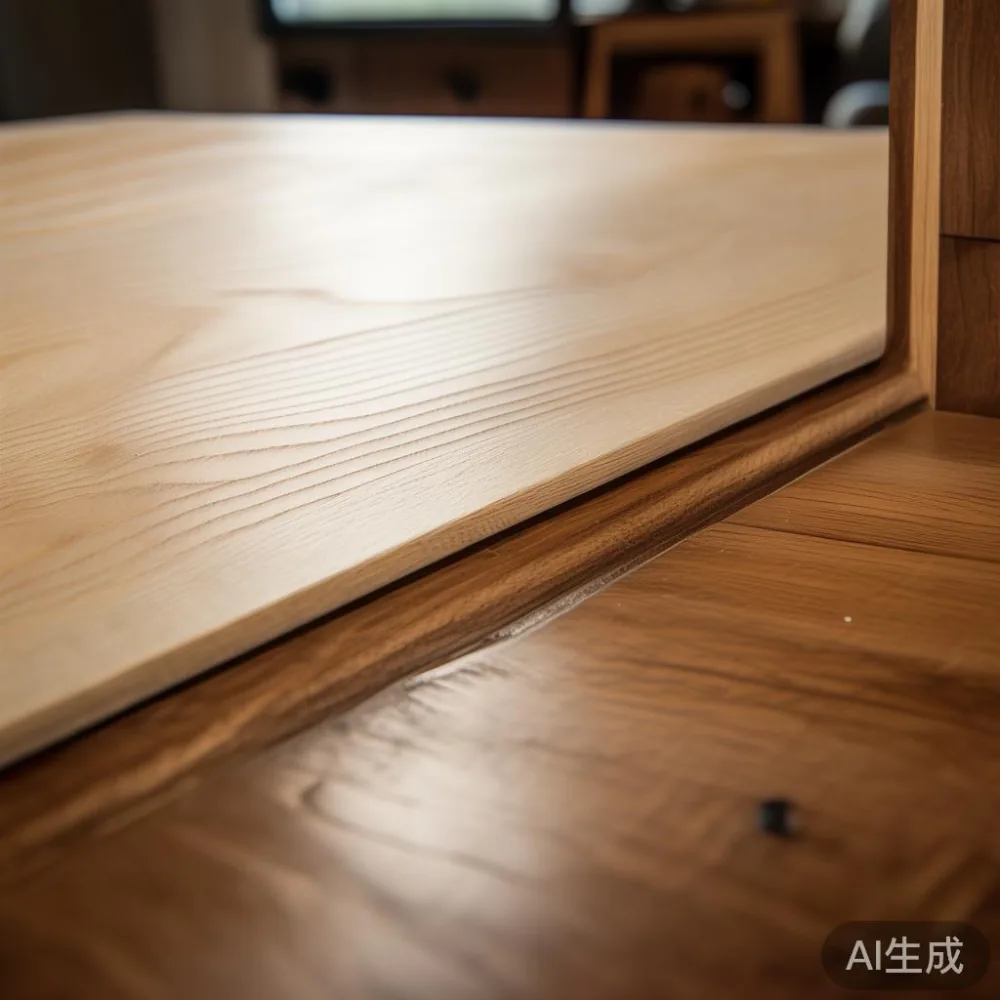
Wood species sets the starting point, but “solid wood” alone does not describe quality. The species, grade, cut, thickness, and source all influence the price of a dining table. Teak and oak are familiar choices, while walnut and ash can create a different visual character and price band. A table with a 40 mm top will generally demand more material than one with a 25 mm top, and a wide board that must be matched for grain requires more careful selection than a smaller panel.
Concrete dimensions help buyers compare products fairly. A 180 cm table seats 6 people at roughly 60 cm per place setting; a 200 cm table usually seats 6 to 8; a 240 cm table can accommodate 8 to 10. In a compact Tampines dining area, a 160 cm table might be more useful than a 220 cm statement model. Paying for a larger top is reasonable if it solves a seating problem, but it is less persuasive if the table leaves a 70 cm circulation route that feels cramped.

Grades also affect appearance. Clear-grade boards reduce knots and colour variation, while character-grade wood may show stronger grain and small natural marks. The latter can work well with French light luxury styling because texture becomes part of the design. American light luxury often favours cleaner surfaces and balanced proportions, whereas post-modern light luxury may make grain contrast more visible.
My own check was practical rather than showroom-based. Last month, I visited a supplier and weighed several dining table crates before assembly. One 200 cm oak table packed down to 54 kg, while a smaller metal-frame version weighed 31 kg. The solid wood top accounted for much of the difference, but the packaging was not incidental: its corner protection, skid, and reinforced carton were designed to reduce transit damage.
Is light luxury bed worth it?
The question of whether a light luxury bed is worth it depends on whether the customer values structure, finish, and comfort rather than decorative labels. A solid wood bed frame provides stability, but a light luxury design should also control visual weight. Low-profile side rails, a 105 cm mattress, and restrained detailing can make a king-size frame feel appropriate in a condo bedroom without reducing every walkway to a narrow gap.
The frame’s dimensions affect both price and assembly difficulty. A queen bed frame with a 160 × 200 cm mattress platform is common, while a king platform is around 180 × 200 cm. Headboard panels may use thicker timber, upholstered inserts, or shaped components. Slatted bases save weight compared with solid platforms, and a centre support leg can prevent sagging on a wider span.
Here, assembly difficulty is a legitimate cost driver. A 38 kg slatted frame may need 2 people and 25 to 40 minutes. A 62 kg frame with a tall headboard may need 3 people and 90 minutes. A heavier frame can still represent good value if the joints, supports, and packaging are properly engineered, but weight without better construction does not justify a higher price.
Buyers should compare the number and type of fasteners, the centre rail, slat spacing, floor-contact points, and included tools. A frame that takes 12 bolts to assemble may deserve a price adjustment if the alternative uses fewer joints and arrives with labelled hardware. Assembly difficulty should be judged from instructions, component count, and total weight—not merely from the word “easy”.
Why do two wardrobes with the same doors cost different amounts?
Wardrobe pricing is driven by usable storage and construction, not by door area alone. A 150 cm wardrobe with six doors can cost more than a 120 cm four-door model if it includes deeper drawers, a stronger internal frame, more adjustable shelving, or premium hardware. Internal depth is useful: a 58 cm cabinet body can hold standard hanging lengths more comfortably than a 45 cm compact body, but it may project too far into a narrow HDB bedroom corridor.
Timber thickness, back-panel construction, and hanging rails are often overlooked. A 18 mm carcass with a 9 mm back panel may be adequate for lighter storage, while a 12 mm back with a 22 mm frame can provide more rigidity for heavy garments. Drawer systems vary significantly. A simple 35 mm slide may be sufficient for occasional use; a 45 mm under-mounted runner with damping is more appropriate for frequently opened drawers.
For anyone researching the best Japandi wardrobe for 2026, the useful comparison is not limited to photographs. Japandi styling often uses pale wood, clean lines, integrated handles, and a restrained mix of Japanese proportion with Scandinavian practicality. The wardrobe should still be measured against the room. Allow 75 to 90 cm for opening a door where a drawer or wardrobe faces a walkway, and confirm that the corridor and lift can accommodate the packaged body.
A 200 cm-high wardrobe weighs around 70 to 110 kg depending on its construction, while a 210 cm model with thicker sides and a higher-quality drawer system can reach 130 kg. That weight influences delivery and assembly difficulty. At MIDHILL, the lifetime refinishing commitment means the finish can be maintained over time; the 10-year structural warranty addresses a different layer of confidence, covering the frame rather than treating every surface as permanent.
How much should joinery and hardware affect the price?
Joinery is where manufacturing consistency becomes visible and useful. Dowels, mortise-and-tenon joints, corner blocks, metal brackets, and concealed fasteners each have different labour and performance characteristics. The strongest solution is not always the most concealed one. A large dining table may benefit from a reinforced apron and corner blocks, while a nightstand can use straightforward screws, proper dowels, and well-spaced holes.
Hardware should match the load and movement. A 4 mm shelf pin should not carry a dense stack of books, and a soft-close drawer action should have a full extension system rather than a shortened rail. A 70 kg bed frame and a 28 kg nightstand should not be assessed with the same expectations. Load capacity, fixing points, and replacement availability matter more than a fashionable finish.
Assembly difficulty rises when customers must align a large number of small parts, reach underneath a frame, or position panels in a confined space. A table assembled upside down on a 300 × 200 cm protective cloth can take 35 minutes; the same table assembled without a second person may take 75 minutes and result in an uneven leg. This is why clear instructions, pre-labelled hardware, and realistic weight estimates are useful product features.
Compare a dining table that takes 6 labelled parts with one requiring 18 loose pieces. The first may use a pre-fitted apron and fewer exposed fasteners. Assembly difficulty is not an inconvenience to hide; it is a measurable part of the customer experience, particularly in a Singapore flat where several family members may be helping.
Does the finish explain a large price difference?
Finishing can account for a meaningful share of a furniture price because each layer adds preparation, labour, drying time, inspection, and protection. A clear matte finish over close-grain timber may take fewer corrective steps than a deeply stained finish that must be sanded repeatedly. Lacquer, oil, and wax are not interchangeable: they offer different levels of sheen, maintenance, repair behaviour, and colour depth.
French light luxury often draws attention to tactile surfaces and softly blended tones. A natural oak or walnut finish with restrained contrast can support that aesthetic while remaining suitable for everyday family use. Post-modern light luxury can pair warmer timber with unusual geometry, but a demanding coating still needs careful curing. A marble table presents another issue: the stone slab, support structure, edge treatment, and protection process each carry separate costs.
For a marble table, a 120 × 60 cm top may weigh 35 to 55 kg depending on material and thickness, while a 180 × 90 cm version can weigh 75 to 115 kg. It should not be lifted by two people without checking the base design. The package must remain upright if the stone or frame requires it, and the installer may need a clear route from the HDB common corridor to the unit.
Ask the supplier how the surface can be maintained, what products should be avoided, and whether refinishing is available. MIDHILL’s lifetime refinishing policy gives solid wood owners a maintenance route beyond the original purchase. A warranty for 10 years and lifetime refinishing are not the same claim, so responsible sellers should explain what each covers.
How do delivery, GST, and assembly affect the final cost?
Local price comparisons should include delivery and installation. A solid wood dining table may be quoted at SGD 1,680, with delivery to a Singapore address and GST adding 9%. If the displayed price is tax-inclusive, the arithmetic is already included; if it is tax-exclusive, a 9% GST charge applies. The customer should compare the landed amount rather than the catalogue figure alone.
Delivery to the door is also different from room-of-choice placement. A lift may accept a 95 × 65 cm package, but the relevant load rating and turning space still matter. Corridors of 110 cm can make a 100 cm package difficult to turn. A 200 cm wardrobe may need to enter through the lift diagonally, and a long dining table top may be refused by a residential lift if it cannot be tilted safely.
Typical delivery windows should be stated clearly. A standard Singapore order might be dispatched within 7 to 15 working days, with production or stock conditions affecting the schedule. A made-to-order finish can require 25 to 45 days. These are planning ranges, not guarantees for every configuration. MIDHILL offers free shipping above US$350, but international thresholds do not replace a clear Singapore delivery quotation, and its 14-day returns policy should be read against the condition of the item and applicable exceptions.
Professional assembly may add roughly SGD 60 to SGD 180 for a dining table, SGD 80 to SGD 250 for a bed frame, and SGD 150 to SGD 350 for a wardrobe, depending on access and complexity. Sometimes it is worthwhile: a 65 kg wardrobe can require 2 to 3 hours, while a 42 kg nightstand may take 20 minutes. Assembly difficulty should be included in the total ownership calculation.
How do light luxury styles change the price?
Style affects design complexity, material selection, and visual detailing, but it should not obscure basic construction comparisons. Buyers searching for the top 10 light luxury furniture often focus on sofas, beds, tables, and storage. In solid wood, the category can include a solid wood sofa with a timber frame, a restrained bed frame, a shaped dining table, or a coordinated wardrobe. The “light” in light luxury usually means proportion, colour, and texture rather than flimsy construction.
French light luxury commonly uses curved edges, muted finishes, and elegant profiles. Creating a curved headboard or shaped side panel requires more design work and potentially more material. American light luxury often emphasises generous comfort and a coordinated look, which can raise costs through upholstery, hardware, and larger dimensions. Post-modern light luxury may use asymmetry, mixed materials, and sharper forms, each of which can require additional templates and production checks.
Those descriptions can also help a buyer ask practical questions. If searching for for sale Post-modern furniture, inspect the underside, joints, and support points rather than relying on a distinctive silhouette. If looking up how to style American sofa in apartment, consider the sofa’s actual footprint: a 220 cm model can work in a living room with a 300 cm wall, while a 250 cm model may crowd a compact HDB living area. For guides on how to style Japandi bed in bedroom, keep the visual language consistent and measure the 90 cm side access route before choosing a wide frame.
Price should rise when those requirements involve extra timber, better hardware, accurate joinery, and controlled finishing. It should not rise merely because a photograph contains more pale-coloured objects or a French-style label. A solid wood nightstand at SGD 420 with 18 mm sides, proper drawer runners, and a durable finish may be a stronger purchase than a visually similar SGD 680 model built around oversized panels and weak slides.
What should you check before paying for solid wood furniture?
Start with measurements, then construction, then service. Measure the room, lift opening, door width, turning points, and stair access. Record the item’s packaged dimensions and weight. A 170 cm table might have a 178 × 92 cm carton, and a king bed frame may arrive in 2 cartons of 45 kg and 25 kg rather than one immovable block.
Next, identify the wood species and whether every visible structural part is solid wood. Ask about plywood or engineered components used in drawer bottoms or backing panels; these can be practical, but the seller should describe them accurately. Confirm joint types, drawer rail sizes, shelf-pin loads, and centre supports. Request photographs of the underside and the actual finish sample, not only a staged room image.
Finally, read the commercial terms. A 10-year structural warranty should define its scope. Lifetime refinishing should define eligible pieces, surface types, and the process for requesting service. A 14-day return policy should identify exceptions for made-to-order goods, used items, and damage caused during customer assembly. Clear terms reduce the chance that a low price simply transfers risk to the owner.
The real price of solid wood furniture sits in the relationship between material and use. Species, dimensions, joinery, hardware, finish, and logistics each contribute. Assembly difficulty matters because it affects time, risk, and installation cost. The strongest value is not the item with the lowest sticker price; it is the one whose construction, dimensions, finish, warranty, and delivery arrangements remain workable in a real home in Tampines, Bedok, Punggol, or anywhere else in Singapore.
For a specification or delivery question, contact MIDHILL at midhillco@gmail.com.