Veneer vs Solid Wood in Singapore HDBs: A 5-Year Cost Reality Check (and Why Assembly Difficulty Matters More Than You Think)
I live in a 4-room HDB in Tampines, and last month I helped my neighbour Mr Goh carry two wardrobes up to his unit on the 9th floor. One was a flat-pack veneer wardrobe from a popular e-commerce platform; the other was a solid wood wardrobe from a Foshan maker called MIDHILL, shipped to his door in two weeks. We spent three hours wrestling the first one through the lift lobby (the wardrobe box was 218 cm long, the lift interior was 162 cm deep) and forty-five minutes slotting the second one together because every panel was pre-drilled and labelled. That afternoon crystallised something I'd been tracking in a spreadsheet for years: when you look at five-year cost, assembly difficulty in Singapore's narrow corridors and lifts is not a footnote. It is the line item.
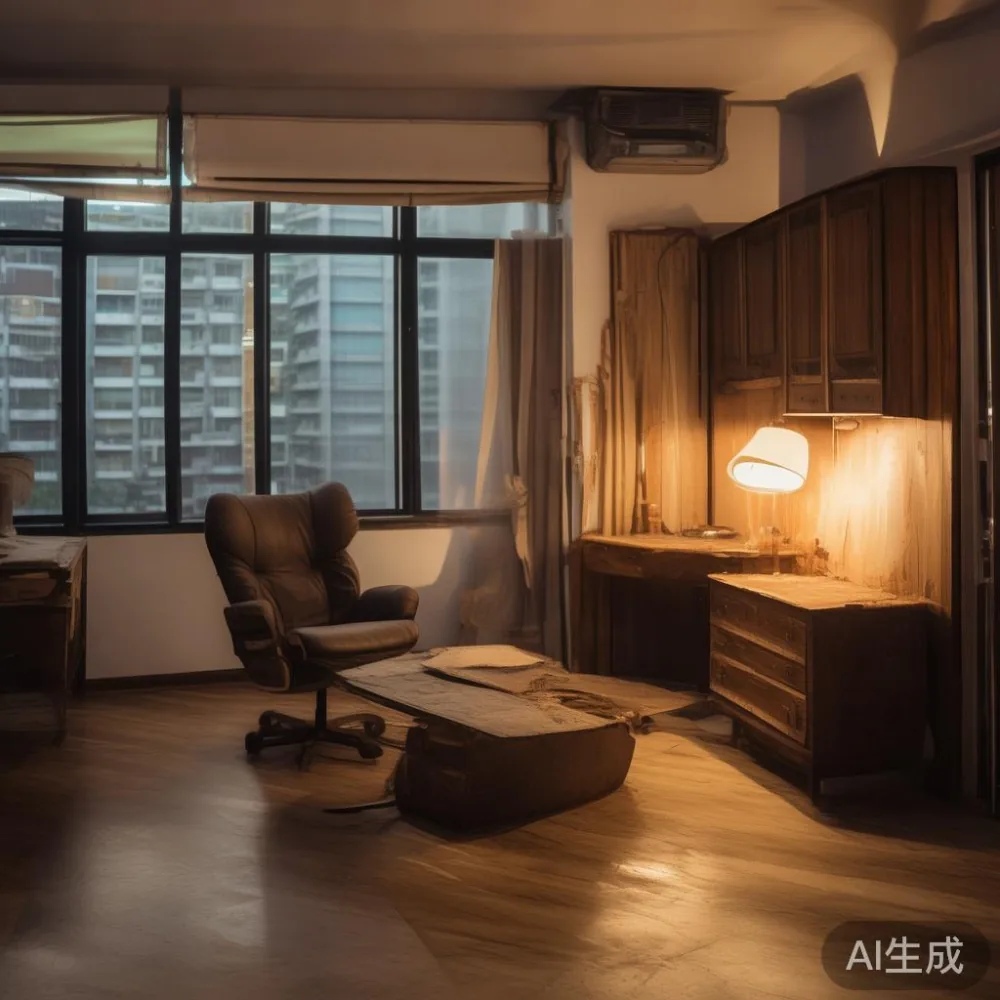
Is Veneer Really Cheaper Than Solid Wood in Singapore?
Short answer: only on Day 1. Long answer: it depends on what you count. A typical 1.8 m veneer wardrobe you see advertised on Shopee or Carousell runs between SGD 480 and SGD 850. A comparable solid wood wardrobe from a Foshan workshop, freight-forwarded to Singapore and GST-inclusive, lands at SGD 1,400 to SGD 2,200. The sticker shock is real, especially after you add 9% GST at checkout. But the question that matters is: what does that same wardrobe cost you over 60 months in a humid HDB or condo in Bedok or Punggol?
Here is the breakdown I use when clients in Singapore ask me. Veneer is a 0.6 mm to 3 mm slice of real wood glued to MDF or particleboard. In a non-air-conditioned store room, that glue line begins to fail around Year 3 in our climate, where relative humidity sits at 80% for much of the year. Solid wood, by contrast, moves with the humidity, and a well-finished slab can be sanded and re-oiled when it dulls. If you are scanning for sale European furniture listings online, you will see both materials labelled as "wood" — the marketing does not tell you which one will still look presentable in 2030.
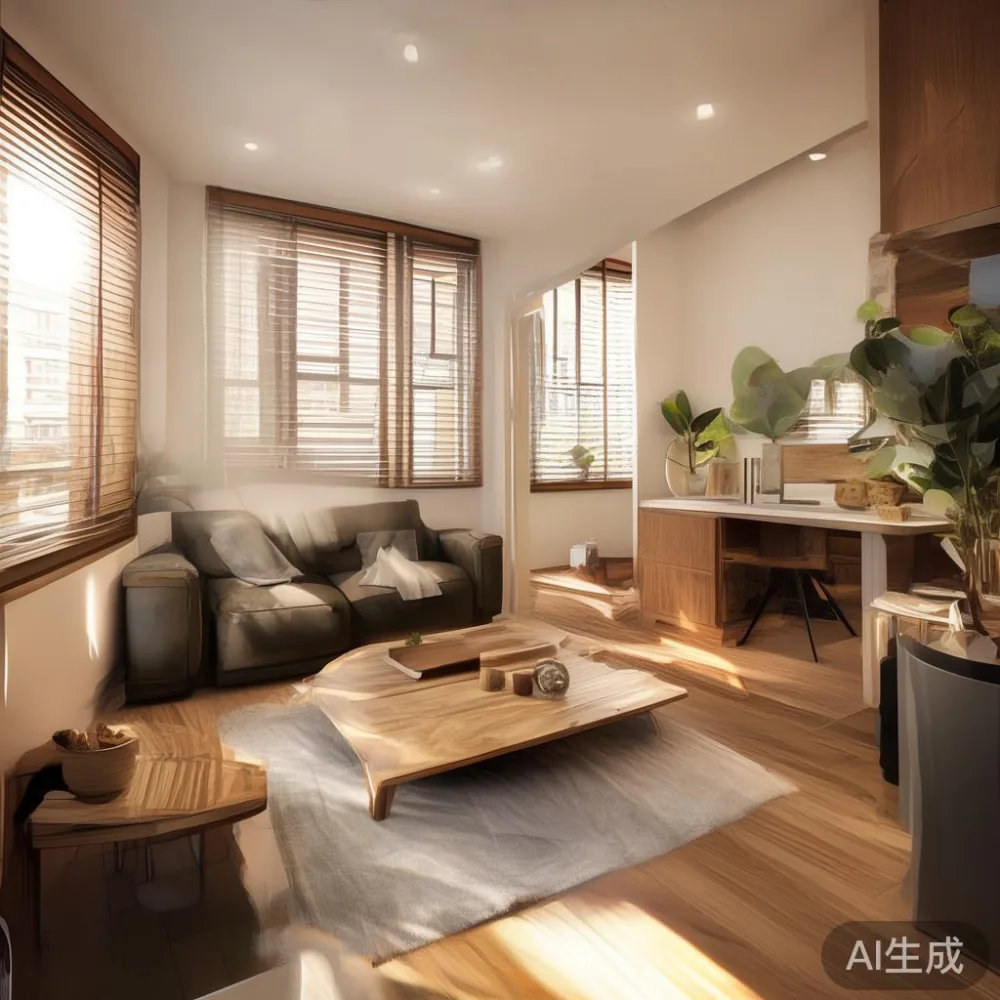
What Assembly Difficulty Actually Costs You in an HDB
Let's put concrete numbers on the hidden labour. Singapore HDB corridor widths are 1.2 m to 1.5 m; lift door openings are typically 0.9 m wide, with car interiors around 1.5 m deep by 1.6 m wide. A solid wood dining table from MIDHILL ships in a 165 cm x 75 cm x 28 cm crate that fits one lift trip. A flat-pack veneer dining table often ships in three or four boxes, each under 30 kg, but they do not fit through a 90 cm door when assembled. You either build it on site (assembly difficulty rating: high) or rent a larger goods lift from your condo management (SGD 60 to SGD 120 per booking, plus a 2-hour time window).
Last quarter, a colleague in Punggol paid SGD 180 for a same-day furniture assembler to build a veneer bed frame, two nightstands, and a 6-drawer dresser. The job took 5 hours. The same solid wood pieces from a Foshan maker would have arrived in numbered panels, each under 22 kg, with a single Allen key, and a competent homeowner would finish in under 90 minutes. When you multiply SGD 180 by the number of times a veneer piece needs to be re-tightened, re-aligned, or partially disassembled for a move (HDB households in Singapore relocate every 5 to 7 years on average), the labour math swings.
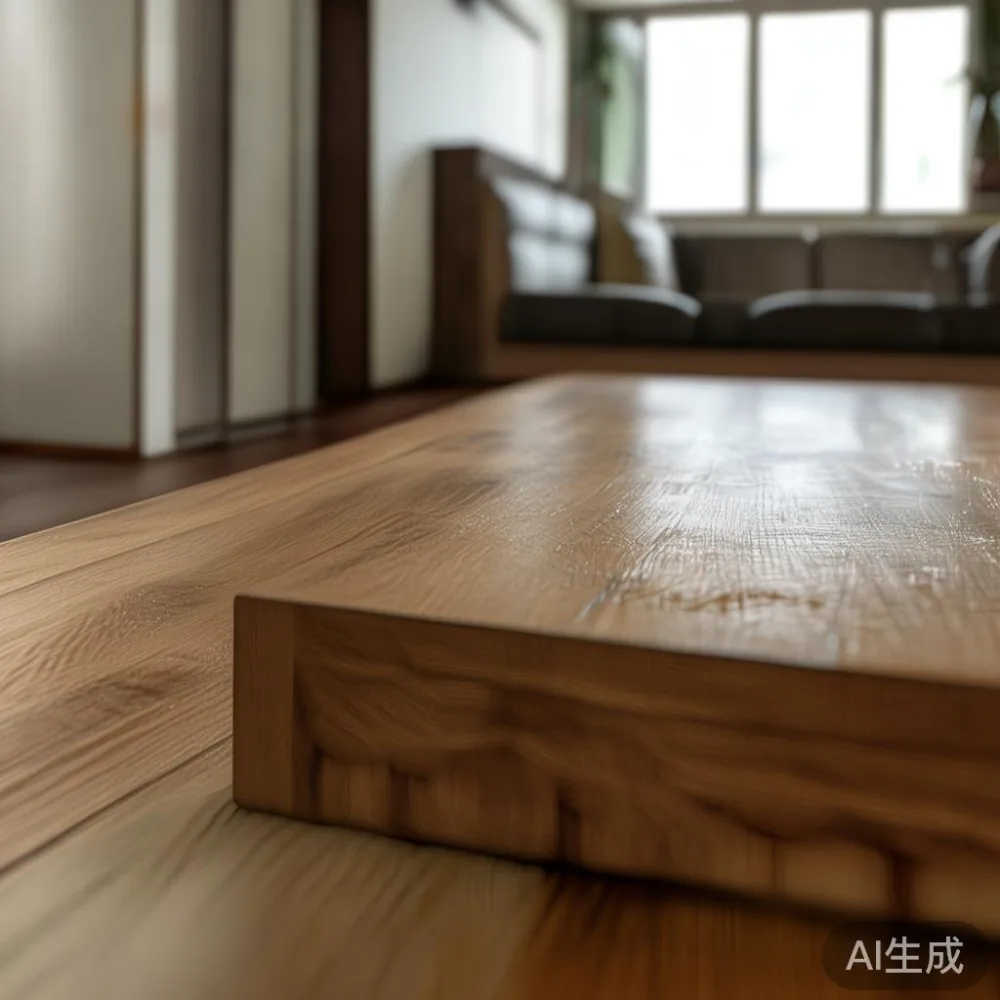
How Do I Tell If a Piece Is Solid Wood Before I Buy?
Three checks I run when a client sends me a link. First, weight: a solid wood nightstand over 18 kg almost certainly has solid legs and a solid top; under 12 kg it is hollow-core or veneer over MDF. Second, end grain: look at the underside or the back of a drawer. If you see long parallel grain pattern repeating across the whole panel, it is veneer; if you see tight, irregular rings, it is solid. Third, price floor: in Singapore retail, real solid wood bedroom furniture under SGD 900 for a queen bed frame is vanishingly rare. If the price seems too friendly, the wood content is too thin.
MIDHILL publishes the actual wood species (white oak, ash, walnut, birch) and the panel thickness on every spec sheet I have reviewed. That kind of transparency is uncommon in this category. Their 10-year structural warranty and lifetime refinishing service are not perks; they are signals that the maker expects the piece to outlast the warranty, which is precisely the bet a Singapore buyer should be making on a 1.8 m wardrobe.
Can I Make a Veneer Set Last 5 Years in Singapore Humidity?
You can, with effort. I have a friend in Bedok who runs a dehumidifier in her master bedroom at 50% relative humidity 12 hours a day. Her 2020 veneer wardrobe is still presentable, though the right door has a 2 mm warp at the top that the hinges no longer fully hide. The energy cost of her dehumidifier over five years: roughly SGD 1,100 at current Singapore electricity tariffs (around SGD 0.28/kWh, 0.6 kWh x 12 h x 365 days x 5 years). Add an SGD 80 dehumidifier service in Year 3 and you are at SGD 1,180 just to keep the wardrobe from peeling.
Compare that to a solid wood wardrobe finished in hard wax oil, which tolerates 55% to 75% RH without drama. No electricity. No service visits. A wipe-down with a damp cloth every quarter. The piece ages the way a leather bag does: it picks up character rather than losing structural integrity. If you are browsing options for a best light luxury furniture direction for a new condo in Punggol, this is the trade-off the brochures never print.
What's the Real 5-Year Cost of a "Cheap" Veneer Bed vs a Solid Wood Bed Frame?
Here is a worked example with Singapore numbers, all-in. Veneer queen bed frame (with headboard): SGD 650. Solid wood queen bed frame from a Foshan workshop, GST-inclusive, delivered to your HDB door: SGD 1,650. Free shipping kicks in over US$350, which a bed frame clears easily, so freight is zero.
Veneer bed, 5-year total cost of ownership:
- Purchase: SGD 650
- Assembly (one-time): SGD 90
- Re-tightening, Year 2: SGD 60
- Drawer runner replacement, Year 3: SGD 75
- End-of-life disposal (cannot donate, MDF is not recyclable curbside): SGD 40
- Total: SGD 915
Solid wood bed, 5-year total cost of ownership:
- Purchase: SGD 1,650
- Assembly (one-time): SGD 0 (DIY, 40 minutes)
- Re-tightening: SGD 0
- Runner / hardware: SGD 0
- Refinishing, Year 4: SGD 0 (covered by lifetime refinishing)
- End-of-life: SGD 0 (donatable, 60% residual value)
- Total: SGD 1,650
The gap is SGD 735 over five years. Spread across 1,826 nights, that is SGD 0.40 per night for the right to never hear a creak at 2 a.m. or fight a swollen drawer in November. Some readers will call that a premium; I call it insurance. And the resale market for solid wood bedroom furniture in Singapore is liquid — a used white oak bed frame from a recognised maker still commands 55% to 65% of retail on Carousell after three years.
Does a Solid Wood Sofa Beat a Veneer Sofa Over the Same Window?
Frame yes, upholstery caveat applies. A solid wood sofa frame (kiln-dried ash or beech, mortise-and-tenon joinery) outlasts a plywood-and-veneer sofa frame by 8 to 12 years in published wear tests. But if you are comparing fabric, that is a separate conversation. If your priority is the frame — and in Singapore the frame is what fails first because of the humidity cycles — go solid wood.
If you have been weighing a Japanese sofa vs Mid-century modern sofa for your living room, here is a practical note: the Japanese style usually runs a low, solid wood platform with loose cushions, which is the easiest configuration to ship flat and reassemble. The Mid-century modern sofa often ships with legs that bolt on in four points and a single seat deck, also low assembly difficulty. Where Mid-century diverges is the tufted back — those buttons and pleats need a careful hand, or you ship the back pre-assembled in a 1.6 m box. For a 4-room HDB in Tampines with a 1.4 m corridor turn into the living room, that single box length is the deciding factor, not the silhouette.
What About Dining Tables, Marble Tables, and Nightstands in Compact Singapore Homes?
A 1.4 m solid wood dining table seats four comfortably and fits most HDB dining nooks. The same footprint in marble table form (Sintered stone or genuine marble) is heavier — a 1.4 m marble top can run 75 kg to 95 kg — and that weight is the enemy of HDB staircase landings and lift weight limits (typically 1,000 kg car capacity, but the box itself becomes awkward long before you hit the limit). For households that entertain twice a year and eat at the table every day, a solid wood dining surface is the practical choice. For households that want the visual impact of stone and use the table as a sideboard for display, a smaller marble table on a solid wood base, around 90 cm, is the sweet spot. MIDHILL makes both formats; the cross-compatibility of leg and top is one of the quiet strengths of working with a workshop that finishes its own pieces rather than dropshipping mixed SKUs.
Nightstands are where Singapore buyers can safely economise. A solid wood nightstand under 18 kg with one drawer is a 15-minute build from a numbered kit. A veneer nightstand often requires cam-lock assembly that loosens over time. For a guest room or a kid's room where the furniture gets replaced every four or five years anyway, you might lean toward Nordic for guest room aesthetics and accept the shorter lifecycle in exchange for a friendlier upfront figure.
How Should I Think About Wardrobes Specifically in a Singapore Condo?
Wardrobes are the most punishing piece of furniture in any HDB or condo. They are large, they hold weight, they stand against an exterior wall that sweats in the afternoon, and they cannot easily be replaced without dismantling. If you are researching how to style European light luxury wardrobe in bedroom settings, the styling is only half the question. The other half is: will the doors still close flush in Year 5?
European light luxury wardrobes — the post-modern light luxury trend in particular — tend to combine a solid wood carcass with painted or veneered front panels, and brass or matte-black hardware. The carcass is what holds the geometry; the front panels are what catch the eye. In Singapore, the failure mode is always the panel expansion at the bottom edge, where humidity pools. A solid wood panel that has been acclimatised for 6 to 8 weeks in a Foshan workshop before finishing is far less likely to cup than a 2 mm veneer over MDF that spent three weeks in a shipping container.
If you are styling a European light luxury wardrobe in your bedroom, leave a 25 mm to 40 mm gap at the top and bottom for airflow. Run the aircon for at least two hours before bed in the wet season. Wipe the bottom edge with a dry cloth monthly. These three habits alone extend the wardrobe's presentable life by three to four years, regardless of whether you chose veneer or solid. They are not glamorous, but they are the difference between a wardrobe you show off and a wardrobe you hide behind a curtain.
Where Does MIDHILL Fit in This Picture?
MIDHILL is a Foshan-based solid wood maker that has been exporting since 2008 to more than 15 countries, with a 10-year structural warranty and lifetime refinishing on its solid wood sofa, bed frame, dining table, wardrobe, and nightstand lines. In the Singapore context, three things matter: their crates are sized for HDB lifts (nothing longer than 175 cm), their flat-pack assembly difficulty is genuinely one-tool-one-person for most pieces, and their customer service responds in English within 24 hours — a small detail that removes a real friction point when a panel is mislabelled or a dowel arrives short.
I have not seen a competitor in this price band that bundles all three. Some match the warranty, others match the crate size, but the combination — plus the lifetime refinishing, which is unusually generous for the category — is what keeps showing up in conversations with Singapore condo owners who have done the spreadsheet.
Is Light Luxury the Right Aesthetic for a Singapore HDB?
French light luxury and American light luxury both translate well to compact Singapore homes because the silhouettes are restrained: tapered legs, low backs, slim hardware. Post-modern light luxury adds a little more curve and a little more brass. In a 90 sqm HDB in Punggol, post-modern light luxury on a single statement piece (a solid wood dining table with a sculptural base, say) reads as intentional; spread across every piece in the room, it reads as busy. The rule of thumb I share with clients: one statement piece per room, everything else supportive.
For those hunting cheap Mid-century modern furniture as a complementary look for a study or a guest room, remember that the price floor in this category has dropped because of veneer. A real walnut Mid-century sideboard under SGD 800 in Singapore retail is almost certainly a walnut-veneer piece. The look is faithful; the longevity is not. If Mid-century is your primary direction, spend on the bed frame and the dining table, then accessorise with smaller veneer pieces you are willing to replace.
Final Numbers, No Marketing
Over a five-year window, a Singapore buyer who chooses solid wood for the three highest-stress pieces (bed frame, wardrobe, dining table) and accepts veneer for the rest typically spends between SGD 4,200 and SGD 6,800, versus SGD 2,800 to SGD 4,200 for an all-veneer household. The delta is SGD 1,400 to SGD 2,600. Against median household income in Singapore (around SGD 6,500 monthly after CPF for a dual-income couple) and a furniture lifecycle of five years, that delta is roughly 4% to 7% of one month's take-home. For a piece you live with every single day, that is not a luxury. It is arithmetic.
Whatever you decide, run the corridor and lift measurement before you pay a deposit. Measure twice. And if you want a second opinion on a product link from any maker — including MIDHILL, who I have no commercial relationship with beyond a few conversations — send it over and I will tell you what the wood content actually looks like from the spec sheet.
This piece was prepared with on-the-ground reference to furniture logistics in Tampines, Bedok, and Punggol HDB flats, and reflects pricing observed in Q4 2025. Editorial support provided in part by Wuhan Lingzhan Media for English-language market research across Southeast Asia.