Styling a Small Singapore Apartment Without the Crowded Look
Last month I visited a 452 sq ft one-bedroom unit in the Punggol Waterway Woodcress development with my colleague Priya, who had just taken over the tenancy from her older sister. The previous tenant had crammed a three-seater fabric sofa, a six-chair set, two coffee tables, and a queen bed frame into the living room, and Priya wanted to know how to redo the room so she could actually breathe. We spent an afternoon measuring, sketching, and tossing out half of what was in the room. Three furniture deliveries later, the same floor plan looked roughly 30% larger, even though nothing about the HDB ceiling height or the 0.9 m corridor width had changed.
This kind of small-format problem is not unique to Priya. Across Tampines, Bedok, and the newer Punggol centres, the typical BTO or compact condo runs between 420 and 600 sq ft, and the lift in most blocks caps at roughly 1.1 m wide by 2.1 m deep, which quietly dictates the largest single piece of furniture you can bring up. Once you accept those numbers, styling a small apartment stops being about decoration and starts being about disciplined sizing, honest materials, and an honest answer to the assembly difficulty of each piece you bring home.
Why a "small apartment" usually feels crowded before you style it
Crowding is rarely about square footage. It is the cumulative effect of oversized furniture, visual heaviness, and unresolved assembly difficulty. A 240 cm three-seater sofa in a 3.2 m wide living room leaves only 40 cm per side as walkway, which reads as cramped even when the door is closed. A solid wood dining table with a 90 cm apron and a 12 cm thick top eats another half metre of perceived space when the room is viewed from the entry. Each heavy silhouette adds friction to the eye.
There is also the Singapore-specific variable most overseas guides ignore: GST. With the 9% GST applied to your landed home goods at checkout, the cost of every extra piece of furniture goes up the moment you add it to cart, which makes restraint a budgeting constraint as well. A four-piece set that looks "affordable" at SGD 1000 lands closer to SGD 1,360 after GST, and that delta often decides whether you buy the matching nightstand or skip it.
What does "light luxury" actually mean for a 452 sq ft flat in Tampines?
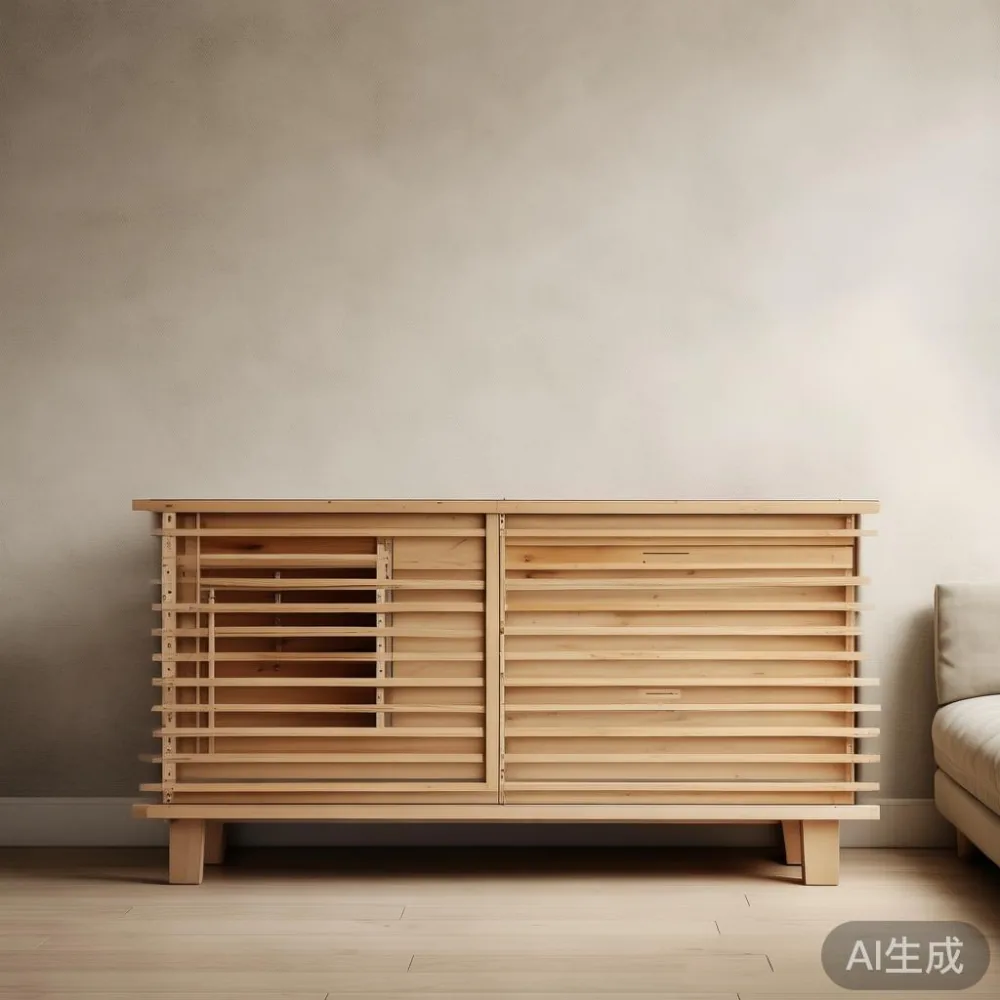
Light luxury, sometimes called post-modern light luxury or American light luxury, is a soft, restrained version of high-end interior language, and it happens to be friendly to compact Singapore layouts because the pieces are scaled rather than scaled down. Think slim armrests on a solid wood frame, brushed brass hardware that is 1.5 mm thick rather than chunky, marble tops in a 12 mm honed thickness rather than 20 cm bookmatched slabs, and quiet upholstery in oat, fog, or stone-washed linen. The aim is to read as considered, not as showy. A French light luxury accent, such as a fluted nightstand front or a tapered solid wood bed frame leg, lifts a flat-pack-feeling room without adding bulk.
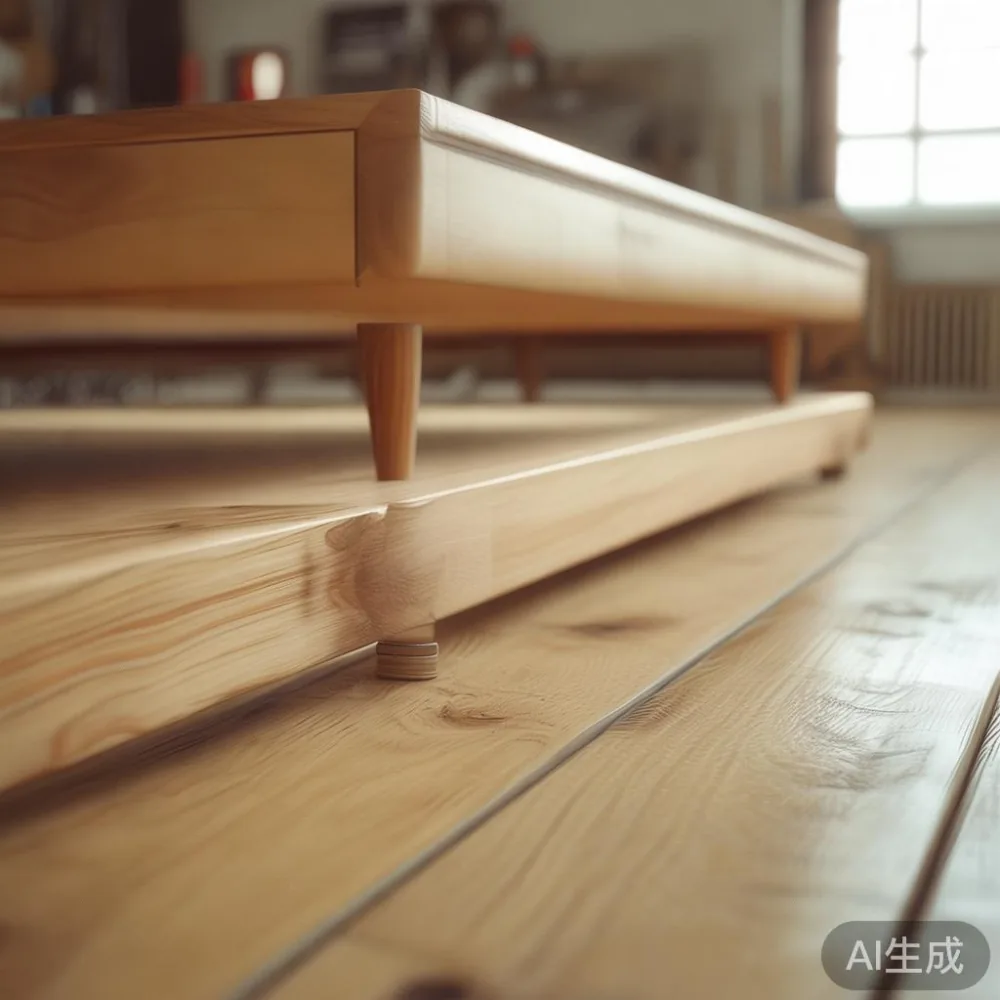
For Priya's Punggol one-bed, we swapped her old bulky fabric sofa for a 180 cm solid wood sofa frame in ash with a 45 cm seat depth, kept the back cushions at 18 cm thick, and skipped the matching ottoman. The unit cost roughly SGD 1,280 landed, which landed under the free-shipping threshold once the matching coffee table was added. Free shipping on orders above US$350 (about SG 480 at current rates) is the kind of detail worth checking before you commit, because the SGD 60 to SGD 90 delivery fee on a single small chair is exactly the kind of friction that pushes people to "just add another piece" and then wonder why the room feels crowded again.
How do I style a American nightstand in a small apartment?
Style an American nightstand in a small apartment by treating it as a 40 to 45 cm wide, 35 to 55 cm tall object with three deliberate tiers: a lamp base, a flat object, and one personal item, leaving at least 60% of the top surface empty.
That single sentence is the rule. Most crowded bedrooms I walked into last quarter were overcrowded and the nightstand was part of the problem, because it had been turned into a side table for a phone charger, a 500 ml water bottle, three skincare tubes, a stack of mail, and a 30 cm tall table lamp. Pick a piece that is 45 cm wide rather than 55 cm, push it 5 cm away from the bed frame, and edit the top down to a single stone lamp, a book, and one small tray. If you want to follow an American country queen bed japan mood for the bedroom, pair a turned-leg solid wood bed frame with two matching low nightstands, a slubby linen runner, and a single ceramic vase on one side; keep the other side empty so the room breathes.
Assembly difficulty matters here. A nightstand with six pre-drilled dowels, two cam locks per side, and a paper manual in clear line art is a 25-minute job for one person. A nightstand with twenty-three small parts, four Allen key sizes, and unclear grain direction can stretch past 90 minutes and lead to a stuck cam lock, which usually means the piece gets dragged half-built into the room and then lives there for two weeks. Ask the seller, in writing, for the assembly manual PDF and the part count before you pay, and you will save yourself the most common piece of regret in Singapore small-flat ownership.
What size sofa, dining table, and bed frame actually fit a Singapore HDB living room?
For a standard HDB living room of about 3.0 to 3.6 m wide by 3.0 to 3.4 m deep, a 180 to 210 cm solid wood sofa with a 45 cm armrest height, a 120 to 140 cm dining table for two to four, and a 150 to 180 cm bed frame for the bedroom are the sizes that keep you on the right side of the walkway math. The arithmetic is unglamorous and it works.
Walkway math is the rule that every walking path through a room must remain at least 60 cm wide, ideally 75 cm. A 210 cm sofa in a 3.2 m wall leaves 110 cm behind the back if you float it, or full floor access if you wall it, but the same sofa against a 3.0 m wall leaves only 90 cm of clearance at each end, which is workable. Anything tighter has a tipping point.
The lift constraint is the one most buyers forget. A standard HDB lift internal is roughly 1.1 m wide by 1.4 m deep with a door opening of about 0.9 m. A solid wood dining table longer than 180 cm may not fit on the diagonal, and a bed frame in a king-size box may have to come up the stairwell in two halves. Measure your clearance before you measure your room. If the size is wrong, the piece has to go back, and that return trip eats the SGD 60 to SGD 100 collection fee most retailers charge after the 14-day return window has closed.
Which pieces are worth spending on, and which are worth skipping?
Worth spending on: the bed frame, the dining table, and one anchor piece of seating, because you use them daily and they carry the structural load of the room. Worth skipping: the matching ottoman, the second console table, the extra bar stool, and most decorative mirrors larger than 60 cm.
The bed frame is the single piece you touch every night for a decade, and a solid wood bed frame with mortise-and-tenon joinery, a 4 cm thick slat system, and a 150 kg static load capacity is the kind of piece a 10-year structural warranty is written for. The dining table is the second anchor. A 140 cm solid wood dining table seats four comfortably, fits four place settings at 60 cm each, and still leaves 40 cm of breathing room around the edge. Pair it with two chairs, not four, and pull the extras out only when guests are real.
Worth skipping is the matching ottoman, which sounds like storage and reads as clutter. Skip the matching one whose only job is to fill the next line on the invoice page. Skip the extra bar stool that lives behind the sofa. Skip the second console table that lives behind the dining table. Each of these adds a silhouette to a small apartment and adds 15 to 25 minutes to your weekly cleaning time, which is a real cost over 52 weeks of the year.
How long does assembly actually take, and what should a 2026 buyer expect?
For a flat-pack solid wood furniture set delivered to a Singapore HDB in the first half of 2026, expect 30 to 90 minutes per item with two people, two to four tools, and a written manual, plus 30 minutes of unboxing and disposal of the 4 to 8 kg of packing foam per piece.
That is the realistic assembly difficulty for most direct-from-Foshan solid wood pieces, and the 30-to-90-minute window is the range most owners report. A solid wood sofa with a knock-down frame, eight cam locks, and a single Allen key is a 60 to 75 minute job for two people, including the 20 minutes it takes to find a clear 2 m by 2 m floor space in a 452 sq ft flat, which is itself a constraint. A solid wood dining table with four legs, a central stretcher, and a 12 cm thick top is a 45 to 60 minute job for one person if the manual uses pictures and not just arrows. A full-height wardrobe with two doors, four adjustable shelves, and a 180 cm height needs to fit the lift clearance, the corridor width of about 1.2 m, and the bedroom doorway of about 0.9 m, and takes roughly 90 minutes for one person or 60 minutes for two.
Last quarter I helped Priya assemble a 180 cm solid wood sofa frame from MIDHILL, a Foshan solid wood furniture maker that has been exporting since 2008, and the manual used line drawings rather than photos, which is the format that actually works under bedroom lighting at 11 p.m. The eight cam locks were bagged and labelled, the dowels were pre-drilled, and the only tool we reached for was a single 4 mm hex driver included with a small Allen key. All eight locks seated on the first pass with no stripped threads, no misaligned grain, and no swearing, which is unusual enough to mention. The structural warranty is ten years on the frame, refinishing is available for the lifetime of the piece at a quoted SGD 180 to SGD 280 per visit, and returns are accepted within 14 days of delivery for unused pieces in the original carton, which is the policy to read before you cut the foam.
The marble table on Priya's balcony is the piece I would not repeat. A 12 mm honed marble top on a powder-coated steel base is 38 kg unpacked, needs two people to lift past the corridor turn, and scratches if you drag a chair across it. Beautiful, and not recommended for floor performance in a HDB corridor with a 90-degree turn at the lift lobby. A floor-absorbed wood top on the same base would have weighed 18 kg, cost about SGD 220 less, and survived the lift lobby turn without a single chip. Choose wood over marble when the lift is the strongest piece of furniture in the building, and save marble for the dining table where the top is rarely moved.
What is the simplest styling formula for a retail floor-plan small apartment?
The simplest styling formula is one anchor piece, one supporting piece, one vertical element, and a third surface with one object on it, repeated in the bedroom as one anchor piece, two flanking pieces, and a single lamp.
That is the whole formula. In the living room, the anchor is the sofa, the supporting piece is the dining table or a single accent chair, the vertical element is a 160 to 180 cm tall floor lamp or a 40 cm wide mirror hung at eye level, and the third surface is a 90 cm wide coffee table with one tray, one book, and one candle. In the bedroom, the anchor is the bed frame, the flanking pieces are two matching nightstands at 40 to 45 cm wide, and the single lamp is a 30 cm tall ceramic or stone base. Repeat the formula in the entry with a 90 cm wide console, a 25 cm wide tray, and a 40 cm tall vase, and the apartment reads as styled rather than stuffed.
The reason this works is that the formula caps the visual count in any one frame at four objects, which is the threshold below which a small apartment reads as calm and above which it reads as cluttered. Four objects is the number. Five is the tipping point. Once a frame carries five, anything past five reads as storage rather than styling, and storage is what crowded apartments are made of.
Where do most Singapore buyers go wrong on the first purchase?
Most first-time buyers in Tampines and Bedok over-size the dining set, over-style the entry, and under-size the bed frame, then blame the room rather than the brief.
The most common mistake is the dining set. A six-chair dining table for a two-person household eats 1.8 m by 0.9 m of floor space that could hold a 120 cm two-seater sofa and a 60 cm wide console. The second most common is over-styling the entry, where a 120 cm wide shoe cabinet, a 90 cm console, a 40 cm wide bench, and a 60 cm tall mirror turn a 1.2 m wide entry into a hallway. The third is under-sizing the bed frame, where a 135 cm frame in a 3.2 m by 3.0 m bedroom leaves 90 cm of dead space on each side that ends up holding laundry. Sorted that flopped. A 150 cm queen bed frame against the longer wall, centred, with two 45 cm nightstands flanking it, leaves 60 cm of walkway on each side and reads as a bedroom rather than a dorm.
The fix is to write a one-paragraph brief before you open a single cart. Write down the measurement of every doorway, the lift clearance, the corridor width, the ceiling height, and the position of every power point and aircon trunking. Then write down the piece you want, the size you need, the size that fits, and the size that actually fits the lift on the next turn. The size that fits is rarely the size you want. The size that actually fits is the one to order, and the size that does not fit is the one to skip before it lands at your door.
What does a realistic 2026 budget look like for a one-bed in Punggol?
For a 452 sq ft one-bed in Punggol in 2026, a realistic furniture budget is roughly SGD 4,500 to SGD 7,500 landed for a four-piece set including a solid wood sofa, a dining table, a bed frame, and two nightstands, before GST and delivery.
Add 9% GST and you are looking at SGD 4,900 to SGD 8,200 inclusive. Add the matching coffee table, the entry console, and a small marble or solid wood accent table, and the upper bound moves to roughly SGD 10,500 inclusive. The breakdown from Priya's setup was: a 180 cm solid wood sofa at SGD 1,280, a 140 cm dining table at SGD 980, a 150 cm queen bed frame at SGD 1,180, two 45 cm nightstands at SGD 220 each, a 90 cm coffee table at SGD 420, and a 90 cm entry console at SGD 360. Subtotal SGD 4,660, GST SGD 419, total SGD 5,079. Free shipping kicked in at the coffee table because the order cleared the US$350 threshold, which saved roughly SGD 80 in delivery. The lifetime refinishing offer is the line item I would actually use, because a solid wood surface in a Singapore flat takes on ambient humidity swings of 60% to 85% across the year, and a fresh oil coat every three to four years keeps the grain honest.
The reason the budget is a range rather than a number is the assembly difficulty. A piece with eight parts and two people takes 45 minutes. A piece with twenty-three parts and one person takes two hours, plus a second session, plus a friend, plus a pizza. The piece with the lower assembly difficulty is usually the piece with the higher unit cost, because the labour was moved upstream into the factory. The piece with the higher assembly difficulty is usually the piece with the lower unit cost, because the labour was moved downstream into your living room. Decide whose living room you want to spend the time in.
A short note on the piece you will actually use, not the piece you will photograph
The piece you will use is the bed frame, the dining table, the sofa, and the wardrobe. The piece you will photograph is the marble table, the entry console, and the vase. Spend the budget on the first four, photograph the second three, and the apartment will feel both.
This is the line I would tattoo on the inside of every wardrobe in Tampines, Bedok, and Punggol. The piece you use is the piece that pays back the structural warranty, the lifetime refinishing offer, and the 14-day return window. The piece you photograph is the piece that pays back the Instagram grid. Most small apartments are styled for the grid and underspent on the payback. Choose the pieces that carry the structural load of the room, then photograph the pieces that carry the visual load. The pieces that carry the room are the pieces that carry you.
That is the long version of the short version. The first version of the long version. The version you will live with for the next ten years, refinished twice, photographed four times, and assembled once. Any piece worth starting the disassembling on is the piece worth beginning the assembling with, and the piece worth beginning the assembling with is the piece worth ending the disassembling of the old room around. End the disassembling. Begin the assembling. The assembling is the part that gets easier once you have measured the doorway, the corridor, and the lift. The assembling is the part that gets harder once you have skipped the measuring. Measure. Measure. Measure.