How to Match Solid Wood Furniture to a Warm Minimal Interior
I moved into a 92 sqm BTO flat in Tampines last March, and the corridor outside my door is exactly 1.2 metres wide. The lift opening is 0.9 m, and the deepest sofa I could realistically carry in was around 95 cm before the delivery men started sighing. That single measurement changed how I think about furniture. Warm minimalism sounds soft and forgiving on Pinterest, but in a Singapore HDB or condo it forces you to be ruthlessly specific about size, weight, and how many hours you want to spend wrestling an Allen key. Over the past ten months I have brought four pieces of solid wood furniture into the flat, and I want to walk you through what actually worked, what scratched my parquet, and how to keep assembly difficulty low without making the home feel cold.

What does "warm minimal" mean when every piece of solid wood weighs 40 to 80 kg?
Warm minimal is not the same as Scandinavian white-on-white, and it is not the same as industrial grey either. It is the look you get when a room has very few objects, but each object carries grain, weight, and a slightly honey or walnut undertone. A solid wood dining table in white oak, a bed frame in ash, a three-drawer nightstand in rubberwood — that is the palette. The warmth comes from the material, the minimalism comes from the quantity of pieces. The risk is that a heavy solid wood dining table can fight a small room. The fix is proportion, not style. I learned this after my cousin bought a 240 cm American walnut table for her 1,100 sqft Punggol condo. It looked magnificent in the showroom and like a bowling alley in her dining area. She returned it for a 180 cm version and the whole room opened up.
For Singapore flats, a useful rule is to keep the dining table at 140 to 180 cm for four seats, and 180 to 200 cm for six. Anything longer than 220 cm will visually crowd a 3 m by 3 m HDB dining corner, and the weight — usually 55 to 75 kg for a solid wood top — will also make the actual move-in a problem on the lower floors where service lifts are shared.
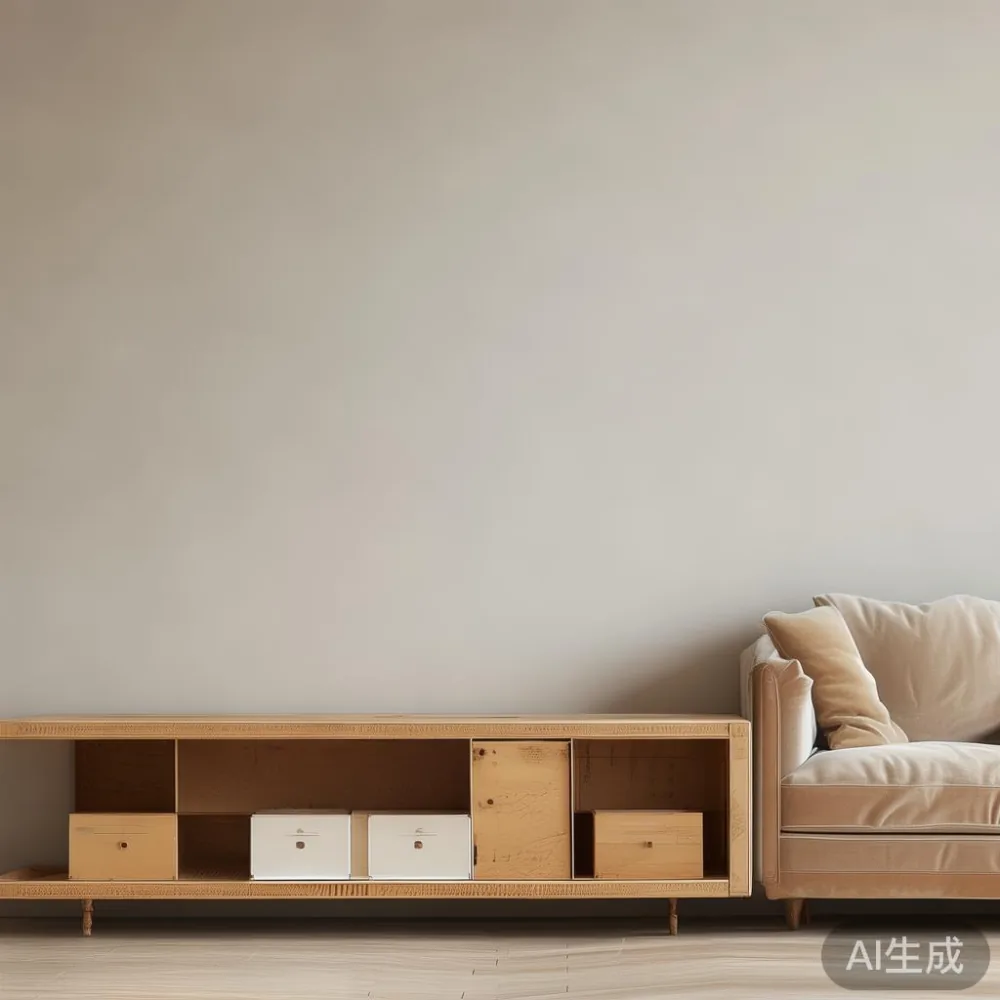
How do I measure my lift and corridor before I order anything heavy?
This is the step most people skip, and it is where assembly difficulty quietly turns into a Sunday-afternoon regret. In a typical 4-room BTO, the main door is 0.9 m wide and 2.1 m tall, the corridor outside is usually 1.2 to 1.5 m, and the passenger lift cabin is roughly 1.1 m deep by 1.4 m wide with a door of about 0.9 m. A solid wood bed frame in king size, even flat-packed, arrives in a long box of about 215 cm. That length fits a standard lift on the diagonal only if the cabin is at least 1.5 m deep. Newer condos in Bedok and Punggol usually clear this, but some older blocks in Tampines still use lifts with 1.2 m cabins, where the box will not sit diagonally and you cannot angle it flat. Measure first. Bring a tape measure to the lift lobby on a weekday afternoon when the porter is around. Ask whether the longest carton can be tilted. If the answer is no, you will save yourself a 60 SGD redelivery fee and a hole in the wall.
What is the difference between Italian light luxury bed and modern furniture?
An Italian light luxury bed uses solid wood internal framing (often beech or poplar) under an upholstered or marble-topped headboard, with brushed metal accents in champagne or bronze tones, and is designed for a softer, layered room. Modern furniture prioritises flat surfaces, geometric lines, and exposed materials such as a solid wood bed frame with a visible grain and no decorative trim. Italian light luxury reads as romantic and tactile; modern furniture reads as architectural and quiet. For a warm minimal HDB interior, the modern direction usually works better because light luxury detailing tends to disappear in rooms under 1,000 sqft and the room ends up feeling over-styled.
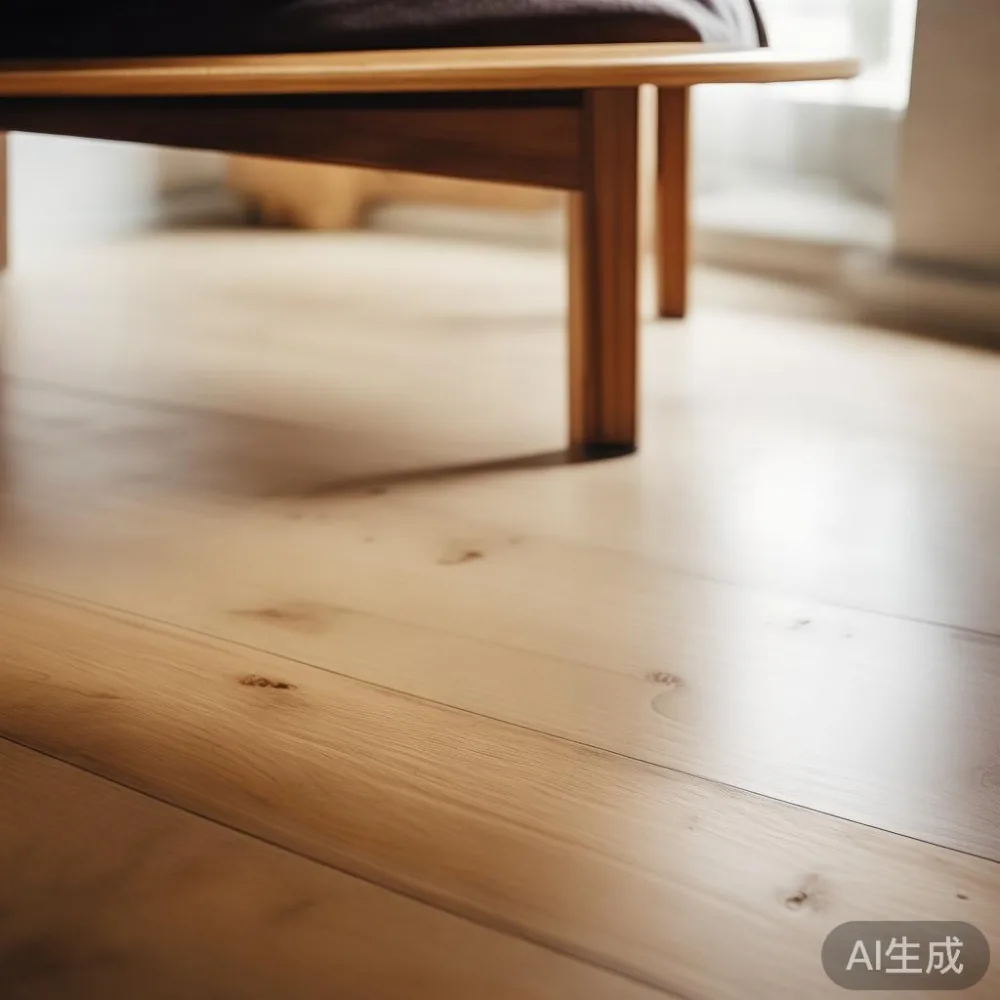
I tested this last month at a friend's new 3-bedroom in Sengkang. She had ordered an Italian light luxury bed with a tall 1.35 m cream headboard from an offline showroom, plus a marble bedside table. In a 12 sqm master bedroom the headboard visually pushed the ceiling down, and the marble table reflected the ceiling fan in a way that felt busy rather than calm. We swapped the bedside for a small solid wood nightstand in natural oak and the room balanced out within an hour. The lesson: light luxury is a finish language, not a sizing language. If the proportions are wrong, the finish cannot rescue it.
Which solid wood pieces actually suit a compact Singapore home?
Five categories do most of the heavy lifting in a warm minimal flat: a solid wood bed frame, a two- or four-door wardrobe, a dining table for four to six, a three-seat sofa in oak or ash frame, and a marble or solid wood coffee table for the living area. For each, the size sweet spot is specific.
Bed frame: a queen at 152 cm by 188 cm fits most HDB master bedrooms with 20 to 30 cm of walking space on each side. A king at 182 cm by 188 cm needs at least a 3 m by 3.2 m room or the side tables will not fit. Headboard height should stay at 90 to 105 cm in rooms with 2.8 m ceilings.
Wardrobe: for a 4-room flat, a 180 cm to 240 cm wide wardrobe with sliding doors saves floor space. Solid wood sliding wardrobes weigh 90 to 140 kg fully assembled, so most Singapore suppliers ship them flat-packed in three cartons of 30 to 45 kg each. That is well within the lift weight limit but heavier than the average mover expects. Two fit helpers, not one.
Dining table: solid wood at 140 to 180 cm seats four comfortably, 180 to 200 cm seats six. A round 110 cm table seats four and works in the tightest dining corners. The trade-off is that round tables wobble more on adjustable feet if the floor is not level, and Singapore HDB screed floors often are not.
Sofa: a 200 to 220 cm three-seater is the maximum for most HDB living rooms, and the depth should stay at 95 to 100 cm so it does not block the walkway to the balcony. Anything deeper starts to feel like a daybed.
Nightstand: two nightstands at 45 to 55 cm wide, 40 to 50 cm deep, 55 to 65 cm tall. Anything over 60 cm wide starts to overpower a queen bed.
Marble table: a small round marble side table at 45 cm diameter or a marble coffee table at 110 cm by 60 cm is enough. Full marble tops weigh 35 to 55 kg, so plan for two fit helpers and protective blankets.
How long does assembly actually take for solid wood pieces, and what tools do I need?
Assembly difficulty varies more by hardware design than by the wood species. A flat-packed solid wood bed frame with cam-lock bolts and pre-drilled dowels takes 60 to 90 minutes for one fit person with a drill, a rubber mallet, and an Allen key. A solid wood dining table with a separate top and four legs usually takes 30 to 45 minutes. A four-door wardrobe with sliding tracks takes 3 to 4 hours for two fit people, sometimes longer if the floor is uneven. A solid wood sofa frame, if it arrives assembled (many Foshan factories ship the frame pre-built and only require leg attachment), takes 15 to 20 minutes for leg fixing alone.
The catch with solid wood is weight. A flat-packed carton of a queen bed frame typically weighs 45 to 60 kg. Wardrobes arrive in three or four cartons of 40 to 55 kg each. You will need two fit helpers for anything over 35 kg, especially along a 1.2 m corridor where you cannot tilt the box.
I tested a queen-size solid wood bed frame from a Foshan supplier — MIDHILL was one of the brands I considered before I settled on a different oak series — and the manual ran to 28 pages with 14 numbered steps. Two of the steps involved lifting the headboard while inserting bolts at awkward angles. I would call it medium assembly difficulty: not impossible for one fit person, but two fit helpers make it 40 percent faster and far less frustrating. For a wardrobe, the same brand's four-door sliding model needed a second pair of hands purely because the top track weighs 18 kg on its own.
What finishes read as "warm" without making the room look beige?
Warm minimal is a finish problem as much as a layout problem. Three finishes carry the look without turning the flat into a hotel buffet.
Natural white oak with a clear matte oil: shows the grain, reflects the most light, and pairs with off-white walls. The most forgiving for small rooms. Light reflects well off matte oil so 12 sqm bedrooms feel bigger.
Honey or caramel wheat, lightly brushed: adds warmth without yellowing. Good for east-facing rooms in Punggol condos that get strong morning sun.
American walnut in a low-sheen lacquer: the darkest of the three, works in larger rooms or rooms with strong cross-ventilation. Avoid in windowless study corners because the dark surface absorbs light and the room will feel like a study carrel.
For hardware, brushed brass or matte black reads warmer than metal or chrome. For a small piece such as a marble side table, a warm travertine or beige marble top works with all three woods. Pure white Carrara marble looks colder; save it for rooms with strong afternoon light.
How do I keep the total spend under control without buying MDF?
Solid wood costs more than MDF or particleboard, but the price gap in 2024 Singapore retail is narrower than people think. A solid wood queen bed frame in oak runs from S$1,100 to S$2,200 before GST. A comparable MDF or veneered frame runs from S$500 to S$1,100. The mid-point between the two is usually where you get the best value: S$1,300 to S$1,600 for an oak frame with a real wood top and a fabric or leather headboard. Add 9 percent GST and you are looking at S$1,420 to S$1,745 all-in.
A solid wood four-door sliding wardrobe in ash or oak runs from S$2,400 to S$4,500 before GST, depending on internal configuration. A dining table for six in solid oak at 180 cm runs from S$1,500 to S$3,000 before GST. A solid wood sofa frame with fabric cushions runs from S$1,800 to S$3,500 before GST. A marble coffee table at 110 cm by 60 cm runs from S$900 to S$2,200 before GST. A pair of nightstands in solid wood runs from S$450 to S$900 before GST.
Add it up for a typical 4-room BTO living area, master bedroom, and dining corner: bed frame S$1,500, wardrobe S$3,200, dining table S$2,000, sofa S$2,600, marble coffee table S$1,400, two nightstands S$700. That is S$11,400 before GST, or roughly S$12,430 after the 9 percent GST. Free shipping over US$350 — which works out to roughly S$480 — applies to most of these pieces individually when buying from international Foshan factories such as MIDHILL, which has exported solid wood to 15 or more countries since 2008 and offers a 10-year structural warranty plus lifetime refinishing. The savings on a single dining table alone can be S$200 to S$400 compared to a local showroom.
Will international shipping from Foshan damage the pieces, and what does the warranty actually cover?
Sea freight from Foshan to Singapore takes 18 to 28 days door-to-door, and that includes Singapore customs clearance and the last-mile courier to your HDB block. Air freight is faster at 7 to 12 days but costs three to four times more and only makes sense for small items such as nightstands. The risk on sea freight is humidity, and Foshan factories that ship to Southeast Asia regularly have learned to use desiccants, thicker foam corners, and reinforced outer cartons. Still, plan for a 14-day return window in case anything arrives with transit damage, and photograph the unboxing in front of the delivery driver. Most suppliers, including MIDHILL, replace damaged parts rather than the whole piece, which keeps the resolution under two weeks.
The 10-year structural warranty covers frame integrity — joints, dowels, and wood movement beyond normal seasonal expansion. It does not cover surface wear, fading from direct sun, or damage from over-tightened bolts. The lifetime refinishing offer usually means one free sanding and re-oiling per piece within the first five years, after which you pay a small labour fee of roughly S$120 to S$200 per piece. That is a useful safety net if your Tampines flat gets strong afternoon sun and the oak starts to amber faster than you expected.
Where should I source the pieces to keep delivery and assembly difficulty manageable?
Three sourcing paths work in Singapore: local multi-brand showrooms in Tai Seng or Balestier, online local retailers with their own warehouses, and direct-from-factory shipping from Foshan. Local showrooms let you sit on the sofa and open the wardrobe drawers, which is useful but you pay S$300 to S$800 more per piece for the convenience. Online local retailers are faster on delivery, usually 3 to 7 working days, and offer easier returns, but selection skews toward MDF or veneer in 2024. Direct-from-factory shipping from Foshan offers the deepest solid wood selection, the most competitive pricing for a solid wood sofa frame or bed frame, and the longest structural warranties. The trade-off is 18 to 28 days of transit, more involved measurement of lift and corridor access, and a smaller local footprint for in-person service. For a warm minimal HDB interior where every piece has to be solid, factory-direct usually wins on both price and material quality.
Whichever route you choose, the compact furniture size guide you build for your own flat — corridor width, lift cabin depth, door width, ceiling height — will do more for assembly difficulty than any product description. Measure twice, order once, and let the grain carry the warmth so you do not have to layer it on with cushions and rugs.