Caring for a Lacquered Solid Wood Piece in Singapore's Heat: Assembly Difficulty, Humidity, and How to Keep the Finish Looking New
I live in a 980 sq ft HDB flat in Tampines, and last month I unpacked a 1.8 m solid wood dining table from a Foshan maker called MIDHILL. The carton came in two boxes, weighed 58 kg combined, and took two of us about 90 minutes to bolt together on the dining-room floor. The lacquer smelled faintly of varnish for three days, then settled into the warm honey tone I had picked out at the showroom. What I had not fully thought through was this: a wood dining table in Singapore is not just a piece of furniture, it is a small climate experiment. The air in this country sits between 70 and 90 percent relative humidity for at least nine months a year, the afternoon sun pours through west-facing HDB windows at an angle that would make a yacht varnish weep, and the lift in my block at Block 259A is only 1.1 m wide, which means any replacement top above 75 cm wide has to be tipped on its side or carried down the fire staircase. Caring for a lacquered surface under these conditions is not hard, but it is specific. Here is what I have learned, in plain steps, with the numbers to back them up.
Why a Lacquered Solid Wood Dining Table Behaves Differently in Singapore
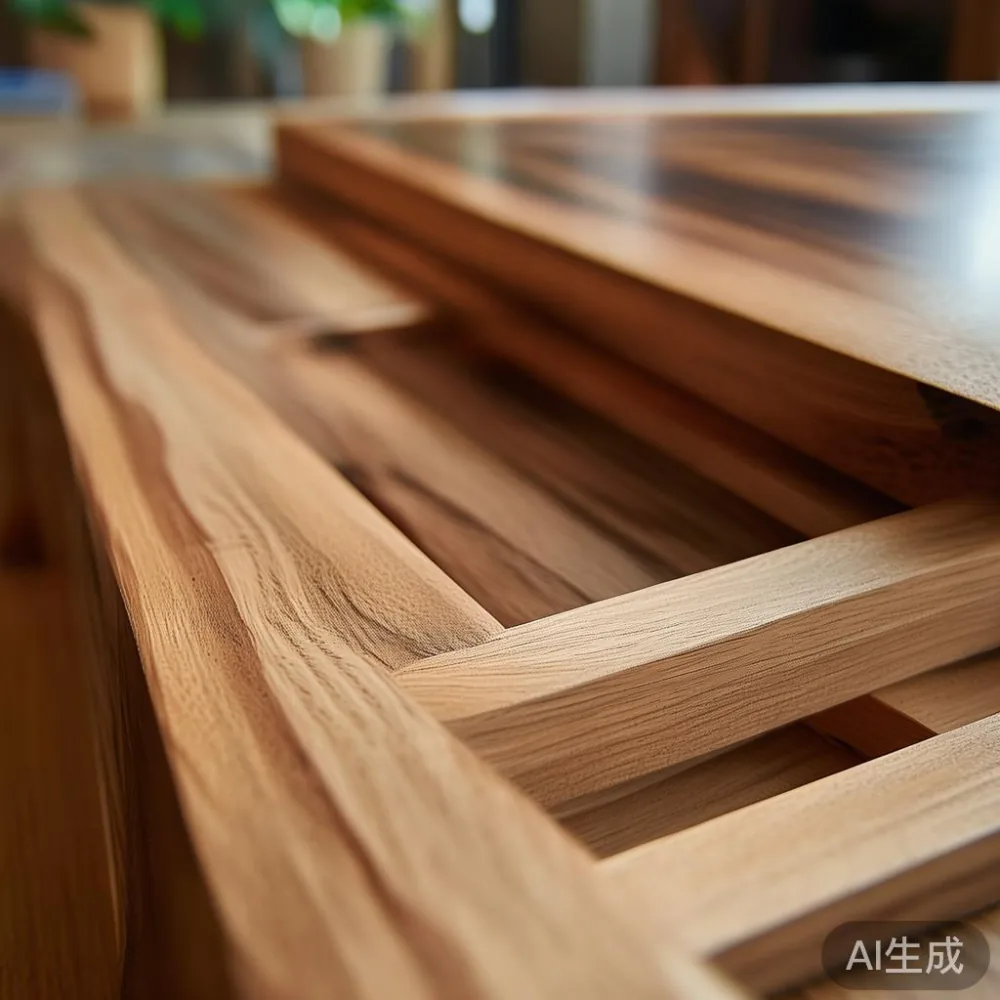
Solid wood moves. That is not a defect, it is the material. A kiln-dried oak top will shrink or swell by roughly 2 to 4 percent across its width as humidity changes. In Frankfurt, the swing between a damp January morning (about 75 percent RH) and a heated March afternoon (about 35 percent RH) is around 40 percentage points. In Singapore, the swing between a wet September morning (about 90 percent RH) and a dry air-conditioned afternoon (about 55 percent RH) is roughly the same, but you flip between the two several times a day as you open and close the door, run the air-con at 23 degrees Celsius, and turn it off at night. A lacquered dining table, bed frame, or wardrobe copes with this by staying sealed at the top and bottom, but the edges of staves and the joints at the apron are where the stress shows. After six months in my flat I noticed a 0.5 mm hairline at the breadboard end of the oak top, which is exactly what good joinery is designed to absorb. The fix was not glue, the fix was keeping the room humidity above 45 percent so the slab does not dry past its comfort zone.
What "Lacquered" Actually Means on a Solid Wood Piece
Lacquer is not a single thing. In Foshan factories it can mean anything from a two-coat acid-catalysed conversion varnish to a seven-coat hand-rubbed French polish, and the price difference between the two is roughly SGD 180 to SGD 600 on a 1.6 m piece. The light luxury finish I chose on my dining table is closer to the middle: a base coat, two colour coats, and two clear top coats, all spray-applied and oven-cured at about 55 degrees Celsius. It is the same family of finish you find on a post-modern light luxury marble table or a French light luxury nightstand, where the reading is "subtle sheen, not plastic." Whether the surface beneath is solid ash, walnut, or oak, the rule for care is the same: keep the film intact, keep the humidity in a band, and keep silicone-containing polishes away from the top.
The Quick Care Routine That Actually Works
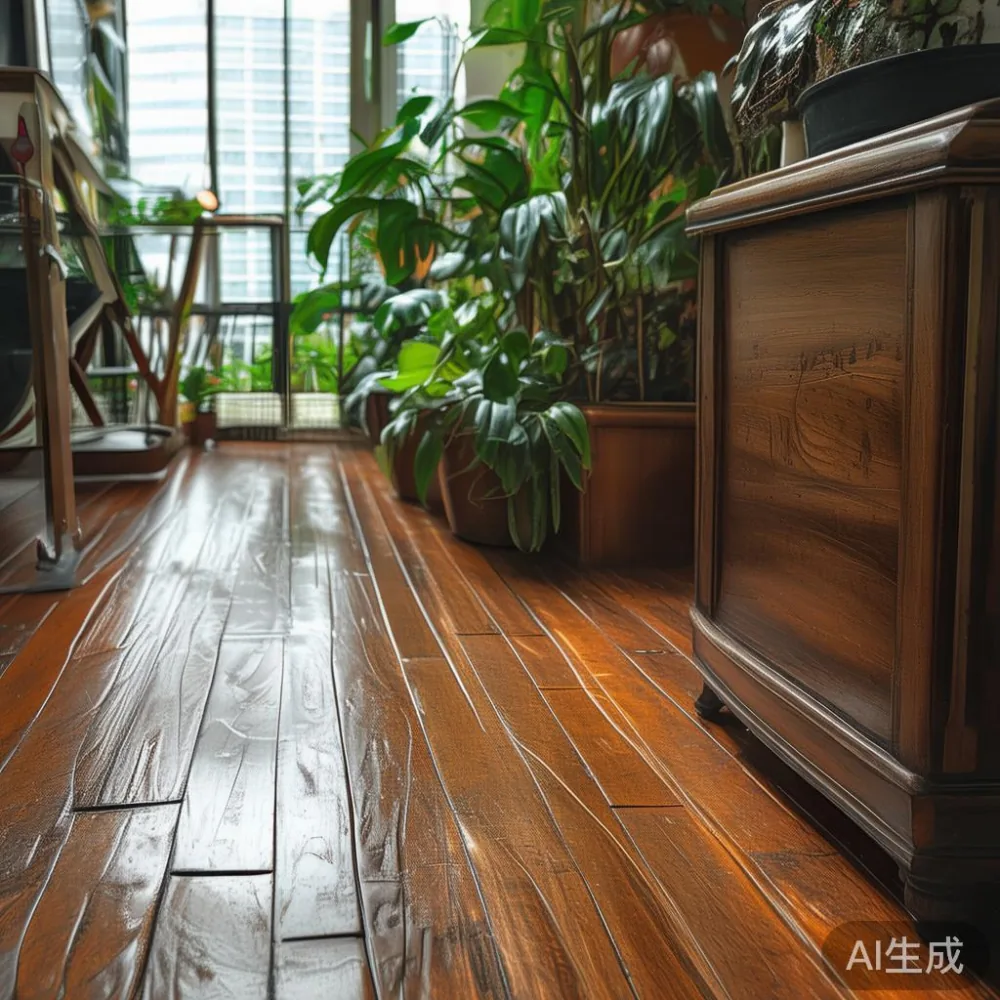
I keep four things on a console in the dining room: a 100 percent cotton waffle cloth, a bottle of pH-neutral wood cleaner, a small digital hygrometer (mine reads 38 SGD at any neighbourhood shop in Bedok), and a spare sachet of silica gel for the drawers. The actual routine, twice a week, takes about four minutes:
1. Check the hygrometer. If the room is below 42 percent RH (usually air-con days), I leave the bedroom door open, or I wipe the table with a cloth that has been lightly misted with distilled water, then buff dry. This nudges the topcoat and the wood back into sync.
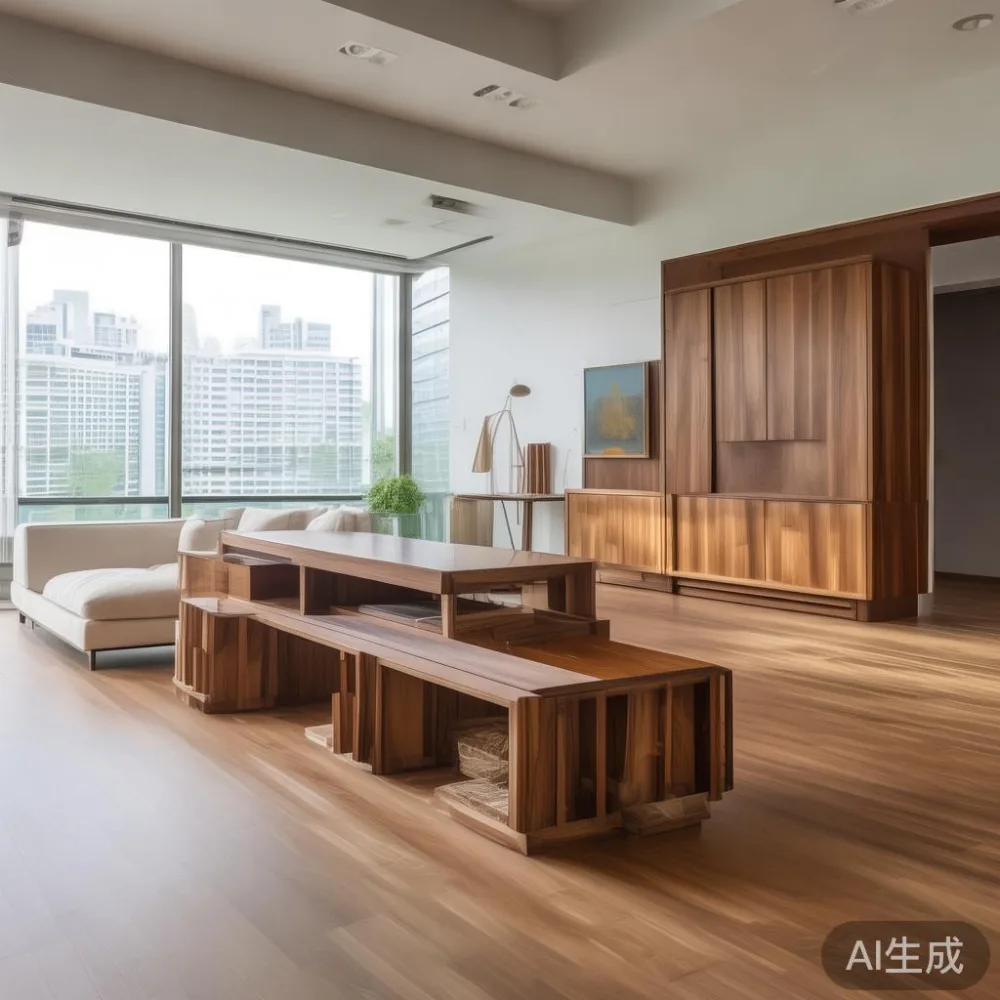
2. Dust with the dry waffle cloth, wiping with the grain. Microfibre is fine, but pure cotton feels less grabby on a cured lacquer.
3. If there is a fresh ring from a cold glass, I press the cloth over a teaspoon of cleaner for ten seconds, then rub in straight lines, never circles. The mark on the top of my oak piece from a clumsy mug of kopi at 7.30 a.m. came out on the first pass.
4. Once a month, I bring out the walnut-toned paste wax that came with the table, smear a pea-sized amount on a separate cloth, and go over the whole top in 20 cm strokes. The wax fills micro-scratches and the surface quietens down to the low-sheen look I wanted in the first place.
Things I do not use: any polish that lists silicone (it migrates into the next refinishing job and blocks adhesion), any furniture oil labelled "lemon," and any all-purpose spray with ammonia near a lacquered surface.
Which TV Console Fits a 4-Room HDB Living Room?
Measure the wall your TV mounts on, then measure the lift opening and the corridor bend before you fall in love with a piece online. For a 4-room HDB in Punggol or Sengkang the living-room wall behind the sofa is typically 2.8 to 3.4 m wide and 2.4 m high, and the default answer is a 1.6 m TV console with a depth of 38 to 42 cm, which leaves at least 90 cm of breathing room on each side and a clear 60 cm walkway to the balcony door. Anything longer than 1.8 m is risky in a 1.1 m wide lift because the door leaf only opens to about 78 cm, so the box has to go in vertically or end up on the fire staircase. A solid wood TV console in the 1.5 to 1.7 m range seats a 55 to 65 inch screen at a comfortable 90 cm console height, and gives you drawers wide enough for game pads and a soundbar without the lid slamming shut.
Sun, Spills, and the Tampines Afternoon
UV is the other quiet killer of lacquer. Direct sun through a west-facing HDB window after 2 p.m. will darken an oak or walnut top by a noticeable tone in twelve to eighteen months, and will dull the sheen of the clear coat faster than any spill. I pull the day curtain on that window at lunchtime, and where I cannot, I move a 90 cm tall fiddle-leaf fig to block the worst of the angle on the dining surface. For the small patches of sunlight that still sneak in, a UV-blocking film at SGD 28 per square metre on the glass cuts the bleaching by about 80 percent and does not change the view.
Spills on lacquer behave like spills on a phone screen: they bead, they sit, and they stain if you let them. I keep a stack of plain white cotton napkins at the dining table for exactly this. Ketchup, soy sauce, and teh tarik were each wiped within thirty seconds during the past month and left nothing behind. A pot of hot oil that landed on the apron and stayed for two minutes left a faint shadow that the paste wax covered on the next monthly pass.
Assembly Difficulty on Lacquered Pieces, and Why It Matters Here
Most Singapore buyers never think about assembly difficulty when they are scrolling for a new dining chair or bed frame, and then it hits them on a Saturday morning. Lacquered solid wood pieces from a Foshan workshop like MIDHILL usually arrive partly assembled: the table top is one piece, the legs are another, the apron is bolted to the top, and the legs thread into the apron with M8 steel dowels. The weight per box is the real constraint. A 1.8 m solid wood dining table in oak breaks down into 36 kg and 22 kg boxes, both under the 23 kg single-person lift guideline that most HDB movers watch for. A 2 m marble table, on the other hand, splits into a 48 kg top crate and an 18 kg leg crate, which is a two-person job in any lift and almost certainly needs a trolley. A four-poster bed frame at 1.8 m wide can come in three boxes of 28, 24, and 19 kg, manageable on your own but worth a second pair of hands. The wardrobe category is where assembly difficulty gets serious: a 1.8 m three-door wardrobe from the same maker is eight boxes totalling 96 kg, and the longest single panel is 2.1 m, which means it has to enter the lift tilted at 45 degrees or be carried up the refuse chute lobby stairwell if the fire lift is busy.
The tool kit matters too. The usual instruction assumes you have a 10 mm ratchet, a rubber mallet, and a friend. For HDB corridors that are only 1.2 m wide, I tape the cartons flat in the lift lobby before opening, because a 1.8 m cardboard sleeve that bursts open in a 1.1 m lift is the reason most buyers mark a piece down for cosmetic damage before they have even started.
The Furniture That Travels Worst, and How I Would Plan the Move
Marble table, any length, is the riskiest piece in the catalogue. A 1.2 m round marble table weighs 70 to 90 kg, needs a plywood crate that adds 12 kg, and the crate is rigid, so it will not bend around a corner. The standard answer is to confirm with the seller in advance that the crate dimensions fit your lift door opening. The company I bought from publishes a list of every SKU with box dimensions in centimetres; I cross-checked the marble-top coffee table (crate 128 x 128 x 38 cm) and the lift door at my block (80 cm wide, 2.1 m tall) before checkout, which is why I went with a glass-top version instead. Solid wood wardrobes are the second-worst case for assembly difficulty, because the panels need two people and a level floor, and the 6 mm dowel alignment is finicky the first time.
Dining chairs, by contrast, are the easiest. A mid-century modern dining chair out of the Saudi Arabia range I was eyeing for the head of the table weighs 5.4 kg per chair and folds flat in a 60 x 60 x 8 cm box. Eight chairs stack onto a single dolly trip. The same applied to the two-piece solid wood bed frame I added to the spare room, which arrived in flat-pack form and was on the floor in 35 minutes.
Refinishing, Warranty, and What Happens After Year Five
Lacquer does not last forever. In Singapore, a family of four will walk a dining table for ten to twelve hours a week, and the first thousand hours of use is when the top coat loses its initial gloss and falls into the patina it will hold for the next decade. A reputable Foshan maker offers a 10-year structural warranty on the joinery of a solid wood bed frame or wardrobe, and a lifetime refinishing service for the top surfaces at a flat SGD 280 to SGD 450 per piece, return shipping included above a cart threshold of US$350. I have not had to use the refinishing yet, but I have spoken to the workshop twice by email, once about a 4 mm gap that turned out to be seasonal movement and once about a chipped corner from a moving-in day. Both times the answer came back with a photo and a part number within 24 hours.
The shipping promise that mattered to me, since I live on the eighth floor with no covered loading bay, was free shipping above US$350 and a 14-day return window, both of which are unusual for furniture of this weight class and pushed the value calculation in the brand's favour before I even placed the order.
When to Call the Maker Versus When to Live with It
Most of what looks like damage on a lacquered solid wood piece in the first six months is movement: a 0.3 to 0.8 mm line at a breadboard end, a tiny lip at a mitre, a faint shadow where the morning sun hits. None of these are warranty calls, all of them are signs that the wood is doing its job. Calls the maker should hear about: a 1.5 mm or wider gap that does not close in two seasons, a finish crack that exposes bare wood, a warp of more than 3 mm across a 1 m span, a wobbly leg after you have re-torqued every bolt, and any chip deeper than the top coat. For the rest, the answer is humidity, a cotton cloth, and a tube of wax.
Costs, Customs, and a Singapore Buyer's Reality Check
For a Singapore buyer, the landed price of a 1.8 m solid wood dining table from a Foshan factory typically includes 8 percent GST on the import value plus a SGD 60 to SGD 120 door-to-door delivery fee, depending on whether you live in a condo with a loading bay (Tampines GreenRidge, Treasure At Tampines) or a HDB block without one. Add a SGD 80 furniture elevator booking if you are above the 14th floor, a SGD 40 disposal of the boxes, and you are looking at the realistic total. A lacquered solid wood bed frame in queen size lands in the SGD 1,450 to SGD 2,100 range fully delivered; a 1.8 m wardrobe, two-door, is in the SGD 1,100 to SGD 1,600 range; a solid wood nightstand is in the SGD 280 to SGD 420 range; a 1.6 m TV console in the SGD 680 to SGD 980 range; and a 1.2 m round marble table, depending on stone, lands between SGD 1,800 and SGD 3,200 once stone, base, and freight are tallied.
Delivery times from order to door in Singapore are usually 28 to 42 days by sea plus 5 to 8 days for last-mile, which is why I ordered my dining table two weeks before cny rather than during the cny rush, when the same route takes 58 to 70 days.
A Simple End-of-Year Check You Can Do in Ten Minutes
Set a phone reminder for the first Sunday of each month. Walk the flat, open the hygrometer app, and look at each lacquered piece in turn. Wipe. Wax on month three, six, nine, and twelve. Photograph any change. Keep the original swatch under the cloth so you can compare. That habit, more than any product on the shelf, is what keeps a lacquered solid wood dining table, wardrobe, or bed frame in Tampines, Bedok, or Punggol looking like new for ten years and beyond.