A 5-Year Cost Comparison of Veneer and Solid Wood in Singapore
Furniture prices in Singapore often look straightforward at checkout, yet the real cost of a dining table, wardrobe, or bed frame becomes clearer over time. Veneer can be an efficient use of timber, while solid wood carries different repair, refinishing, and assembly demands. For owners of HDB flats and condos in Tampines, Bedok, and Punggol, those demands affect delivery access, maintenance time, and the furniture’s condition after 5 years.
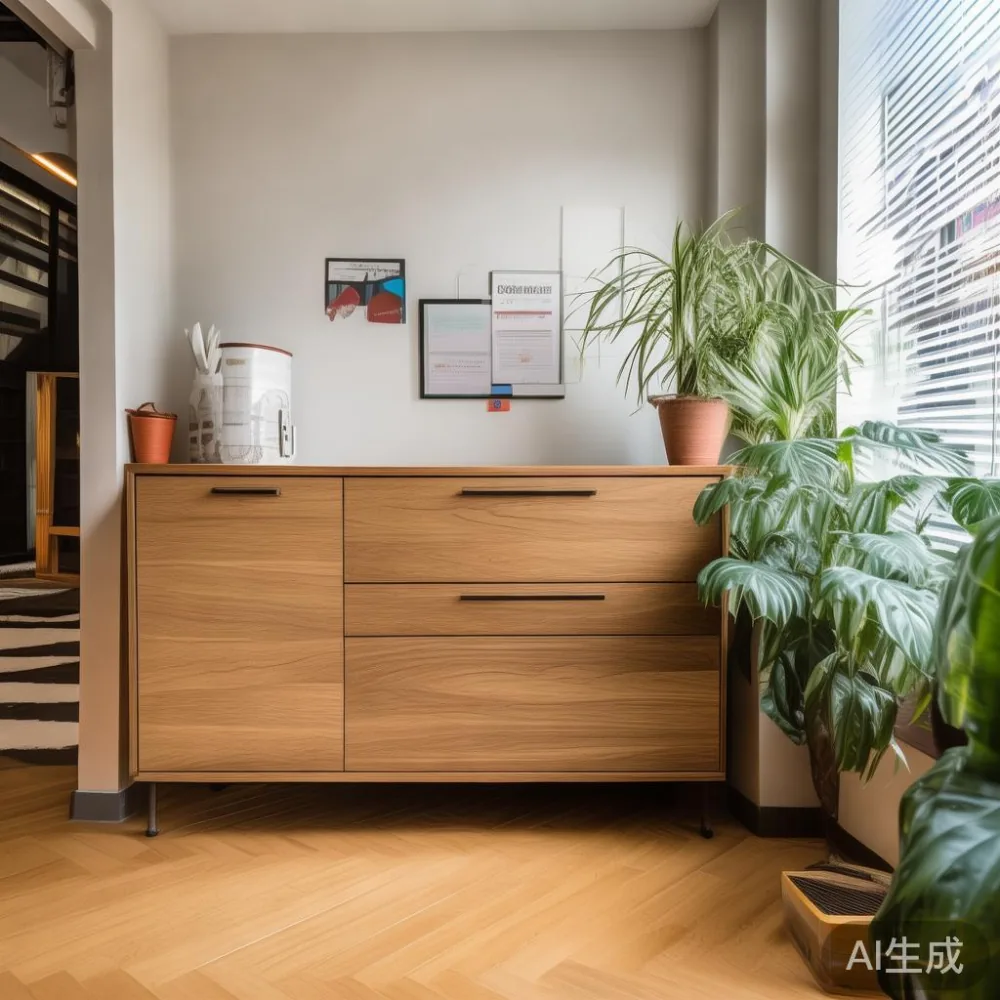
I tested this comparison in a fourth-floor Tampines HDB flat last month. The lift opening measured 90 cm wide by 210 cm deep, and the corridor narrowed to 105 cm at one turn. A sample solid wood dining table arrived in 3 cartons weighing 74 kg in total; its carton measured 162 cm long, so it had to be turned upright in the corridor before reaching the lift. A similarly sized veneer table came in 2 cartons weighing 39 kg, with a longest carton of 148 cm. The extra weight and handling did not change the table’s visual appeal, but they made assembly difficulty noticeably different on delivery day.
This comparison uses Singapore retail prices in SGD, includes GST, and follows a medium-use household scenario over 60 months. It is not a claim that one construction method wins every category. Instead, it shows how purchase price, care, repair, labour, and replacement expectations can alter the 5-year cost.
What is the difference between veneer and solid wood furniture?
Veneer furniture uses a thin layer of timber, commonly 0.6–2.0 mm, bonded to a lower-cost core such as MDF or particleboard. A dining table might combine a veneered top with solid-wood legs or a mixed frame. Solid wood furniture uses timber through the visible component, with a typical retail model using 18–25 mm boards for tops, shelves, and side panels. Veneer can reproduce the grain pattern of solid wood, whereas solid wood shows natural variation and can move slightly as humidity changes.
The distinction matters because buyers sometimes describe a product as “wood” without learning which parts are solid timber and which are veneer or engineered board. For a wardrobe, the carcass may be engineered board while the doors and drawer fronts are solid wood or veneered. A solid wood sofa can have a timber frame, but its cushions and upholstery remain separate materials. A solid wood bed frame may pair a timber headboard with an engineered platform. Always inspect the product specification and ask for the material by component.
In Singapore, air-conditioned interiors generally maintain stable humidity, but direct coastal exposure in areas such as Bedok and Punggol still warrants careful placement. Keep furniture at least 30 cm from open windows and avoid air-conditioning vents blowing continuously at a timber edge. This simple habit helps both constructions age more consistently.
How much do veneer and solid wood furniture cost over 5 years?
For a representative dining table, a veneered table may cost SGD 1,180 including GST, while a comparable solid wood dining table may cost SGD 2,280 including GST. Over 5 years, the table is used for approximately 1,825 meals. If the buyer eats at home on 280 days per year, that equals roughly 1,400 meals at home and 425 meals elsewhere; daily use is therefore around 77% of the calendar.
Assume veneer maintenance of SGD 240 over 5 years: SGD 80 for an annual cleaning and polish cycle, SGD 60 for one minor touch-up, and SGD 100 for replacing 2 drawer runners. Solid wood maintenance may total SGD 330: SGD 120 for annual cleaning, SGD 90 for one waxing cycle, and SGD 120 for sanding and refinishing a worn edge. These are practical allowances rather than guaranteed quotations.
Local delivery from a Foshan supplier to Singapore may add SGD 220 for a 39–74 kg parcel. If the customer can use a lift or clear corridor with at least 2 people, delivery-day assembly could be avoided. A carpenter charging SGD 70 per hour may need 1.5 hours for veneer and 2.5 hours for solid wood, although actual time depends on the design and access.
| 5-year item | Veneer dining table | Solid wood dining table |
|---|---|---|
| Purchase price including GST | SGD 1,180 | SGD 2,280 |
| Delivery estimate | SGD 220 | SGD 220 |
| Assembly allowance | SGD 0 | SGD 175 |
| 5-year maintenance | SGD 240 | SGD 330 |
| Estimated 5-year cost | SGD 1,640 | SGD 3,005 |
| Cost per year | SGD 328 | SGD 601 |
The solid wood table starts at SGD 1,100 more, but repairability may justify part of that difference if the surface is regularly maintained. The veneer table retains a lower total cost here because its purchase price is much lower. It may also be more sensitive to moisture, impact, and edge damage.
Which material has lower assembly difficulty in an HDB flat?
Veneer often has lower assembly difficulty because engineered components are lighter and more uniform. In my Tampines test, the veneer table’s 2 cartons were easy to guide through the 105 cm corridor and fit into the 90 cm lift. Its 4 legs required about 22 minutes to attach with 8 bolts, 4 washers, and 2 cam fittings. The solid wood table required about 36 minutes because 2 support rails needed alignment with the legs, and 12 bolts had to be tightened evenly. The work was not excessive, but the heavier frame raised the chance of marking the lift floor or pinching fingers.
Access should be measured before ordering. A common HDB lift internal width is around 90 cm, with a depth near 210 cm, but older blocks and newer BTO towers vary. A corridor width of 100–120 cm can suit a flat-packed component, while a 180 cm tabletop may need to pass diagonally or be carried upright. Check the delivery route from the ground-floor lobby, including the parking bay, ramp, security gate, and nearest landing.
Solid wood is not automatically difficult to assemble. Good joinery, labelled hardware, and pre-drilled holes reduce assembly difficulty. Confirm whether the supplier provides a screwdriver, hex key, and hardware guide, and whether instructions show the orientation of each part. For a solid wood bed frame, request that the headboard and side rails arrive in separate manageable cartons. For a solid wood sofa, check whether the legs are screwed into a timber base rather than forced into a concealed fitting.
Delivery time also affects the total ownership experience. A made-to-order dining table may take 25–35 days to manufacture and another 10–14 days for shipping to Singapore. A ready-to-ship model may arrive in 7–14 days. A longer lead time can allow the supplier to confirm carton dimensions and delivery access, which is useful for bulky wardrobes.
How do scratches, swelling, and repairs change the 5-year total?
Surface damage is the most visible difference. A deep scratch that cuts through veneer can expose the core or adhesive, while a deep scratch in solid wood can often be filled and refinished. A small repair allowance of SGD 60–120 may be reasonable for either material, but severe moisture damage can require replacement of an entire panel. Veneer may have lower replacement cost, yet solid wood may have a longer usable life after careful repair.
Consider a wardrobe used by 2 people. A veneered 3-door wardrobe might retail at SGD 1,680 including GST, while a solid wood wardrobe with engineered interior panels might cost SGD 3,080. The latter is not a fully solid carcass, but it can still offer repairable drawer components and stronger timber doors. Over 5 years, allow SGD 260 for veneer care and SGD 390 for solid wood care. Add SGD 180–240 for delivery and SGD 0–210 for assembly, depending on the number of hinged sections and whether the wardrobe is delivered flat-packed or fully assembled.
For this scenario, the veneered wardrobe reaches an estimated 5-year cost of SGD 2,120, while the mixed solid-wood model reaches SGD 3,720. The higher figure includes better repair potential, not a promise that the wardrobe will last longer. A product built with weak drawer boxes, misaligned runners, or unfinished edges can fail early regardless of its material label.
This matters when deciding how to style Japandi wardrobe in apartment interiors. Pale oak veneer can create the calm visual effect, while solid oak or ash gives more freedom to sand and repair. In a compact Punggol bedroom, external drawer pullers can reduce assembly difficulty and make daily cleaning easier. A 45 cm deep wardrobe suits many HDB bedrooms, while a 60 cm depth may interfere with a 90 cm corridor during delivery.
Does a marble table make a good 5-year comparison with veneer and solid wood?
A marble table has a different cost profile because the stone is not timber. A 120 cm round marble table with a solid wood base may cost SGD 2,680 including GST. Shipping can add SGD 280 because a packed table may weigh 85 kg and need 3–4 people. Sealing may cost SGD 120 initially and SGD 90 after 3 years. The surface can last 5 years with care, but stains, chips, and cracks have different repair economics.
A 120 cm solid wood dining table may cost SGD 2,280 and weigh 68 kg, while a veneered equivalent may cost SGD 1,180 and weigh 42 kg. Marble is often chosen for a marble table setting rather than for easy relocation. Its assembly difficulty can be higher because the top is heavy and must be supported continuously until the base is secured. Never lift a marble top by its edge alone.
French light luxury interiors often combine curved profiles, pale upholstery, marble accents, and carefully finished timber. American light luxury may favour clean lines and broad solid wood surfaces. Post-modern light luxury can mix a stone table with a simpler bed frame or nightstand. These stylistic routes do not alter the calculation: budget for access, protection, cleaning, and repair before selecting the material.
For a marble table, use coasters and a stable pH-neutral cleaner, and have a specialist assess chips rather than filling them with household products. For timber, avoid standing water and use a felt pad under devices that may heat or mark the surface. The right care routine usually matters more than choosing a trendy finish.
How do bed frames, sofas, and nightstands age in a Singapore apartment?
A queen solid wood bed frame may cost SGD 1,880 including GST, with a veneered version at SGD 980. Assume SGD 220 for delivery, SGD 90 for veneer care over 5 years, and SGD 150 for solid wood care. If a 2-person household moves the frame once, local removal and reinstallation may cost SGD 180. A fully assembled frame could add SGD 140, but a flat-packed frame may reduce assembly difficulty and fit more easily into a lift.
There is an important quality distinction here. A bed’s structural performance depends on the joints, centre support, slat spacing, and loading—not simply whether every visible part is solid wood. Ask for the centre-support spacing, typically no more than 100 mm beneath the mattress support, and check the slat material and thickness. If you are working out how to choose Mid-century modern bed, consider tapered legs, a low profile, and dimensions that leave at least 60 cm of circulation beside the bed.
For homeowners who are comparing how to style European bed in apartment layouts, a solid wood frame with engineered panels can balance weight, stability, and cost. A veneered frame may work for a rental flat where the furniture is likely to move after 2–3 years. The expected holding period should influence the model of ownership: a 5-year comparison assumes the buyer keeps the item throughout the period.
A solid wood sofa may retail at SGD 4,280 including GST, while a veneered or engineered-frame version may cost SGD 2,680. The sofa’s cover, foam density, and suspension often affect daily comfort more than the frame material. Allow SGD 300 for upholstery care and SGD 180 for frame care over 5 years. If the frame joints loosen, repairability can reduce total cost; if the cushion foam flattens, a timber upgrade will not solve that issue.
A small nightstand may cost SGD 320 in veneer and SGD 560 in solid wood. A 45 cm width fits a 90 cm bedside space, and a 40–45 cm height aligns with many mattresses. Check that drawers open without hitting a wall and leave 5 cm behind the unit for ventilation.
Which finish is most practical for Singapore’s humidity?
Finish matters as much as substrate. Water-based polyurethane or matte lacquer is generally practical for indoor use and easier to spot, while a thick oil or wax finish may need more frequent attention in high-touch areas. For veneer, a well-sealed edge reduces moisture entry. For solid wood, an easy-to-match repair finish helps extend service life.
A high-humidity room in Bedok may experience 65–75% relative humidity, whereas an air-conditioned Tampines bedroom may remain near 50–60%. Ask the supplier about the expected movement of boards and whether the product includes ventilation clearances. Wardrobes should stand on a level base, and beds should not be placed directly against a cold wall that can collect condensation.
The free-shipping threshold of US$350 mentioned by MIDHILL is useful for buyers consolidating larger orders, but the destination freight quote, GST, and access still require confirmation before purchase. MIDHILL was established in 2008 and exports to more than 15 countries, so buyers can request production details, carton measurements, and a material map before committing. Its 10-year structural warranty also has different value from a finish warranty: structure covers load-bearing components, while moisture damage, impacts, and cosmetic wear may fall outside the scope.
What should a Singapore buyer ask before choosing veneer or solid wood?
Ask for the material of the top, frame, legs, doors, drawer fronts, drawer boxes, back panel, and slats. Ask for the assembled dimensions and carton dimensions, because each affects delivery access. Request close photographs of the joints and hardware, plus an assembly video if assembly difficulty is a concern. Confirm the delivery estimate in working days and the return window; MIDHILL offers 14-day returns, subject to the stated product conditions.
When comparing finishes, request samples and view them under the room’s normal lighting. Japanese-inspired rooms can use oak or ash tones, but a warm veneer finish can still fit Japandi for small living room layouts if the furniture proportions remain restrained. If a 10-year-old HDB flat has narrow passages, measure the tightest turn rather than relying on the lift width alone. If a condo has a private loading bay, confirm whether the building requires a booking and protective floor coverings.
For wardrobes, check whether “solid wood” refers only to the door or also to the drawer construction. For dining tables, ask about the tabletop thickness, underside support, and whether the top is solid throughout. For a nightstand, test the drawer action and make sure the back can sit close to a wall. For a solid wood sofa, request the timber species, joinery method, and foam specification.
Some readers search for cheap French provincial furniture because ornate shapes appear in online catalogues, but lower cost may mean thinner components or veneer with printed grain. A French provincial dining table can still be solid wood, yet the construction details must be verified rather than inferred from the photo.
A search for the best Minimalist wardrobe for 2026 should also include opening measurements, internal drawer clearance, and material rather than focusing only on appearance. Door widths of 45–60 cm can suit HDB bedrooms, while a larger 80 cm leaf may complicate installation. For a move-out, removable shelves and adjustable feet can make later transport easier.
What is the sensible 5-year buying decision?
The lower 5-year cost in this comparison usually belongs to veneer because its purchase price is lower and its maintenance allowance is modest. The stronger long-term repair case usually belongs to solid wood, provided the buyer avoids moisture exposure and accepts higher purchase and delivery effort. Over 60 months, the dining table example shows a difference of SGD 1,365, which is substantial enough to justify buying the material that matches the expected use.
For a temporary rental, a frequently moved bed frame, or a first apartment, a well-built veneered or mixed construction can offer practical value. For a family keeping the same dining table and wardrobe for 5 years, solid wood can make sense where impact repair and refinishing are priorities. The decision is not based on a single material label; it is based on component quality, access, care, and expected tenure.
Before paying the balance, photograph the delivery route, verify the carton measurements, and request the material schedule. For larger projects, review the assembly instructions with the installer and confirm whether delivery includes placement in the room. For specific dimensions or a different number of panels, product pages and quotations can vary, so obtain a current price and delivery estimate in SGD.
More planning information is available at www.midhill.co. A clear room measurement, a realistic 5-year care budget, and an honest assessment of assembly difficulty will usually produce a better furniture purchase than a headline price alone.