How Southeast Asian Humidity Changes the Way Solid Wood Furniture Behaves
Singapore’s tropical air can make a timber furniture decision more complicated than checking the colour, dimensions and delivery date. Relative humidity commonly reaches 70–90% during wet periods, while air-conditioned HDB flats may sit near 45–60%. That difference matters because solid wood expands, contracts and can twist as it exchanges moisture with the surrounding air. It also affects adhesive performance, hardware alignment and how much assembly difficulty you may encounter after the carton reaches a Tampines, Bedok or Punggol home.
MIDHILL designs solid wood furniture for export markets and has operated since 2008, shipping to more than 15 countries. Its 10-year structural warranty and lifetime refinishing service are reassuring, but no manufacturer can make timber completely immune to movement. The practical answer is controlled acclimatisation, sensible placement and careful assembly rather than treating humidity as a remote threat.
Why does Singapore humidity affect solid wood furniture?
Wood is hygroscopic: it takes on moisture when the surrounding air is humid and releases it when the air becomes drier. A solid oak dining table with a 180 cm top and 75 cm height can change dimension across its grain by several millimetres during a pronounced humidity cycle. The movement is usually small enough to remain usable, but it may open a drawer gap by 1–3 mm, make doors rub, or place uneven pressure on dowels, screws and hinges.
In an HDB flat, humidity often changes quickly. The building may be dry in the early evening while the kitchen, balcony and bathroom air remain humid. An open HDB corridor can experience air changes as doors open and close, while a lift lobby may be cooler and more sheltered. The furniture does not need a constant outdoor environment; it needs a reasonably stable indoor one. Aim for about 40–65% relative humidity where practical, and avoid standing a solid wood wardrobe directly against an air-conditioning outlet or beside a bathroom wall.
Condominiums add another layer. A unit facing the western sun can heat a glass balcony enclosure to 32–35°C, with much higher humidity than the living room. A solid wood bed frame or nightstand placed there may dry and contract faster than the same product in a climate-controlled bedroom. Temperature and humidity work together, so keeping the furniture away from direct sun and heat is as important as using a humidifier.
What happens to a solid wood dining table during a wet week?
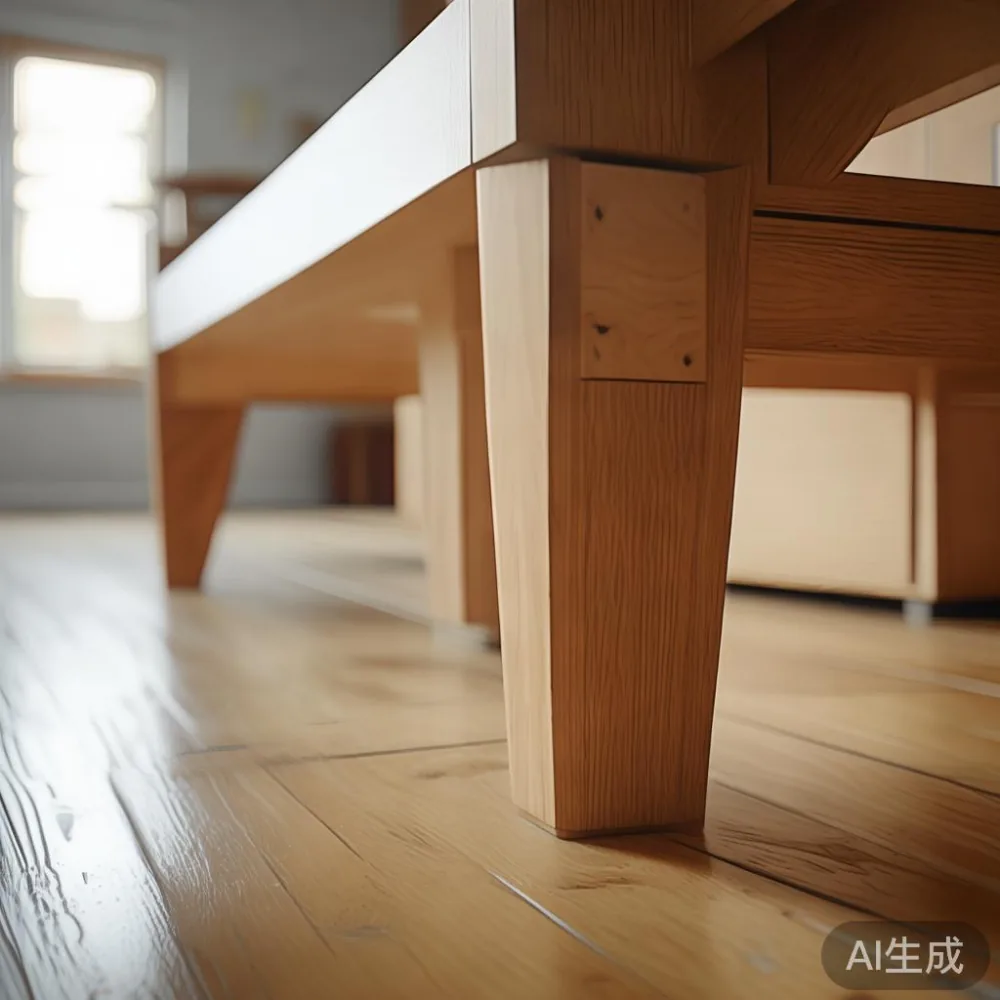
Take a 200 cm solid wood dining table with a 4 cm top. During a humid week, the top can swell slightly across its width. If four legs are attached by tight corner brackets with little adjustment, that swelling can pull the frame out of square. You may notice one leg touching the tile more firmly than the others, or hear a faint knock when the table is lightly pressed.
This is not necessarily structural failure. It is often a geometry problem caused by rapid environmental change. Let the table acclimatise in its final room for 5–7 days before tightening hardware. If assembly instructions specify connecting the top after 48–72 hours of air exposure, follow them. Leave expansion gaps of roughly 5–8 mm where the design allows them, and do not force a drawer or door that has begun to bind.
A marble table is less prone to dimensional movement than timber because marble has very low water absorption. However, its base and supporting frame may still be solid wood. Humidity can therefore influence a marble top’s level or the stability of its mounting system even though the stone itself changes very little. Keep the stone supported at the points specified by the maker and avoid heavy impacts at the corners.
For buyers comparing design references, a European light luxury sofa worth it becomes a question of comfort, frame quality and fabric performance, not humidity alone. A solid wood sofa frame should be checked for movement at joints, while upholstered cushions can show a different response. Leather may tighten in dry air, and woven fabrics can crease more readily after a sudden temperature shift. Allow 24–72 hours for upholstery to settle before judging the fit.
Can humidity increase assembly difficulty?
Yes. Assembly difficulty often rises when components arrive from a drier manufacturing environment and are then assembled in a humid room. Timber can swell, instructions may be printed for a slightly different moisture state, and metal hardware can show corrosion if it is exposed to damp conditions before installation.
Inspect every part before assembly. Check that bolts, dowels, cams and screws are free of rust, and do not tighten a joint solely because it feels loose. If a cam lock resists engagement, remove it, inspect the hole and correct the alignment rather than applying more force. A 6 mm bolt driven 2 mm too deeply can reduce thread engagement and make later tightening difficult.
For a 150 cm solid wood bed frame, allow 6–12 hours for the parts to acclimatise before connecting the headboard, footboard and side rails. A 180 cm wardrobe may need 12–24 hours in a consistently humid location. The larger the component and the more joints it contains, the longer a controlled settling period can be useful.
Assembly difficulty should be judged before the carton is opened. A wardrobe that must travel through a lift, turn in a corridor and pass a doorway requires a different preparation plan from a nightstand that can be carried by 2 people. Measure rather than estimate: record the packaged width and depth, lift door opening, corridor turning space and the actual door or service-access route.
Will a solid wood bed frame warp in a Singapore bedroom?
Good construction reduces the risk, but placement determines long-term stability. A solid wood bed frame should sit at least 30–45 cm from a window that receives direct sun, and at least 20–30 cm from a persistent cold-air outlet where possible. This is especially relevant in Tampines HDB units with broad windows and in condominiums with floor-to-ceiling glazing.
Keep the frame away from exterior walls that stay cold after rain. The wall may create condensation and a local humidity pocket. A moisture meter reading of 12–16% is plausible for many indoor solid wood products, but the exact safe range depends on the species and the maker’s specifications. Use the meter to identify unusually wet or dry corners rather than assuming every room should have the same reading.
Check the frame every 3 months during the first year. Look for a 2–3 mm gap at one joint, a scrape mark near a fixing or a leg that no longer sits flat. Small changes can often be corrected before the issue becomes visible. Structural defects such as a cracked rail, deeply split joint or persistent looseness should be documented with photographs and reported under the applicable warranty.
Buyers searching for the best Modern light luxury bed for 2026 will see many visually similar frames. The practical distinction is joinery and adjustability. Look for solid rails, accessible fasteners and design details that permit minor seasonal correction. A post-modern light luxury appearance should not be used to excuse weak connectors or poor moisture control.
My colleague in the furniture trade tested an unfinished oak frame beside a west-facing window last month. Its moisture reading moved from 10.4% to 15.8% over 9 days, and one fixing loosened by roughly 1 mm. After the frame was moved 60 cm indoors and the fastener adjusted, the movement stopped. The test reinforced a simple rule: react to the environment early rather than waiting for visible damage.
How should a solid wood wardrobe and nightstand be installed?
A tall solid wood wardrobe requires the most stable installation. Place it against an interior wall rather than a façade wall exposed to daily temperature swings. If it is an oversized 240 cm model, check whether it must be secured to the wall and whether the fixings suit the wall construction. In Singapore, solid masonry, drywall and party walls are not interchangeable, so follow the supplied instructions and obtain advice when the wall type is uncertain.
Leave 3–5 cm of clearance behind a freestanding wardrobe for air circulation where space permits. For a hinged model, confirm that the door can open through at least 90 degrees without touching a corridor wall. For a sliding system, confirm the track is level within 2 mm over 200 cm. These checks reduce the appearance of humidity-related binding.
A solid wood nightstand is easier to manage. Keep it 15–30 cm away from the bed if the floor is often wiped with a damp mop, and do not place it in a closed balcony. Wipe the surface with a lightly damp cloth and dry it within 10 minutes. Avoid silicone-based mattes and furniture waxes unless the finish supplier confirms compatibility, because an unsuitable coating can trap moisture or leave a patchy appearance.
Those planning how to choose Mid-century modern wardrobe should compare the carcass construction, runner type, hinge adjustment and wall anchoring options. A clear wardrobe interior with solid timber shelves may move slightly; the critical point is that the cabinet hardware allows controlled alignment. The same applies to a French light luxury nightstand: visual restraint is useful, but the drawer should glide smoothly after the room has settled for 48 hours.
What should I do before assembling furniture in an HDB flat or condo?
Begin with a 24–48 hour environmental check. Use a hygrometer in the intended furniture position and note readings at about 8:00, 14:00 and 21:00 over 3 days. A range near 50–70% can be managed for many indoor pieces, while readings above 75% call for improved airflow and closer attention to dry indoor conditions. Do not aim to force a dry reading with a dehumidifier alone; aim for stability.
Next, plan the route. A typical HDB lift door may be 900 mm wide, while a furniture carton can exceed 1,200 mm in its longest dimension. Measure the carton, not only the assembled product. A 160 cm dining table may fit through the lift diagonally, but a 220 cm solid wood dining table may need to enter as a protected flat pack. Confirm whether the building has a booked service elevator or a delivery pad before the driver arrives.
Corridor turns can be tighter than lift openings. Clear at least 1,200 mm of turning space where possible, remove shoes and other obstructions, and protect the floor with cardboard or a purpose-made moving blanket. Door removal may create more room, but the tenant or building management should confirm whether that is permitted. For a condominium, check parking bay dimensions, loading bay rules and the minimum path from the service entrance to the unit.
Protect the components during unpacking. Keep labels attached to each board so the assembly sequence remains clear. If instructions show left and right rails, photograph their positions before removal. Lay panels on a clean, level surface rather than directly on a damp balcony. After assembly, use the included hardware rather than substituting random screws of a different diameter.
Buyers browsing the top 10 light luxury furniture lists should also check practical terms: total assembled dimensions, carton dimensions, weight, warranty length, return period and delivery timing. Those details matter more than a vague style label. For MIDHILL products, free shipping applies above US$350, but the final delivery charge to a Singapore address should be confirmed in SGD before purchase. The return period is 14 days, so inspect packaging and furniture promptly and document any transit damage.
How much delivery time should I allow for a Singapore installation?
International production and sea freight usually require around 25–45 days, depending on the destination and production slot. Local delivery after arrival commonly takes 1–5 days for stocked items, while made-to-order pieces may require another 7–14 days. For a made-to-order solid wood dining table or wardrobe, a realistic planning window is about 5–10 weeks from order to arrival, including manufacturing and transit.
Allow another 1–3 days inside the unit for acclimatisation and assembly. During a particularly humid period, leave a large wardrobe or dining table unpacked but protected from condensation for 12–24 hours before final assembly. This gives the surface and internal surfaces time to respond gradually.
Costs should also be considered in SGD. A local furniture mover for a 2-person lift move may charge around SGD 80–180 for the first 10–15 items, with extra charges possible for long carries or oversized packages. A dedicated vehicle may cost SGD 180–350. A single nightstand may cost SGD 30–80 to deliver within Singapore, depending on distance and access. Confirm the mover’s insurance terms because a scratched tabletop can cost more to repair than the delivery charge.
For a hotel or hospitality project, freight volumes change the calculation. European light luxury for hotel projects should be assessed by sample approval, moisture data, timber specification and repeatable installation instructions. A 220 cm solid wood dining table used in a restaurant may need a different maintenance schedule from a 45 cm nightstand in a guest room. Bulk delivery may take 30–60 days after the sample is approved.
Which furniture-care routine works through the year?
Wipe solid wood with a soft cloth, slightly damp but not wet. Use 2–3 drops of mild pH-neutral soap on a 500 ml water bottle if needed, then remove residue with a clean damp cloth and dry the surface immediately. Avoid steam mops, household ammonia, abrasive pads and standing water. These measures protect the finish and reduce the small daily moisture changes that make joints feel tight.
Inspect moving parts every 3–6 months and tighten fixers only when needed. Check the wardrobe hinge screws, bed-frame connectors, dining-table corner hardware and nightstand drawer runners. If a door starts to catch at one corner, adjust that hinge before tightening the entire frame. Humidity often magnifies installation tolerances, so targeted adjustment is safer than a wholesale overhaul.
For outdoor-adjacent furniture, use covers that breathe rather than sealed plastic wrapped directly against the wood. Keep solid wood sofas, bed frames and dining tables away from sprinklers and rain. On a marble table, clean the stone with a neutral product suitable for its finish and avoid acidic liquids such as lemon juice or vinegar. For solid wood sofa cushions, rotate and plump them every week so compression is not confused with moisture movement.
The broader design question of how to style Japanese sofa in apartment settings also benefits from deliberate humidity control. Low-profile timber frames and light textiles suit many compact Singapore rooms, but the frame still needs stable indoor conditions. Leave air gaps around the sofa and avoid placing it against a cold balcony wall.
How can I tell whether a problem is humidity-related or an assembly fault?
Look for a pattern. If a drawer catches only during very humid days and returns to normal after a dry period, environmental movement is likely. If it binds in every weather condition, check assembly, cam locks, frame squareness and carton damage. A screw head sitting 2–3 mm above the surface, a dowel protruding by 4 mm or a rail that is visibly out of square can indicate assembly difficulty rather than seasonal movement.
Measure before correcting. Photograph the joint, record the gap with a ruler and note the room’s humidity reading. Use a straightedge across the frame and check whether the diagonal measurements differ. A dining table with diagonals differing by more than roughly 3–5 mm over 150–200 cm may need reassembly. For a wardrobe, place a spirit level against the side and confirm that the doors are not pulling the carcass out of alignment.
Keep evidence. Take photographs at 1 m distance in daylight, include a measuring scale and retain the assembly instructions, carton and fittings. For MIDHILL, the 10-year structural warranty applies to qualifying structural issues, while normal seasonal movement and finish care should be managed through the product guidance. Questions about a specific joint should include measurements and humidity data so the supplier can distinguish workmanship from environmental movement.
Singapore furniture does not need to fear the climate, but it should not be installed as though every room has temperate, steady conditions. Measure the route, allow 48–72 hours for acclimatisation, control direct sun and dampness, and inspect the joints before problems become obvious. With those steps, humidity is a manageable operating condition rather than a reason to avoid solid wood furniture.