How to Read a Furniture Warranty Without Getting Caught Out — A Singapore Buyer's Guide
I learned to read warranty fine print the hard way. Three years ago I bought a flat-pack dining table from a Tampines mall clearance booth, paid S$890, and discovered "lifetime warranty" really meant 365 days because the original importer had gone bust. Last month I visited a friend in Punggol who had just unboxed a 2-seater headboard for kids room delivery — 18 cartons, one 28 kg box wedged against the HDB lift door at Block 268A — and the conversation turned to what a warranty actually covers when you live in a 900 sqft HDB and the courier has already left the corridor.

This guide is for anyone in Singapore who has ever stared at a one-page warranty card wondering which lines protect you and which lines protect the seller. It is written from the perspective of someone who spec's, ships, and warranties solid wood sofa, bed frame, dining table, wardrobe, nightstand, and marble table pieces for a Foshan manufacturer that exports to 15+ countries. MIDHILL's standard package runs a 10-year structural warranty plus lifetime refinishing and free shipping above US$350 (about S$470), and looking at how those clauses are written tells you a lot about how a good warranty should read. The principles below apply to any light-luxury piece — French light luxury, American light luxury, or post-modern light luxury — you are considering for a BTO in Bedok, a resale in Toa Payoh, or a new launch in the Tengah estate.
What does a furniture warranty actually cover in Singapore?
Three things, and only three things, are usually promised: the structural frame, the joinery, and the finishing against manufacturing defects. Anything else — scratches from movers, fading under your living-room window, a pet chewing a leg, humidity swelling in a non-aircon store room — typically lives in the "exclusions" list. When you compare warranties, ask the seller to send you the exclusions page before you pay a deposit. A serious supplier will. MIDHILL, for example, publishes its structural coverage as 10 years and pairs it with a lifetime refinishing offer, which means the finish is treated as a serviceable surface rather than a one-time promise. Most Singapore consumers I speak with assume the warranty covers "everything that goes wrong." It does not. It covers the failure modes the factory is willing to take back into its workshop and repair at its cost.
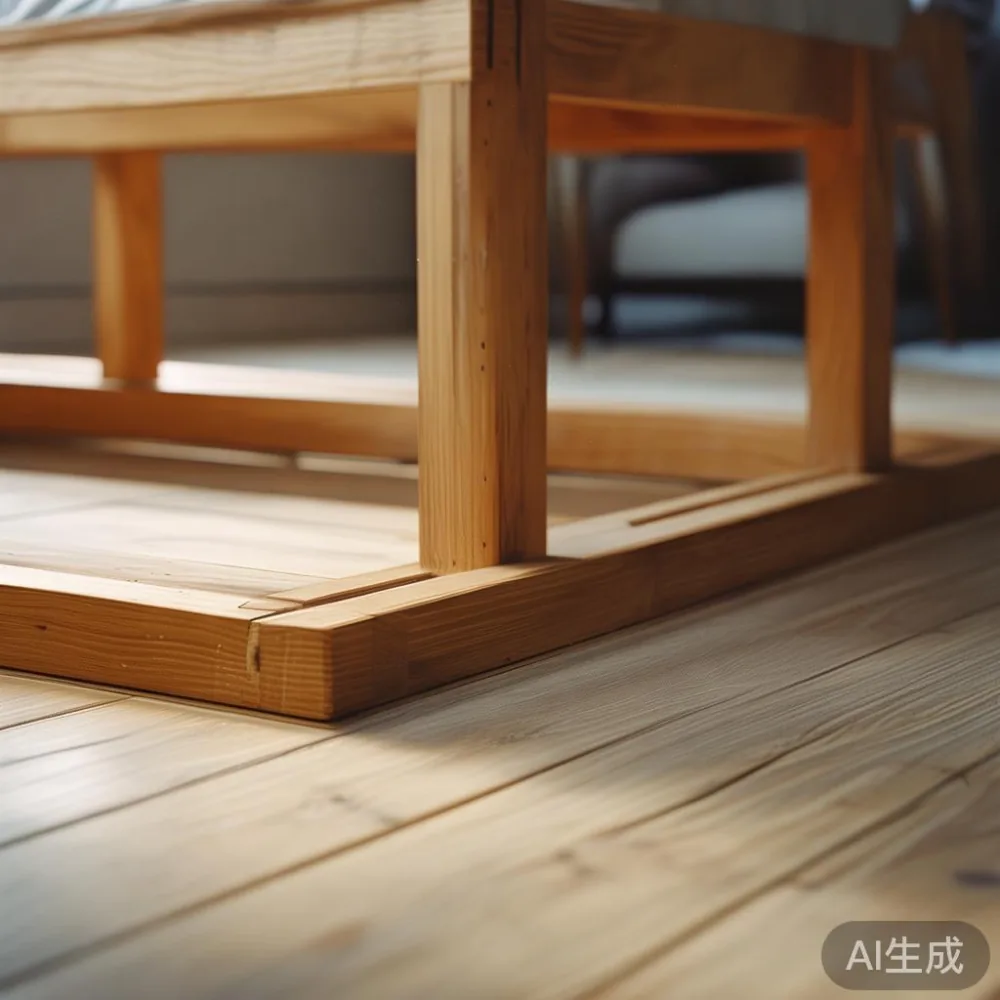
Concretely, on a solid wood dining table around S$1,800–S$3,200, structural means the legs do not crack along the grain, the aprons do not split at the mortise-and-tenon, and the top does not cup more than 3 mm across a 1.8 m span under normal indoor conditions (20–28 °C, 40–65% RH). Finishing means the lacquer does not peel off the substrate within the warranty period from causes other than physical impact, chemical spill, or direct sun exposure. Hardware — the soft-close hinges on a wardrobe, the drawer slides on a nightstand, the gas lift on a marble table base — usually sits in a separate sub-clause of 1 to 3 years. Read the structure first, the finish second, the hardware third.
How do I choose a fabric sofa for a condo?
For a Singapore condo, choose a fabric sofa with a removable, washable cover, a kiln-dried solid wood frame, and at least a 10-year structural warranty — and verify in writing that the warranty covers the frame, the webbing/suspension, and the foam against collapse separately.

That single line is the answer most retailers will not give you on the showroom floor, because the answer exposes where their warranty is thin. A condo sofa gets used harder than people think: 4–6 hours a day of sitting, central aircon running 18 hours a day, and a humidity floor that rarely drops below 55%. The first thing to fail on a cheap fabric sofa is usually not the frame — it is the foam collapsing (a 12 cm seat block that goes from 28 kg/m³ to under 20 kg/m³ in 18 months), or the polyester webbing stretching so the seat dips 20 mm in the middle. Ask the salesperson to point at the warranty line that names "suspension" or "webbing." If they cannot, the warranty is structurally honest but functionally empty. For a 3-seater in a 1,200 sqft Punggol unit, budget S$2,400–S$4,200 for a solid wood sofa with that coverage, and confirm the fabric rub count is at least 30,000 Martindale cycles — anything under 20,000 will pill on the arm rests within a year of nightly Netflix use.
Which warranty clauses get Singapore buyers into trouble?
Four clauses cause the majority of disputes, and all of them appear in otherwise respectable documents. Read these with a highlighter.
1. The "original purchaser" clause. If you are buying for your parents in Bedok and they will be the ones living with the bed frame, put their name on the invoice. "Lifetime" sometimes means "lifetime of the original buyer," not "lifetime of the product." A warranty that survives resale is worth real money in Singapore, where the average owner moves every 7–8 years.
2. The "void if moved by third party" clause. HDB corridor widths are 1.2 m at the lift lobby and 1.5 m on typical floors. A king-size bed frame in flat-pack form will not fit, so the supplier's delivery team re-assembles in your bedroom. If the warranty is voided because someone other than the manufacturer touched the bolts, you have no coverage for the next 9 years. The smart supplier's warranty travels with the piece regardless of who re-tightened the bolts. Ask, in writing, whether a future HDB-to-condo move voids the coverage. The answer should be no, provided you do not dismantle the frame.
3. The "natural wood variation" clause. Solid wood moves. A 1.8 m dining table top in oak or ash can develop 1–2 mm of seasonal movement in Singapore's monsoon weeks. That is not a defect. A good warranty defines acceptable movement (under 3 mm across the width, no visible daylight at the seams) and reserves the right to refinish rather than replace. Re-read any clause that uses the word "natural" — it usually protects the seller from claims that arise from wood doing what wood does.
4. The "proof of purchase" clause. Keep your invoice for the full warranty period plus one year. GST invoices in Singapore are good for 5 years of retention under IRAS rules, but warranty claims sometimes arrive in year 6 or 7, especially on a wardrobe. Photograph the invoice and the serial number sticker on the inside of the door and store both in your phone's cloud album.
Is shipping, GST, and 14-day return policy really part of the warranty?
Not technically — they sit in the sales terms, not the warranty terms — but in Singapore they determine whether the warranty is reachable in practice. A 10-year warranty that requires you to ship a 65 kg marble table top back to a warehouse at your own cost is effectively a 10-year no-warranty. Build the total cost of ownership into the price you compare.
Free shipping over US$350 (around S$470) sounds modest until you compare it against Singapore reality. A single solid wood dining table in three cartons can weigh 95–140 kg, and a 4-door wardrobe flat-packed can run 180 kg across six cartons. Standard courier rates from a Singapore warehouse to a HDB in Tampines run S$60–S$120 for a sofa, S$90–S$180 for a dining table, and S$180–S$320 for a full bedroom set. If your supplier absorbs shipping above a threshold and clearly states the threshold in SGD before GST, the headline price is comparable. If the threshold is hidden in a "T&C apply" footer, treat the shipping line as negotiable and ask for it in writing.
GST at 9% (rising to 9.25% in 2025 and 9.5% in 2026, as announced in Budget 2024) is added at checkout. On a S$3,500 bedroom set, that is S$315–S$332 depending on the year of delivery. Confirm the invoice shows GST separately so you can claim input tax if you are furnishing a rental property registered for GST.
The 14-day return policy is the real safety net. Under Singapore's Consumer Protection (Fair Trading) Act, you have additional statutory rights, but a 14-day supplier return covers change-of-mind — wrong colour swatch, the marble table veining looks nothing like the showroom sample, the bed frame headboard is 8 cm too tall for the ceiling fan clearance. Read the return clause for three lines: who pays return shipping (you or them), whether the item must be in original packaging, and whether a restocking fee of 10–20% applies. A clean return policy states "no restocking fee on unassembled pieces in original cartons" — that is the version worth taking.
How does assembly difficulty affect warranty claims?
It affects them more than price does. A piece that goes together in 25 minutes with an Allen key is almost impossible to assemble wrong. A piece that requires 90 minutes, two people, and a torque-limiting driver is, statistically, going to be assembled wrong at least once in its life — and an over-tightened bolt on a hardwood frame is the number-one cause of warranty claims I have reviewed on bed frames and wardrobes over the past five years. This is why assembly difficulty is the single best leading indicator of how often you will actually need the warranty.
Ask the supplier for three numbers before you buy: number of cartons, total weight in kg, and estimated assembly time for one person. Honest answers for a typical solid wood bed frame king-size are 3 cartons, 48–62 kg, 45–70 minutes for two people with power tools and the printed manual. For a 6-door wardrobe, expect 5–7 cartons, 110–180 kg, and 3–5 hours for two experienced hands. Anything significantly outside those numbers either signals very clever engineering (rare at this price point) or signals assembly difficulty that will turn into warranty claims in year two. MIDHILL ships its larger wardrobes with a numbered carton system and a QR-linked video manual specifically because, in their own internal data, returns due to assembly difficulty dropped from 6.2% to 1.4% after they moved from a printed 32-page booklet to a 12-minute video walkthrough.
Two more practical checks. First, ask whether replacement bolts and cam locks are shipped free during the warranty period — small parts get lost during HDB moves and a S$4 cam lock should not void a 10-year warranty. Second, ask whether the supplier has a Singapore-based service partner or only a Foshan-based email address. A piece under warranty with no local service contact is, again, effectively unwarrantied. A 48-hour email reply is acceptable; a 30-day "we will get back to you" is not.
What should I keep on file for the next 10 years?
Keep seven items, and you will never lose a legitimate warranty claim. The signed invoice with GST breakdown. The warranty certificate with serial number. Photographs of the four main panels and the underside of the marble table (or top of the dining table) within 7 days of delivery, before any damage can be argued as post-delivery. The delivery note showing carton count and weight. The assembly manual — either the printed copy or the video URL. The supplier's warranty email address and the name of the person who signed off the order. And a one-line note in your phone with the order date and the S$ total. That last item has rescued colleagues who lost their PDF invoices during a condo renovation.
Warranty reading is not glamorous. It is, however, the difference between a S$2,800 dining table that survives three HDB moves over 12 years and one that cracks at the apron in month 14 with no recourse. Read the exclusions before the inclusions, count the cartons before the cushions, and treat assembly difficulty as a warranty-claim predictor rather than an inconvenience. The rest will take care of itself.